Quick Take
- Narration: Garrett Sutton narrating his own work gives the material the authority of a practicing attorney speaking directly to you, though the delivery is more instructional than dynamic.
- Themes: business credit versus personal credit, alternative lending pathways, the legal and financial structure of early-stage financing
- Mood: Practical and direct, with the no-nonsense register of a business attorney who has seen too many entrepreneurs make avoidable mistakes
- Verdict: A genuinely useful survey of business financing options for early-stage entrepreneurs, best consumed as a reference rather than a cover-to-cover listen.
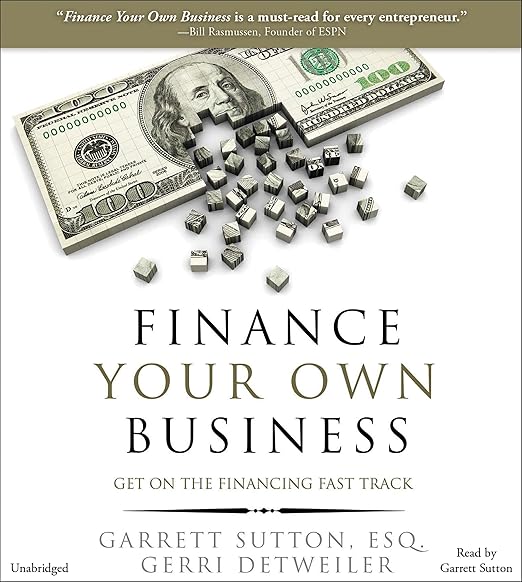
I listened to Finance Your Own Business during a period when I was advising a friend who was trying to figure out why she could not get a business loan despite having what looked like reasonable personal credit. About an hour in, Garrett Sutton explained exactly what she had misunderstood, which is that business credit and personal credit are separate systems that function differently and need to be built separately. That is not a sophisticated insight in retrospect, but it was not something she had been told clearly by anyone, and it is the kind of practical gap this book is designed to close.
Sutton is an attorney who has worked extensively with small business owners and entrepreneurs, and the book reflects that practice-based perspective. He is not writing theory; he is writing what he has watched entrepreneurs do wrong and what he has seen work. The co-author Gerri Detweiler, a credit expert, adds depth to the sections on building business credit and navigating the lending system. The combination of legal and credit expertise is the book’s structural strength: it covers the financing landscape from both the legal structure side and the practical credit side, which are not always covered together in business finance writing.
Our Take on Finance Your Own Business
The book covers a genuinely wide range of financing options: SBA loans, micro-lenders, crowdfunding, private placement memorandums, retirement fund financing, and the specific risks and benefits of each. That breadth is the primary value. Most early-stage entrepreneurs have a narrow view of what financing options are available to them, and Sutton’s survey functions as an inventory of possibilities that many of his readers have not considered. One reviewer who described themselves as an experienced entrepreneur and angel investor said the book covered things they had seen go wrong in early-stage companies, which suggests the material is credible at a sophisticated level as well as useful for beginners.
Sutton narrating his own book provides the authority that a ghosted narration would lack. He is describing his own professional experience and the experience of clients he has actually worked with, and that firsthand quality is audible in the delivery. The narration is more instructional than conversational, which suits the material but means it does not have the warmth or accessibility of a skilled professional narrator. This is a workbook in audio form more than a listening experience in the conventional sense.
Why Listen to Finance Your Own Business
The practical emphasis on what to avoid is as valuable as the guidance on what to pursue. Sutton devotes specific attention to financing scams, which for unsophisticated entrepreneurs can be more dangerous than simple ignorance. The section on the risks of using retirement funds for business financing is particularly clear-eyed about why this option, which is legally available and frequently marketed by certain advisors, carries risks that are not always disclosed upfront.
The structure of the book, which moves through financing types in a roughly sequential order of accessibility, makes it easier to identify where in the landscape your specific situation sits. A first-time entrepreneur with no business credit history has different options than one who has established credit over several years, and Sutton is clear about which sections are most relevant for each situation. That clarity of audience targeting is not always present in business finance writing, which tends to address itself to an abstractly experienced reader.
What to Watch For in Finance Your Own Business
The synopsis for this book is unusually thin, essentially a bullet list of topics covered, which accurately reflects the book’s orientation toward reference material over narrative. The content is solid but the book is not designed to be intellectually stimulating as a reading experience. It is designed to be useful, and evaluated on that criterion it succeeds. Listeners looking for the kind of narrative engagement that makes business books like Bad Blood or Liar’s Poker work as listening experiences will not find it here.
The specific dollar figures, regulatory details, and program structures cited will have shifted since the book’s 2015 publication. The SBA loan program structure, the specific rules around crowdfunding platforms, and the legal framework around retirement fund business financing have all changed to some degree. The book’s principles remain sound, but specific numbers and program details should be verified against current sources before acting on them.
Who Should Listen to Finance Your Own Business
Early-stage entrepreneurs who want a comprehensive survey of business financing options and the legal structure within which those options operate will find this a practical and well-organized resource. It is particularly useful for people who have not yet built separate business credit and do not fully understand why that matters. Skip it if you are looking for narrative engagement rather than reference material, or if you need current regulatory specifics rather than principled guidance. Given the 2015 publication date, treat the specific figures and program details as starting points for verification rather than final answers.
Frequently Asked Questions
Is Finance Your Own Business still relevant given that it was published in 2015?
The principles around building business credit separately from personal credit, evaluating lending options, and understanding the risks of various financing structures remain sound. However, specific program details, dollar limits, and regulatory frameworks for SBA loans, crowdfunding, and retirement fund financing have all changed since 2015. Use the book as a conceptual map and verify current specifics through up-to-date sources.
Does Garrett Sutton’s self-narration add value, or would a professional narrator have been better?
The self-narration adds credibility because Sutton is describing his own professional experience and the situations of actual clients. The delivery is instructional rather than dynamic, which suits a reference-oriented book but is less engaging than a skilled professional narrator would be for sustained listening. The trade-off favors authenticity over listenability.
Is the book better suited to someone starting their first business, or to experienced entrepreneurs?
Primarily to first-time or early-stage entrepreneurs who do not yet have a clear picture of the financing landscape. One experienced entrepreneur and angel investor found it useful for confirming what goes wrong in early-stage companies, but the book’s core audience is people who have not yet built business credit or navigated formal lending processes.
How comprehensive is the coverage of crowdfunding compared to bank lending and SBA loans?
Crowdfunding is covered as one of several options alongside SBA loans, micro-lenders, and private placements, rather than receiving extended treatment. The book is a survey rather than a deep dive into any single financing method, so listeners wanting comprehensive crowdfunding guidance specifically would need additional resources.