Quick Take
- Narration: Kate Harper delivers a clear, scholarly narration that respects the archival weight of the material without flattening its human dimension.
- Themes: Trans and queer history, gender nonconformity, 19th-century social history
- Mood: Scholarly and revelatory, with a careful attention to historical nuance
- Verdict: Serious and well-researched LGBTQ history that does genuine archival work, required listening for anyone interested in the deep history of gender nonconformity in the US and UK.
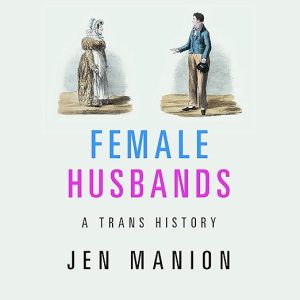
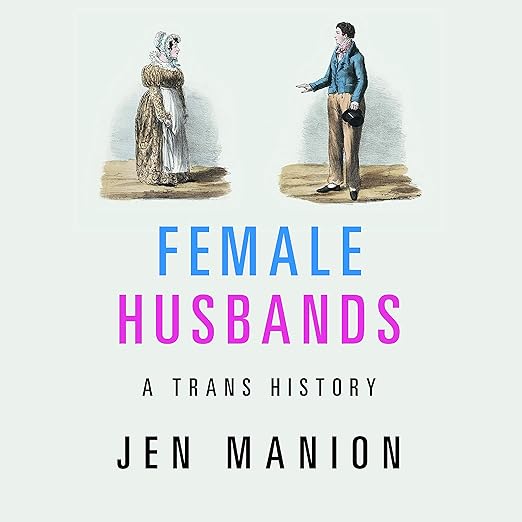
I came to Female Husbands on a quiet weeknight, with a cup of tea and the kind of focused attention this kind of scholarly work deserves. Jen Manion has produced something genuinely important here, not a popular history that uses the past to score points about the present, but a careful, archivally grounded examination of a historical category that most people have never encountered. The term female husband, as Manion uses it, describes people who were assigned female at birth, lived as men, and married women, long before the language of transgender or lesbian identity existed to describe such lives.
Kate Harper narrates, and she is an excellent choice. The material is dense with historical cases, court records, newspaper accounts, and social context spanning from the colonial era to just before the First World War. Harper moves through that density with clarity and appropriate gravity, never reducing these figures to curiosities or making them feel like representatives of modern identity categories dropped into the wrong century. She lets the historical specificity of each life breathe.
Our Take on Female Husbands
Manion’s methodology is one of the book’s strongest features. They are careful throughout not to retroactively apply contemporary identity labels to historical subjects in ways those subjects would not have recognized or claimed. The book navigates the genuinely complex question of whether the female husbands it profiles were what we would now call transgender men, lesbian women passing for social and economic reasons, or something that does not map cleanly onto either category, and it sits with that ambiguity rather than resolving it artificially.
One reviewer noted the book is an eye-opening and educational account that teaches readers about the rules of gender and sexuality across history, how people responded to those rules being broken, and the importance of language in LGBTQ history. That summary is accurate, but it understates the book’s emotional dimension. These are the stories of ordinary people who took extraordinary risks, violence, punishment, social annihilation, to live in a way that felt true to them. Manion treats that courage with appropriate seriousness.
Why Listen to Female Husbands
The book covers the United States and the United Kingdom across several centuries, which gives it a comparative dimension that single-country histories of gender nonconformity lack. Manion shows how attitudes toward female husbands shifted as women’s rights movements developed, and how the very category of female husband disappeared from public consciousness in the early twentieth century as other categories emerged to describe similar lives. That arc is one of the book’s most illuminating arguments.
At thirteen hours, this is a substantial listen, more demanding than most narrative nonfiction in the audiobook space. But the length reflects the scope of the archival research, and listeners who commit to it will come away with a genuinely different understanding of how categories of identity and gender have been constructed and reconstructed across time. That kind of historical perspective is increasingly rare and valuable.
What to Watch For in Female Husbands
Manion is careful to note the complexities around how to describe historical subjects, whether to use they/them pronouns for figures who lived as men, whether to characterize certain lives as transgender or as a distinct historical phenomenon without a modern equivalent. That carefulness is a scholarly virtue, but it can occasionally slow the narrative momentum for listeners who prefer a more declarative historical voice. Stick with it: the nuance is the point.
One reviewer flagged potential concerns about erasure of lesbian identity within the historical framing, a legitimate scholarly debate about how to read these lives. Manion addresses that tension directly in the text. Listeners from within LGBTQ communities who are sensitive to those debates should know the book engages with them rather than ignoring them.
Who Should Listen to Female Husbands
Anyone interested in LGBTQ history, gender history, or the social history of the nineteenth-century US and UK. Particularly valuable for readers who want scholarship rather than advocacy, Manion does important archival work and presents it with appropriate complexity. This is not a light listen, but it is a rewarding one that changes how you see both the past and the present. Casual listeners looking for an accessible entry point to trans history may want to supplement with shorter introductory reading first.
Frequently Asked Questions
Does Female Husbands apply modern transgender identity labels to historical subjects?
No, and that restraint is one of the book’s scholarly strengths. Manion is careful throughout to acknowledge that the people in this book lived before the language of transgender or lesbian identity existed, and they resist flattening these lives into contemporary categories. The book examines what the historical category of female husband actually meant and how it functioned, rather than treating it as simply an earlier name for something we already understand.
How does Kate Harper’s narration handle the scholarly density of the material?
Well. Harper reads with clarity and measured pace, which is exactly what this kind of archivally grounded history requires. The material includes court records, newspaper accounts, and social history spanning multiple centuries, Harper moves through it without rushing or over-dramatizing. Her voice is respectful of the historical weight of each individual life profiled.
Is this book accessible to readers without a background in gender studies or queer theory?
Yes. Manion writes for an educated general audience rather than an academic specialist. The theoretical framework is present but not dominant, the book centers the human stories and uses theoretical context to illuminate them rather than the reverse. Some reviewers with no background in gender studies found it both accessible and genuinely illuminating.
Does the book address the scholarly debate about whether these historical figures were trans men or lesbians who passed?
Directly and carefully. Manion acknowledges this as a live and contested question within LGBTQ scholarship and does not resolve it artificially in either direction. The book argues that the historical category of female husband was distinct from both modern transgender and modern lesbian identity, and that trying to map these lives onto current categories loses something important about how gender functioned in the past.