The Screenplay, Not the Hogwarts Textbook
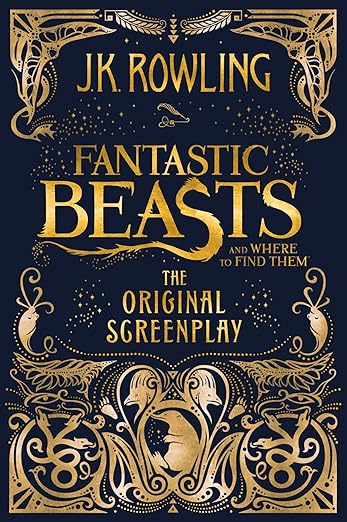
Can a magizoologist's misplaced suitcase really upend an entire city's hidden magical underground? That is essentially the inciting incident of Fantastic Beasts and Where to Find Them: The Original Screenplay, and this audiobook is worth understanding clearly before pressing play, since it is not the in-universe Hogwarts textbook of the same name that Comic Relief published years earlier. This is J.K. Rowling's shooting script for the 2016 film, her screenwriting debut, following Newt Scamander's brief stopover in 1920s New York that goes sideways when his case of magical creatures gets loose in the city. At just one hour and fifty-four minutes, the runtime reflects the format honestly: a screenplay contains far less prose than a novel covering the same story, so the shorter length is a function of format, not abridgment.
Reviewers on this listing are candid about how unusual the screenplay format feels as an audiobook experience. One specifically mentions avoiding Harry Potter and the Cursed Child for the same reason, screenplays are typically light on interior narration and heavy on dialogue and stage direction, a very different reading experience from a traditional novel. But the consensus among these reviewers is that Fantastic Beasts handles the format better than expected, occurring decades before the main Harry Potter timeline with enough distance from the original seven books that it reads as genuinely new material rather than fan fiction retreading familiar ground.
The film itself arrived in theaters on November 18, 2016, launching what became a multi-film franchise plan for Warner Bros., eventually continuing through The Crimes of Grindelwald and The Secrets of Dumbledore. Listening to the original screenplay now carries a slightly different context than it would have at release, since audiences already know how Newt's story expands across the following films; that hindsight can make some of the screenplay's smaller character beats read as setup for a larger arc rather than a self-contained mystery. None of that requires prior knowledge to enjoy this entry on its own terms, but fans who have seen the later films may catch foreshadowing that first-time viewers in 2016 could not have recognized.
Redmayne Brings Newt's Voice Straight From Film
Eddie Redmayne narrates, and the casting is about as direct a connection between performer and material as audiobooks get: Redmayne played Newt Scamander across the entire Fantastic Beasts film series, an Academy Award winner for The Theory of Everything bringing the exact voice, cadence, and physical awkwardness he built for the character on screen directly into the audio format. That is a genuine rarity in audiobook casting; most narrators voicing a screenplay have no direct connection to the production it became, and Redmayne's familiarity with Newt's specific brand of gentle social discomfort and creature-obsessed enthusiasm gives this listen an authenticity that a professional audiobook narrator without that history could not fully replicate.
Because a screenplay format leans almost entirely on dialogue and brief scene description rather than internal narration, listening to Fantastic Beasts asks for a slightly different kind of attention than a standard audiobook. Redmayne effectively performs a kind of one-man table read, voicing Newt directly while also carrying the connective tissue between scenes, and the result lands closer to an intimate radio drama than a narrated novel. For listeners curious about how film scripts actually read on the page, or fans wanting Redmayne's take on Newt without needing to rewatch the movie, that format becomes a genuine selling point rather than a limitation.
Filed as Children's Audiobooks, Built for the Fandom
This listing sits under children's audiobooks and fairy tales categorization, which undersells what the material actually is: a screenplay for a full-length franchise film aimed at the broad Harry Potter fandom, tween through adult, rather than young children specifically. Meaningful creature peril, city-wide magical chaos, and the kind of stakes typical of a Harry Potter-adjacent story run through the plot, appropriate for the same audience that grew up with the original seven novels rather than a picture-book crowd. Families should treat the genre tag as a rough sorting category rather than a precise age recommendation.
One reviewer's title says it plainly: nice but may be long for some, an interesting note for a book running under two hours, and a reminder that screenplay pacing reads differently from prose pacing even at a short overall length, since scene-by-scene structure can feel more repetitive in audio than the same scenes would on screen with visual variety doing some of the work. On the more enthusiastic end, another reviewer's simple declaration, wanting a Niffler of their own, captures the real appeal here: Rowling's creature designs, brought to life vocally by Redmayne's performance, remain the most purely enjoyable part of the experience regardless of format concerns.
A Low-Commitment Sample for Curious Potter Fans
Fantastic Beasts and Where to Find Them is an easy recommendation for Harry Potter fans curious about the wider wizarding world timeline, and especially for anyone who wants Eddie Redmayne's specific performance as Newt without committing to a full rewatch of the film. At under two hours, it is a low-commitment way to sample the screenplay format for listeners who have never tried one, with enough name recognition and built-in fan enthusiasm to make the format experiment feel worthwhile.
Listeners hoping for the in-universe Hogwarts textbook version of Fantastic Beasts, the shorter Comic Relief reference book rather than the film screenplay, should double check which edition they are getting before listening, since the two are easily confused by title alone. Anyone who dislikes the screenplay format generally, dialogue-heavy, description-light, should also temper expectations regardless of their feelings about the franchise itself. But for the audience this edition is actually built for, invested Potter fans wanting Redmayne's Newt in audio form, it delivers a short, distinctive listening experience unlike most other audiobooks in the wizarding world catalog.