Quick Take
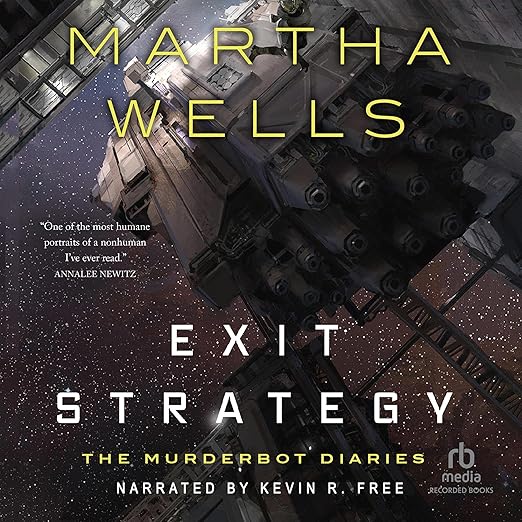
- Narration: Kevin R. Free’s performance has become inseparable from Murderbot’s identity across the series, and this fourth installment confirms that the casting was essential rather than incidental.
- Themes: Identity and autonomy in a corporate surveillance state, found family, the ethics of loyalty
- Mood: Fast and sardonic, with emotional undercurrents that grow stronger as the series progresses
- Verdict: The strongest novella in the original Murderbot Diaries quartet, with higher stakes, tighter structure, and the reunion the series had been building toward.
I listened to all four novellas in the original Murderbot Diaries arc across about a week, which is probably the right pace for a series designed with this kind of serialized momentum. Exit Strategy, the fourth and final entry, was where I stopped resisting the emotional pull of the series entirely. I had spent three novellas watching Murderbot construct ironically detached explanations for its own behavior, increasingly transparent in their defensiveness, and by the time Dr. Mensah reappeared, I cared more about a SecUnit’s capacity for attachment than I had expected to.
Martha Wells’s achievement with these novellas is specific: she takes a premise that sounds like a thought experiment, a cyborg security unit hacks its own governor module and becomes capable of independent action, and develops it into a genuinely moving investigation of what consciousness and care look like in a being that was never supposed to have either. Exit Strategy is where that investigation reaches its first resolution, and the resolution earns its weight.
Our Take on Exit Strategy
The fourth novella picks up momentum immediately rather than resetting as the earlier entries occasionally did. One reviewer here noted that this book “keeps the stakes high from the very beginning,” and that assessment is accurate. Murderbot is heading back to help Dr. Mensah, its former owner, protector, and the one human whose respect it values above all others. The GrayCris Corporation is implicated in colonist deaths. Evidence needs to reach the right people, and a rogue SecUnit is the least credible possible delivery vehicle.
The structural decision to bring back the original PreservationAux crew is the book’s smartest move. Murderbot’s interactions with that group across the first novella established the emotional baseline the series is working with, and the reunion in Exit Strategy allows Wells to demonstrate how much has changed without having to explain it. The changes register through behavior rather than exposition, which is the harder and more effective approach.
Why Listen to Exit Strategy
Kevin R. Free’s narration is indistinguishable from Murderbot at this point, and I mean that as a genuine compliment. He has made specific interpretive choices about how to render the character’s deadpan affect and the moments when something like emotion breaks through anyway, and those choices have been consistent across four books. The performance is how I hear Murderbot now. Any future narrator would need to do something remarkable to displace that association.
The sardonic humor that characterizes the series, Murderbot’s wry running commentary on human behavior and its own malfunctions, is particularly well-served by audio performance. The timing matters in a way it doesn’t when you’re reading, and Free understands where the pauses go. The book is short, under four hours, and the pacing feels calibrated to the format.
What to Watch For in Exit Strategy
The series has won multiple Hugo and Nebula awards, and Exit Strategy is the culmination of that first arc, so it helps to understand what you’re watching Wells do technically. She’s writing action sequences that are genuinely exciting while never letting them overwhelm the character work, she’s resolving an emotional arc without sentimentalizing it, and she’s doing all of this within the word count constraints of the novella form. The compression is part of the achievement.
Watch for how Wells handles Murderbot’s relationship with its own past actions, specifically the “murderous transgressions” referenced in the synopsis. The series has been building toward a reckoning with that history, and Exit Strategy doesn’t deliver a simple resolution. Murderbot’s moral ambiguity is treated with more seriousness than the series’ comedic surface might suggest.
One practical note: Exit Strategy is the fourth novella in a series that builds continuously. It does not function as a standalone entry point. You will not understand the weight of Mensah’s reappearance, or the significance of the GrayCris evidence, without the preceding three books. Start with All Systems Red and work forward.
Who Should Listen to Exit Strategy
Essential if you’ve already listened to the first three Murderbot novellas and want to see how the arc closes. Specifically recommended for SF listeners who want character-driven action with genuine emotional stakes and a protagonist unlike anything else in the genre. Do not start here; the series requires its setup to deliver what this finale achieves. Listeners who bounced off Murderbot’s ironic first-person voice in All Systems Red will find no reason to reconsider here.
Frequently Asked Questions
Can Exit Strategy be listened to without the first three Murderbot novellas?
No. The emotional and narrative payoffs of this book depend entirely on the three novellas that precede it. The reunion with Dr. Mensah means nothing without All Systems Red’s setup, and the GrayCris evidence thread requires the intervening books to make sense. Start with All Systems Red.
How does Kevin R. Free’s narration hold up across the full series?
It’s one of the better narrator-character marriages in contemporary SF audio. Free’s interpretive choices for Murderbot’s deadpan affect and the moments when genuine emotion breaks through have been consistent across all four novellas, and the performance is now inseparable from how readers and listeners experience the character.
Is Exit Strategy the best book in the original four-novella arc?
Multiple reviewers rate it as such, and it’s the view I’d share. The earlier novellas do important setup work, but Exit Strategy benefits from everything they establish, delivers higher-stakes action, resolves the emotional arc that’s been building, and does it without the reset that some earlier entries required.
The synopsis mentions Murderbot’s ‘murderous transgressions.’ Does the book explain what those were?
The series develops this history carefully across all four novellas. Exit Strategy brings that thread toward a partial resolution without providing easy absolution. The moral weight of Murderbot’s past actions is treated seriously and connects to the book’s broader argument about autonomy, culpability, and corporate accountability.