Quick Take
- Narration: Tim Campbell reads with measured clarity, well-suited to instructional content, no performance flourishes, just clean delivery that makes the information stick.
- Themes: Cross-cultural respect, business protocol, the persistence of traditional etiquette beneath modern surfaces
- Mood: Informative and practical, with cultural depth that rewards attentive listening
- Verdict: A useful pre-trip companion that goes beyond surface courtesy rules to explain the cultural reasoning underneath them.
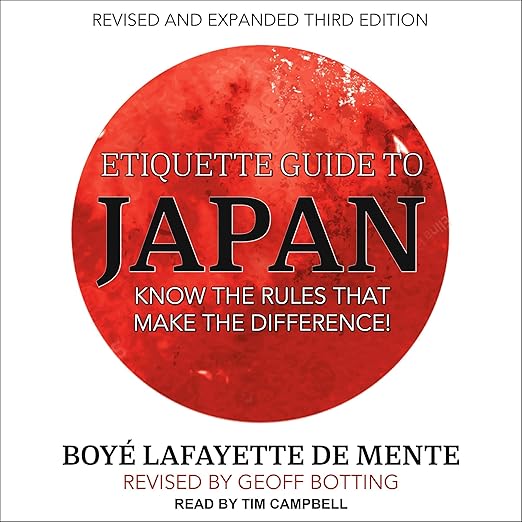
I was preparing for a research trip to Tokyo two years ago and found myself drowning in conflicting advice from travel blogs. One source said bowing at 15 degrees was adequate; another specified 30 for business meetings and 45 for sincere apologies. I eventually turned to Boye Lafayette De Mente’s Etiquette Guide to Japan, partly out of desperation and partly because someone whose Japan experience I respected mentioned it without prompting. I listened to the entire three-and-a-half hours during an overnight flight and arrived with considerably more confidence than I had boarded with.
De Mente was among the most prolific writers on Japanese business culture, and the Etiquette Guide reflects decades of direct engagement with the country rather than research conducted at a remove. Narrated by Tim Campbell for Tantor Media, the audiobook functions as both a preparation tool for first-time visitors and a reference refresh for those returning. The publisher released this version in 2019, but the cultural infrastructure De Mente describes, the deep roots of traditional etiquette that survive beneath Japan’s modern surface, is largely stable across editions.
The Logic Behind the Rules
What distinguishes this guide from simpler courtesy checklists is De Mente’s consistent effort to explain why Japanese etiquette operates the way it does. A reviewer who traveled to Japan specifically after listening to this noted that understanding the cultural logic made the correct behaviors easier to perform and more natural to sustain. That observation rings true. When you know that presenting a business card with two hands and a slight bow signals that the card represents the person, that putting it in your back pocket is literally sitting on someone, you do not forget the rule. You have internalized the reasoning.
De Mente covers an impressively wide range of situations: gift-giving protocols, table manners, appropriate behavior at shrines and temples, greetings, forms of address, and the specific challenges that arise in business negotiations with Japanese counterparts. The business etiquette sections are particularly thorough. A reviewer who read the book specifically for Toyota Production System context found value in De Mente’s ability to connect cultural etiquette to the underlying worldview that also produced lean manufacturing, a connection that is more illuminating than it might initially sound. Knowing why Japanese business culture values the forms it values changes the quality of your compliance with those forms.
What the Three-Hour Runtime Can and Cannot Do
At three hours and forty-two minutes, this audiobook is comprehensive without being exhaustive. The runtime means De Mente cannot drill into every possible scenario, and a reviewer rightly noted that it works best as a foundation supplemented by direct conversation from people who have spent real time in Japan. That is fair. The guide functions as a frame for understanding Japanese social and professional interaction rather than a substitute for immersive experience or more granular regional knowledge. What it does within its scope, it does well.
Tim Campbell’s narration is appropriate to the material. He reads with a quiet authority that suits instructional content, no theatrical interpretation, just clear, well-paced delivery. For a guide that listeners will frequently pause to absorb a point or revisit a section, the unshowy approach works in its favor. The content is the performance here, not the narrator’s range. Campbell’s pacing is deliberate without dragging, which is the right calibration for material that rewards attention rather than speed.
What Actual Visitors Report Back
The review record for this title is particularly useful because multiple listeners report back from actual Japan trips rather than assessing the guide in isolation. A reviewer who read it before visiting described noticing many of the things De Mente mentioned during the trip itself, a confirmation that the guide’s observations are current enough to be practical. Another described how knowing the polite gestures brought smiles from Japanese people she encountered, which is the outcome the guide is designed to produce. De Mente’s observation that while foreigners are generally forgiven for unintentional rudeness, knowing the correct forms earns a different quality of response, is a practical rather than merely aspirational claim. The field reports from actual travelers confirm it.
Who Gets the Most From This Listen
First-time travelers to Japan for business or tourism will find the most immediate value. Business travelers dealing with Japanese colleagues or clients will find the corporate etiquette sections especially worth close attention. Those already deeply familiar with Japanese culture may find the ground already covered, though De Mente’s explanatory approach occasionally surfaces context that even experienced travelers find clarifying. Available as a free audiobook on Audible, the barrier to entry is as low as it gets for a guide that has proven its practical value in actual travel situations.
One specific detail that De Mente returns to throughout the guide is the concept of the thoughtful traveler, the person who approaches Japan not just as a tourist consuming an experience but as someone genuinely interested in meeting its people on their own terms. That orientation is built into the guide’s structure: De Mente does not just tell you what to do, he tells you how to approach the entire encounter. For the right listener, that framing is as valuable as any specific piece of advice in the text.
The reviewer who used the book before a business trip and described interactions becoming smoother and more respectful as a result is describing the guide working exactly as De Mente intended. Etiquette is not about performance, it is about demonstrating genuine regard for the person you are engaging with, and De Mente understands that well enough to communicate it rather than merely listing the behaviors. For listeners preparing any kind of Japan engagement, that understanding is the most transferable thing this guide provides.
Frequently Asked Questions
Is the Etiquette Guide to Japan audiobook still accurate for modern travel?
De Mente focuses on Japan’s traditional etiquette roots, which remain culturally relevant despite modernization. The core business and social protocols he describes are still observed, though specifics around digital business cards and remote work have evolved since publication.
Does the audiobook cover tourist situations as well as business travel?
Yes, it covers both. While the business etiquette sections are particularly detailed, the guide also addresses temple and shrine behavior, dining, gift-giving, and general social interactions that apply to any visitor.
Is Tim Campbell’s narration easy to follow for attentive note-taking while listening?
Campbell’s measured, clear delivery works well for attentive listening and note-taking. The pacing is deliberate rather than rushed, making it practical to pause and absorb specific points as needed.
Is the Etiquette Guide to Japan a free audiobook on Audible?
Yes, it is currently listed at $0.00 on Audible. Members can access this free audiobook before any Japan trip without additional cost.