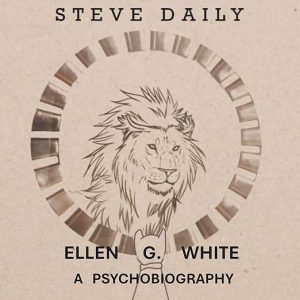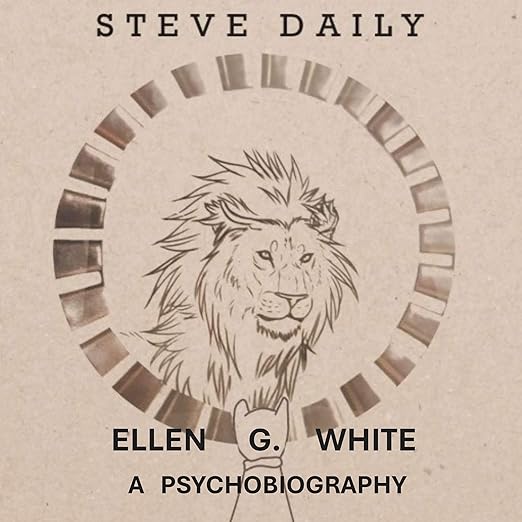
Five responses sit under this audiobook and not one of them could have heard it. The earliest went up in March 2021, the most recent in May 2025, and the recording itself was published in December 2025. What that leaves is a page where every word of listener feedback describes a printed book, attached to eleven hours and thirty-two minutes of Steve Daily building a case against the founding prophet of Seventh-day Adventism. Useful evidence, and none of it about the thing you would actually be buying.
No Subtitle Warns You This Is a Prosecution
Daily's subject is Ellen G. White, whose visions and writings shaped a denomination and are still treated by many of its members as prophetic. The description sets out the intent without softening anything: it promises highly documented material that Adventists in general, and the wider public, will not know, and states plainly that the most striking evidence raises major questions about the prophet's mental and moral health. Whatever else this is, it makes no pretense of being a neutral life.
The four-star response from March 2023 lands on the question the book leaves sitting in the room. Having listed the charges the critical literature makes against White, fraud, plagiarism, deception, that account asks whether God could have been desperate enough to use lies to build a church, and concludes that if the visions are reduced to the common sense of the day or to opinion dressed in prophetic language, the foundation crumbles. Daily supplies the documents. The theological reckoning is left to you.
Notice what the page title gives you: a name, and nothing else. No subtitle, no framing, no signal that this is a prosecution rather than a devotional biography. Browsing a biography list, it reads as the life of a devotional figure written for the faithful. Anyone who buys on the title alone is in for a jolt somewhere in the first hour, and the publisher credit, a mash of an imprint name and a copyright line with the author's name tacked on in lowercase, does nothing to clarify matters.
Crother Carries an Unrelenting Full Working Day
The strongest recommendation here belongs to a July 2023 five-star who arrived already read up. That account had worked through two earlier critical studies, Prophetess of Health and White Lie, and still finished this one dumbfounded by how much it added, reporting having read every single page including the end notes. Someone who has done the background reading and still found new ground is a far better guide to the value on offer than a general recommendation from a newcomer.
Daily's method is why the length stays bearable. The description names history and psychology as the primary disciplines, with theology and personal reflection sprinkled through, and that mixture keeps the argument moving between document and interpretation instead of stacking up citations. Eleven and a half hours of pure archival recitation would be punishing to sit through. A narrative organized around a psychological reading of one person, with the paperwork used as evidence rather than as the main event, holds attention far better in a format you cannot skim.
The subject carries the length as well. A woman whose pronouncements became doctrine for a denomination, and whose authority is still both defended and contested, is dramatic material by definition, and the question of how that authority was established and inherited has pull whether or not Daily's conclusions convince you. The polemical energy is unmistakable and, in audio, unrelenting: no page break, no footnote to duck into, no skimming past a passage you consider unfair. The argument simply advances for a full working day.
Citations Become Spoken Strings You Cannot Check
Here is the real audio question, and it arrives from the most committed supporter in the pool. A March 2021 five-star who was raised in the religion, stayed fifty years, then spent two decades researching its history praises this book for laying out most of the issues history has to offer and for being well referenced. Referencing is exactly what a recording cannot preserve. Citations turn into spoken strings you cannot scan, cross-check, or hold open beside a second source while you weigh them.
That matters more here than it would in most biographies. The authority of the whole enterprise rests on documentation, and anyone who wants to test a claim about a plagiarized passage or a disputed vision needs the note itself, not an author's name and a date read aloud at conversational speed. No supporting document is offered with the recording. Plan on buying the print edition too if you intend to argue with this material, or from it, and treat the recording as a first pass through the case.
Watch the framing as well. The copy has clearly been ported from a print blurb by mechanical substitution, so a sentence about a book turns into a sentence about an audiobook, and a claim about required reading has been rewritten into a claim about required listening. Small, but it points at something larger: nothing on this page was composed with a listener in mind. Nor was any of the visible feedback written by someone defending the subject, so the applause you can read is entirely self-selected.
No Recording Can Put the Endnotes in Your Hand
Current and former Adventists are the obvious audience, and the responses bear that out. A May 2025 five-star delivers the whole verdict in two lines: excellent research, and every Seventh-day Adventist should read it. Outside that circle, this suits anyone drawn to the history of religious movements and their founders, to the mechanics by which prophetic authority gets established, or to the broader question of how institutions handle evidence that embarrasses their own origins.
Give it a wide berth if what you want is a balanced biography. Daily is not attempting one, the page never claims one, and the five posted responses approve of the case rather than weighing it against a defense. Devotional listeners will find the handling of the visions painful rather than challenging. Researchers who need to verify as they go will find eleven and a half hours of unverifiable spoken citation more frustrating than useful, however much they agree with the conclusions.
Anyone who arrives with questions about White already formed, wanting them assembled in one place, gets a substantial and unusually candid piece of work here, and the recording puts the whole case into your ears across a couple of long sittings. Go in aware that the loudest voices on the page are describing a book with endnotes, and that no recording can put those in your hand.