Quick Take
- Performance: MacLeod Andrews is the credited voice for ten and a half hours, though the listing gives no way to confirm which of two different books the recording holds.
- What it covers: Wilderness survival, natural history and bushcraft, a mystery in a teacher's past.
- Feel: Outdoorsy, instructive, and quietly tense.
- Our call: Sort out which Echo you are buying before you spend a credit, because the listing does not.
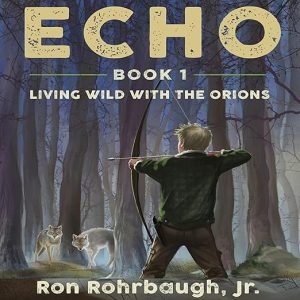
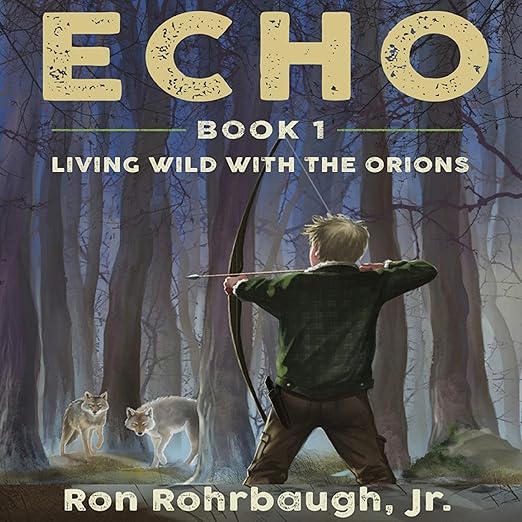
Two different books share this audiobook listing, and the page never acknowledges it. The credits name Pam Muñoz Ryan as author, MacLeod Andrews as narrator, Scholastic Audio Books as publisher, with a release of April 8, 2015 and a runtime of ten hours and thirty-one minutes. The description underneath belongs to something else entirely: a wilderness survival novel about a boy named Echo, written, it says, by a wildlife biologist. Sort out which one you are buying before you spend a credit, because this page will not do it for you.
The Credits Dissent From the Wilderness Novel
Start with what the description actually contains, since it is detailed and internally consistent. A rite of passage goes wrong. Echo ends up alone in the wilderness and badly injured along Young Woman's Creek, kept alive by a handmade hickory bow and by lessons from Luna Woapalanne, described as a part Native American woman who taught him bushcraft. He follows clues toward a mystery in her past while working to earn her trust and to become what the copy calls a Sure Enough Mountain Man. The stated pitch is wilderness survival, wildlife conservation and natural history delivered as story, and the copy is confident enough about the teaching to lead with it instead of with the peril.
The series field supports that version rather than the byline. It reads Living Wild with the Orions, which fits a wilderness sequence and fits nothing about the author credited above it. So does the review column: Olivia255 names Ron Rohrbaugh as the writer who integrates natural history and history lessons into the narrative, and every other response describes the same survival story. Five readers, one series title, one description, all pointing away from the name in the author field. The weight of evidence on this page sits with the wilderness novel, and only the credits dissent. Nothing here explains how two identities came to share a single record, and no correction has been posted anywhere here.
A second inconsistency sits inside the description itself. Its opening line announces that Echo was named Book of the Year in 2023 by Children's Book International and took top honors in adventure and realistic fiction, an award claim dated eight years after the April 2015 release stamped on this listing. The same sentence carries a stray quotation mark around Realistic Fiction with no opening pair. Small errors, but they suggest promotional copy pasted onto an older record, not written for it.
None of the Five Responses Describes Listening
None of the five written responses describes listening to anything. Crazy Cat reports a nine-year-old nephew who loves to read giving it a thumbs up. Olivia255 read it aloud to a five-year-old and a seven-year-old with both parents present, and reports the seven-year-old shouting for the next one at the end. Timothy P bought it as a gift. Two responses from Amazon Customer accounts discuss the writing and the knowledge behind it. On most listings that silence is unremarkable; here it matters, because it means nobody has confirmed which text the recording contains.
Olivia255 does the most useful work for a parent. That response flags hunting as a critical part of the story while judging it not too intense for the more squeamish members of the household, a detail parents need and the product copy leaves out entirely. The same review credits the book with teaching natural history and history without stopping the narrative, which is the harder half of what educational fiction promises and the half most of it fails.
One reviewer ranks it against the whole shelf, having read all the outdoor books with a couple of boys and placing this one near the top, definitely better than hatchet, as the response puts it, and packed with knowledge from someone who clearly knows the subject. Another calls it an updated story of a boy alone in the woods, which names the tradition precisely without pretending the book invented it. Between them you get an honest position: a familiar shape, executed by someone with real field knowledge.
Sample the Opening Minutes, Confirm the Sentence
Ten hours and thirty-one minutes is a long runtime for a middle-grade wilderness novel, and it belongs to whichever book the audio file actually holds. That is the practical problem here. A listener cannot tell from this page whether MacLeod Andrews recorded the survival story described in the copy or the book by the author named in the credits, and the two would be entirely different listening experiences. Anyone buying should sample the opening minutes first and confirm the first sentence matches the description.
An age range of eight to one hundred and eight sits in the description, a joke with a serious point buried inside it. The households on record ran younger than the floor: a five-year-old and a seven-year-old listening with parents, a nine-year-old reading alone. Read-aloud with an adult present clearly works below the stated age, and the hunting content Olivia255 mentions is the reason to be in the room, not the reason to wait.
Hunting aside, the star display needs the usual caution. The badge reads 4.7 while the vote counter beside it admits to two, and five written responses sit below that counter. A tally of two cannot produce a decimal like 4.7 under any rounding rule, and it plainly has not kept pace with the column underneath. Read the five responses and ignore the number they supposedly produced. Four sit at five stars and the fifth at four, a warmer and more useful summary than the badge manages.
Check the Byline Against the Description First
Families who want outdoor fiction that carries real content, and specifically households where an adult listens along. The natural history is the selling point according to every response on file, the survival sequences are the engine, and the read-aloud tradition around this kind of story clearly works for children younger than the stated floor. Listeners who grew up on boy-alone-in-the-woods novels will recognize the shape immediately and, on the evidence of the column, enjoy the update.
Check the byline against the description before buying, and treat that as the first step instead of a footnote. Anyone specifically seeking the book by the author named in the credits should confirm what the file contains, and anyone specifically seeking the wilderness story should do the same in the other direction. Once that is settled, the reviews on this page are warm, specific and unusually consistent about what the story delivers.
Questions Listeners Ask
Why does this audiobook listing seem to describe two different books?
Because it does. The credits name one author, narrator and publisher, while the description, the series field and all five written responses point to a wilderness survival novel that a reviewer attributes to Ron Rohrbaugh. Nothing on the page reconciles the two, so sampling the opening minutes is the only reliable check.
What age is this audiobook actually suited to?
The copy claims eight to one hundred and eight, which is a joke rather than guidance. Reported listeners include a five-year-old and a seven-year-old hearing it read aloud with parents, and a nine-year-old reading independently. Younger children clearly manage it with an adult present, largely because of the hunting material.
Why does the rating show 4.7 from only two votes?
It cannot, honestly. Two whole-star votes have no way of averaging to 4.7 under any rounding convention, and five written responses already sit beneath a counter that still says two. The badge has fallen out of step with the column, so the written comments are the more reliable guide.