The Short Version
- Performance: Matt Hicks sustains a large alien-economy cast across 42-plus hours with no prior track record to lean on, judged here on genre fit alone.
- What it covers: alien-contact commerce, rags-to-riches piloting, individual merit under pressure
- Feel: Adventurous and expansive
- Our call: A strong-value four-book bundle for space-opera binge listeners willing to push past a reportedly rocky opening stretch.
Aliens rip a hole above Earth and arrive not as conquerors but as merchants, hip-high beings with ugly squished faces and thick blue fur called the Iglax, and this omnibus audiobook opens by putting its broke, ambitious narrator through a pilot exam rather than a battlefield. Humanity, it turns out, bends over backwards to appease its new trading partners, offering cheap labor for rare metals and gems in exchange for technology that looks like magic, and the unnamed protagonist pawns what little he owns to study for the individual pilot tests that decide who gets a mining contract and who gets something rarer still.
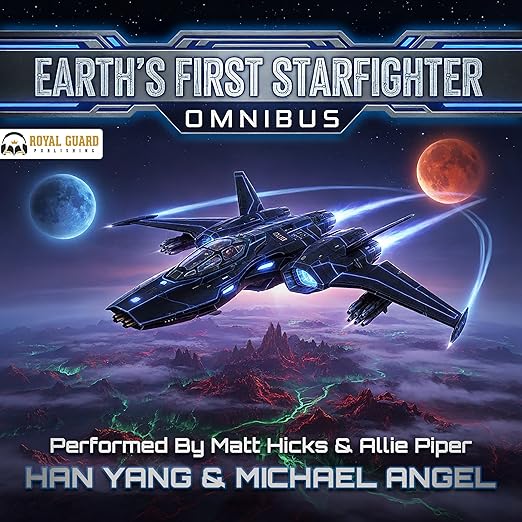
Written by Han Yang and narrated by Matt Hicks, this 42-hour-and-40-minute audiobook bundles all four volumes of the series and holds a 4.6 rating from 98 ratings.
The Verdict, Briefly
The Iglax economy is the book's real inventive engine: alien merchants who trade almost-magical technology for metals and gems, testing individual humans for mining and piloting contracts rather than simply conquering or enslaving the planet outright, as the narrator himself admits he half expected going in. Reviewer G Roelofs called this a well-written rags-to-riches space opera, a backwoods protagonist earning his way up through raw piloting skill, and that framing captures the book's real appeal better than the alien-invasion premise alone would suggest.
Because this listing bundles four full volumes into one 42-hour-and-40-minute purchase, the omnibus format itself is a major part of the value proposition, and it comes with a real caveat directly from the reviews: an anonymous reviewer covering the full bundle noted that the first few chapters of book one run confusing before the story and prose both visibly improve, to the point they found books two through four impossible to put down after that rocky start.
The book sits comfortably inside a recognizable subgenre, self-published military space opera built around individual merit and escalating stakes, a lane popular with readers of serialized web fiction who later find their favorite entries collected into exactly this kind of omnibus edition. Han Yang's specific contribution is the Iglax themselves: physically unthreatening, commercially ruthless, and genuinely strange in a way that keeps the early chapters from reading like a generic first-contact template.
The Iglax test humans individually rather than sorting the whole species into one collective role, and that meritocratic detail, do well on your pilot exam and a starfighter contract becomes possible regardless of where you started, is central to why the protagonist's specific rise reads as earned rather than simply lucky within the story's own internal logic.
What Makes Earth's First Starfighter Omnibus: Books 1-4 Worth Hearing
Buying all four volumes at once removes the usual wait between series entries and lets a genuinely long arc play out without interruption, which matters for military space opera readers who want sustained immersion rather than a single standalone adventure. The cost-per-hour value of a 42-hour-and-40-minute bundle is also simply higher than buying four separate audiobooks and narrator introductions along the way.
Matt Hicks has no extensive prior track record logged for this kind of alien-economy military science fiction specifically, so his performance here is worth assessing on genre fit rather than an established reputation: sustaining a large cast, an alien trading culture, and escalating piloting stakes across four full books in one continuous narration is a real test of stamina and consistency, one this listing's steady 4.6 rating across 98 ratings suggests he generally clears.
The physical specificity of the worldbuilding is worth calling out directly: the Iglax's odd, distinctly unthreatening appearance is a concrete, almost comedic image that Han Yang commits to fully rather than softening into something more conventionally alien-looking, and that willingness to commit to a strange visual suggests a writer trusting his own instincts rather than reaching for familiar genre shorthand.
The listing's own framing, four volumes for a single offering, is a genuinely useful signal for anyone new to the series trying to decide where to start. Rather than committing to book one alone and hoping for the best, a listener makes one purchase decision and gets the full arc Han Yang built, removing the usual risk of falling for a series opener only to find later volumes sold separately at a premium.
Points to Consider
This listing carries relatively thin publisher detail beyond the opening premise, so much of what a listener can verify going in comes from the synopsis's first-contact setup and the attached reviews rather than a fuller plot summary. Reviewer Boz noted a few stretches that drag across the full runtime, which is a realistic risk in any 42-plus-hour commitment covering four full novels back to back.
Before committing to this much runtime, it is worth knowing that the anonymous full-bundle reviewer specifically flagged book one's opening chapters as confusing, a rocky start that resolves once the plot and prose settle into their rhythm by book two. Listeners who bounce off a slow or unclear opening should push through those early chapters rather than judging the whole omnibus by them.
Run the simple math before buying: 42 hours and 40 minutes across four full novels for the price of one purchase is a genuinely strong cost-per-hour value compared to buying each volume separately, assuming the story holds a listener's attention across the full length, which the attached reviews suggest it generally does after the opening chapters settle in.
The title itself undersells what is actually inside: Earth's First Starfighter sounds like a generic single-pilot action premise, when the finished four-book bundle delivers a considerably deeper alien-economy and pilot-culture system than a title this plain would suggest going in.
Should You Listen to Earth's First Starfighter Omnibus: Books 1-4?
Military and space-opera binge readers who want one purchase covering a full arc, fans of alien-economy worldbuilding that treats first contact as commerce rather than combat, and listeners drawn to underdog-pilot stories with real stakes attached to individual skill will find plenty to sustain a 42-hour-and-40-minute investment here.
Given the scale of a 42-hour-and-40-minute commitment across four full novels, this also suits listeners specifically looking for a single long-haul project, something to return to across many separate sessions over weeks rather than a quick single listen, since the format rewards that kind of sustained, repeat engagement.
Listeners burned before by a strong series opener followed by disappointing later volumes have real reassurance here, since the anonymous full-bundle reviewer specifically confirmed that books two through four held their attention more, not less, than the opening installment, a genuinely reassuring signal for anyone hesitant about committing to this much runtime upfront.
Readers who prefer a tightly plotted single novel over a sprawling four-book commitment, or who are put off by reports of a confusing opening stretch even when it resolves later, may want to sample the first hour of book one on its own before buying the full omnibus outright.
Does this audiobook include all four Earth's First Starfighter books or just the first one?
All four. This is a single omnibus purchase covering the complete series through book four.
Is the Earth's First Starfighter audiobook confusing to start?
One reviewer flagged the opening chapters of book one as confusing before the story and prose noticeably improve from book two onward.
How long is the Earth's First Starfighter Omnibus audiobook?
42 hours and 40 minutes across all four volumes, a substantial single-purchase commitment.
Does this audiobook work as a starting point for military space opera fans?
Yes, particularly for listeners who want one purchase covering a full story arc rather than waiting between separately released volumes.