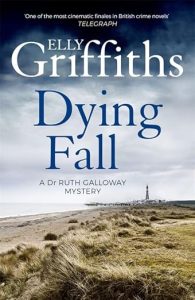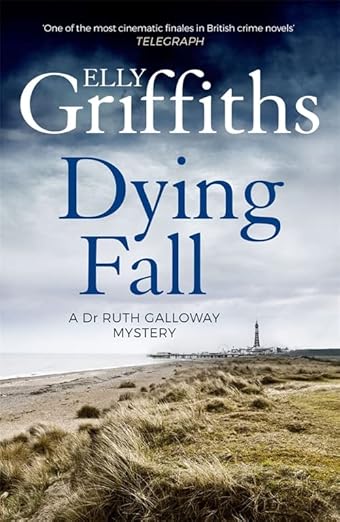
Elly Griffiths has built the Dr Ruth Galloway series into one of the more durably satisfying entries in British forensic crime fiction, and Dying Fall is its fifth installment, narrated throughout by Clare Corbett. The audiobook runs for ten hours and twenty-six minutes, a length that reflects Griffiths' commitment to giving both the archaeological investigation and the domestic life of her protagonist adequate space. Ruth Galloway is a forensic archaeologist at the University of North Norfolk, and the cases that come to her tend to involve the deep past surfacing uncomfortably into the present. Bones that should have stayed buried. Histories that communities would prefer to leave unexamined. Griffiths has found in that premise a reliably productive source of tension across five books, and she continues to find new ways to work it here.
Book Five Confirms a 4.4-Rated Formula
By the fifth book in the series, Griffiths has established a clear and confident approach: the archaeological investigation provides the mystery's intellectual core, the character relationships carry the emotional weight, and the Norfolk landscape functions as something between a backdrop and a co-protagonist. Dying Fall continues that pattern with the assurance of a writer who knows exactly what her series is and what her readers come back for. The 4.4 rating across more than a thousand listeners reflects both the loyalty of the established readership and the minority of new listeners who occasionally find the series' pacing deliberately measured rather than propulsive. Both responses are fair assessments of the same consistent quality.
Ruth the Scientist, and Nelson Without Resolution
Ruth as a character remains one of crime fiction's more genuinely interior protagonists. Griffiths does not write her as a detective in the conventional sense but as a scientist who sees things other people miss because her training makes her read evidence differently. That distinctive perspective on investigation is what gives the Ruth Galloway books their particular texture: the mysteries resolve through intellectual process rather than through intuition or confrontation, and the satisfaction of the resolution is proportionate to the care Griffiths takes in building the evidential case that leads to it.
The relationship with Detective Chief Inspector Harry Nelson, which has been developing across the series with the kind of frustrated complexity that keeps long-running series readers invested, continues here without easy resolution. This is a feature rather than a flaw. Griffiths understands that her readers return partly for the characters' ongoing lives, not just for plot resolution, and she manages the Nelson thread with the patience that long-form character writing requires. Readers who come to book five looking for definitive answers to the series' central personal question have been given no particular reason to expect them, and the book does not manufacture them.
Corbett Times Ruth's Wit Without Self-Pity
Clare Corbett's investment in this series across multiple books is evident in how she handles Ruth. This is not a narrator doing a competent job with unfamiliar material. This is a narrator who has lived inside this character long enough to know which sentences to slow down and which moments to let land without added emphasis. Ruth's interior observations, which Griffiths writes with a dry precision that requires the right timing to register correctly, come through cleanly in Corbett's delivery. The wry self-deprecation that characterizes Ruth's internal voice does not tip into self-pity under Corbett's reading, which is the precise balance the character needs and the balance a less familiar narrator would likely fail to find.
At just over ten hours, this is the kind of audiobook that rewards uninterrupted listening sessions. Griffiths' prose is detailed and atmospheric, and the mystery's development accumulates meaning through specific details that are easier to track in a single extended sitting than across fragmented short sessions. The audiobook format, by imposing a natural pace and continuity, actually serves the book's detective logic: listeners cannot easily skip back to check a detail they half-registered, which gives Griffiths' careful placement of evidence a forward momentum that print reading does not always preserve.
Not an Entry Point Without the First Four Books
This is emphatically not an entry point to the Dr Ruth Galloway series. The character relationships that carry significant emotional weight in Dying Fall depend entirely on what has accumulated across four previous books. Listeners who begin here will follow the mystery competently but will miss the emotional architecture that makes the series worth investing in. Beginning with The Crossing Places is not a suggestion but a requirement for getting full value from this audiobook. The mystery is self-contained; the characters are not.
The series' deliberate pacing occasionally frustrates listeners who come to crime fiction primarily for plot velocity. Griffiths' books take their time with Ruth's observations about her landscape, her academic work, and her complicated inner life. These are not digressions from the story but constitutive elements of it, and listeners who experience that as slowness are looking for something different from what Griffiths is offering. Five books in, readers who have stayed with the series have already made their accommodation with its pace, and Dying Fall does not require them to make any new ones.
Kate Atkinson Fans Belong Here, Eventually
Readers who have been listening to the Ruth Galloway series from the beginning with Clare Corbett as their guide should move to this audiobook directly after finishing the fourth installment. Crime fiction listeners who value character depth and atmospheric setting over plot mechanics will find Griffiths rewards patience in the way that authors like Kate Atkinson or Ann Cleeves do. Listeners drawn to fiction where archaeological and historical material provides the mystery's intellectual framework will find this series their ideal address in the genre. Anyone new to the series should start at book one: the investment in the beginning pays dividends at book five that are not available to newcomers who join at this point.
In Brief
- Narrator: Clare Corbett has narrated the Ruth Galloway series consistently, and by book five her embodiment of the forensic archaeologist's blend of intellectual confidence and social awkwardness is so settled that the character and the voice feel genuinely inseparable.
- Subjects: Archaeological excavation and the violence buried in deep history, amateur detection meeting professional expertise, personal life complicated by professional entanglement
- Tone: Quietly eerie and procedurally satisfying, with Griffiths' characteristic mix of tension and wry domestic observation
- Bottom line: Listeners who have followed Clare Corbett through the first four Ruth Galloway audiobooks will find this fifth installment rewards their investment in both the character and the narrator.
Can I start the Dr Ruth Galloway audiobook series with Dying Fall?
This is not recommended. Dying Fall is the fifth book in a series where character relationships accumulate across installments. The mystery is self-contained, but much of the emotional weight depends on knowledge built from the first four books. Begin with The Crossing Places.
Has Clare Corbett narrated all the Ruth Galloway audiobooks?
Corbett has been the narrator throughout the series, which makes a significant difference to the listening experience. Her settled familiarity with Ruth, built across multiple audiobooks, means the narration has a consistency and depth that is impossible to achieve with a single book.
Is this audiobook suitable for listeners who are not familiar with archaeological content?
Yes. Griffiths incorporates archaeological material through Ruth's perspective, which means it is explained as Ruth would explain it to a non-specialist. The professional detail adds authenticity without requiring prior knowledge of the field from the listener.
How does Dying Fall compare to earlier books in the audiobook series in terms of quality?
By the fifth book Griffiths has full command of her series' strengths. The landscape, character ensemble, and tension between Ruth's professional certainty and personal uncertainty are all well-established. Listeners who have enjoyed the earlier audiobooks generally find the series maintains quality across its run without significant decline.