I keep a short list of genres where I know my instincts as a literary critic are least reliable, and LitRPG is near the top of it. The genre has a relationship with its readers that is intimate and specific in ways that are hard to understand from the outside, built around particular pleasures, particular satisfactions, particular tolerances for the kind of structural repetition that the format demands. I try to approach it accordingly: not asking whether a LitRPG novel meets the standards of literary fiction, but whether it delivers what its genre promises to people who love what it promises.
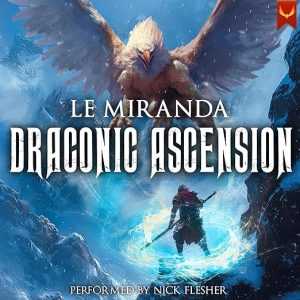
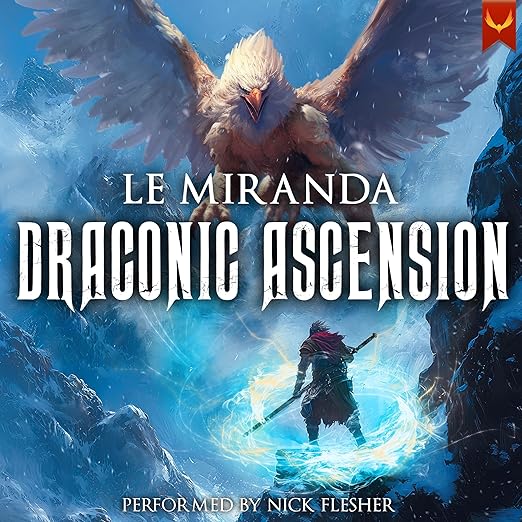
Draconic Ascension, the first book in L.E. Miranda's series, makes a case for itself that I found genuinely interesting even coming in with my usual skepticism about the format intact.
Our Take on Draconic Ascension
The premise is a clean version of a now-established LitRPG subgenre: an apocalyptic System descends on Earth, pulling survivors into a Tutorial Zone that is much less tutorial-like than advertised. Michael, the protagonist, watches this happen and then has to survive it. What distinguishes Draconic Ascension from the pile of similar premises is the bloodline mechanic. A notification appears in Michael's field of vision: a single drop of a different bloodline has been identified, and his race has been changed from Human (F) to Unawakened Human (F). The F in parentheses is the System's ranking, which means he is starting as low as it is possible to start. What he contains, however, might change everything.
Reviewer Brenda and Scott Widener offer the most useful structural summary of what the book actually does with this setup: protagonist focus, multiple POV glimpses at other characters and groups, village-building, the emergence of heroes and villains, and then the Territory wars that escalate everything in the final third. It is a larger canvas than the synopsis suggests. Michael is the narrative center, but Miranda is clearly building a world rather than just a character arc.
Why Listen to Draconic Ascension
LitRPG audiobooks have a particular narration challenge that literary fiction does not. The format includes, frequently, system notifications read aloud. Status updates. Skill unlocks. Race change notifications formatted like in-game text. A narrator who treats these as interruptions will kill the flow of a long listen. A narrator who inhabits them as part of the world's texture keeps the genre logic intact.
Nick Flesher is in the second category. He differentiates the notification text from the narrative prose clearly without making the transition feel abrupt. Over seventeen hours and thirty-six minutes, that consistency matters. The reviewer Samuel Strode keeps his praise brief but pointed: he enjoyed it and appreciated having a Tutorial as an orientation device. The reviewer Kindle Customer notes that the characters are unique and the premise is both familiar and distinctly itself simultaneously, which is the highest compliment you can pay a genre book in a crowded subgenre.
What to Watch For in Draconic Ascension
The reviewer Bryce calls the book bland and the main character boring, with a weak supporting cast. That is a minority position among the reviews I read, but it is not an incomprehensible one. Michael is a survivalist protagonist rather than a charismatic one. His arc in this first book is about adaptation and discovery, not about performing a fully formed personality. For readers who need an immediately compelling central character, this will feel thin in places.
The bloodline mystery, which is the book's most interesting structural element, is developed slowly. Miranda is seeding a larger series, and some of what is planted in this first volume is clearly intended to pay off later. Listeners who prefer narrative momentum to enjoy the investment in setup they will eventually be repaid for may find the pacing patient to a fault in its middle sections.
The Right Listener for Draconic Ascension
Brenda and Scott Widener call this a good entry to LitRPG, and I think that is the right framing for what it accomplishes. It does not reinvent the genre. It does not need to. What it does is execute the LitRPG apocalypse framework with enough specificity, the bloodline mechanic, the multi-POV canvas, the Territory wars escalation, to feel like a genuine contribution rather than a template fulfillment.
For established fans of The Primal Hunter, 1% Lifesteal, or Hell Difficulty Tutorial, which the publisher cites directly as comparable titles, this will feel like comfortable territory with a fresh hook. For listeners who have never tried LitRPG and are wondering whether to start, this is a reasonable first step. The reviewer Zack Turner, who called it amazing, and the reviewer Bryce, who called it meh, are both telling the truth about their experience. The distance between those two responses is the genre preference gap, not a question of whether Miranda has done her job.
In Brief
- Narrator: Nick Flesher handles the system-heavy LitRPG format with clean energy, making seventeen-plus hours of apocalyptic progression feel propulsive rather than repetitive
- Subjects: bloodline mystery and identity, survival under impossible odds, found community in crisis
- Tone: Action-forward and tense, with world-system discovery as its primary pleasure
- Bottom line: A solid entry point to LitRPG apocalypse fiction with a bloodline hook that distinguishes it from the genre's more mechanical offerings, though it won't convert skeptics of the format.
Common Questions
Do I need to know what LitRPG is to enjoy Draconic Ascension, or is it accessible to genre newcomers?
Reviewer Brenda and Scott Widener describe it as a good entry to LitRPG, which suggests it is accessible to new readers. The Tutorial Zone framing in the narrative itself functions as an orientation device for newcomers as well as for characters. That said, listeners who find game-system mechanics uninteresting will not discover a new appreciation for them here.
How much of the bloodline mystery is resolved in this first book?
The bloodline hook is established and developed through Michael's progression, but as a series opener, Draconic Ascension seeds more than it resolves. The System notification that changes Michael's race from Human to Unawakened Human is the beginning of an arc that Miranda is clearly planning to unfold across multiple volumes.
At seventeen and a half hours, is this audiobook too long for a single-volume LitRPG entry?
For the genre, seventeen hours is not unusual. The length accommodates the multi-POV structure, the world-building, and the escalating Territory wars in the final third. Listeners who are already fans of lengthy LitRPG titles will find the pacing reasonable. Those new to the format may want to sample the first few hours before committing.
The negative review calls the main character bland. Is Michael a reactive protagonist who just reacts to System notifications?
Michael is primarily an adaptive protagonist in this first book, discovering his bloodline and learning to survive, rather than a fully formed charismatic hero. His personality develops through action rather than exposition. Listeners who need immediate character investment may find him thin early on; those who prefer watching a protagonist grow into themselves will find the slow-burn approach satisfying.