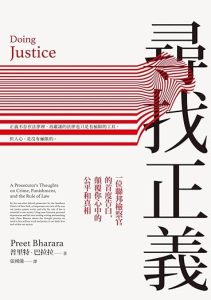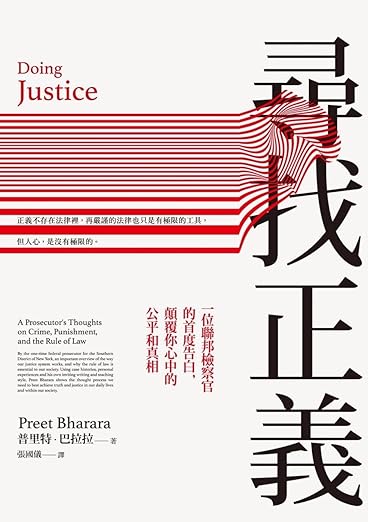
Preet Bharara served as United States Attorney for the Southern District of New York, one of the most consequential federal prosecution offices in the country, before his firing in 2017 became a flashpoint in debates about prosecutorial independence and the rule of law. Doing Justice, which he narrates himself in this audiobook across ten hours and thirty-two minutes, is his attempt to use that career as a lens for examining how justice systems work, where they fail, and why their integrity is not a procedural abstraction but a daily practical matter affecting every institution that depends on rational, fact-based decision-making. The book arrived as a New York Times bestseller, and Bharara's self-narration makes the case that this material specifically needed his voice rather than a professional performer's version of it.
A Closer Look at Doing Justice
Bharara organizes the audiobook around four stages that structure any serious legal proceeding: gathering, deciding, charging, and judging. That framework gives the material an analytical shape more rigorous than memoir, though he draws extensively on specific cases from his career to illustrate each stage. The case selection is careful: Bharara chooses examples designed to illuminate principles rather than to celebrate personal victories, which is a restraint not every prosecutor-turned-author manages. He is candid about failures alongside successes, and the failures are often more instructive. His central argument is that the justice system's credibility depends not on any single outcome but on the consistency and integrity of the process, and that the moment you subordinate process to result, even in pursuit of a result that seems obviously correct, you have damaged something very difficult to repair.
That argument is made with particular force in the sections on charging decisions, where Bharara explores the discretion that federal prosecutors exercise and the ethical weight that discretion carries. The difference between what you can charge someone with and what you should charge someone with is not always obvious, and the book's most intellectually honest passages are the ones where Bharara acknowledges that he was not always certain he made the right call. That admission of uncertainty from someone who spent a career making decisions under time pressure, with incomplete information, about matters of significant consequence, gives the audiobook a moral texture that distinguishes it from simpler prosecutorial memoirs that present every decision as obviously correct in retrospect.
What Preet Bharara Gets Right
Bharara's self-narration is the audiobook's most distinctive feature. He has been a public speaker throughout his career, and the transition to audio narrator is natural; he knows how to sustain an argument across time without losing the listener's attention. His delivery has the measured pace of someone accustomed to courtroom presentation, which means the audiobook rewards attentive engagement rather than background listening. The 4.8 rating across nearly 2,700 reviews is unusually high for a legal nonfiction title and reflects an audience that found his argument genuinely persuasive rather than predictable.
The self-narration also allows moments of irony and understatement in his writing to land exactly as he intends them. A professional narrator reading these passages might smooth them into a more neutral delivery; Bharara's own voice preserves the specific calibration of each sentence. His podcast listeners and public-radio followers will recognize the register immediately: thoughtful, slightly wry, fundamentally serious about the questions at stake. For a book explicitly about the weight of institutional responsibility, having the narrator embody that weight through his own professional history rather than simulate it through performance makes a material difference in how the argument lands.
Where Preet Bharara Loses Some Ground
The audiobook was written and published in 2019, in the immediate aftermath of a period of intense public debate about prosecutorial independence and the integrity of federal law enforcement. Bharara does not avoid the political context entirely, though he is deliberate about keeping his argument at the level of institutional principle rather than partisan advocacy. Listeners hoping for a direct account of his firing or a sustained prosecutorial case against specific political figures will find the book more philosophically restrained than they might expect. That restraint is itself an argument, and the audiobook is more interesting for making it implicitly rather than explicitly. The section on judging is the most philosophically ambitious and also the most demanding; Bharara engages seriously with how personal values interact with professional obligation in ways that complicate easy answers and resist the resolution that legal drama typically provides.
Who Should Pick Up Doing Justice
Listeners interested in how the American justice system actually functions at the prosecutorial level, rather than how it is presented in courtroom drama, will find this audiobook illuminating. Bharara's case histories provide access to a professional world that is rarely described with this combination of specificity and intellectual honesty. Law students and practicing attorneys will encounter familiar territory rendered with an insider's authority. General readers who followed Bharara's public career through his podcast or media appearances will find the audiobook extends and deepens the arguments he has made in shorter form. Those who prefer their political nonfiction more polemical than analytical may find his deliberate restraint frustrating; the audiobook rewards listeners willing to sit with moral complexity rather than those seeking clear resolutions or unambiguous villains. The ten-hour runtime gives each of the four sections sufficient depth that the architecture of Bharara's argument is fully legible by the end. The audiobook rewards listeners who come prepared to follow a sustained analytical framework rather than a narrative one, and who can appreciate the value of restraint as its own form of argument about institutional integrity and the long-term health of democratic norms.
How does Preet Bharara's self-narration change the audiobook experience compared to a professional narrator?
Significantly. His prosecutorial authority gives the legal arguments a weight and directness that a more neutral narrator might not achieve. His delivery of irony and understatement is also more precise because he controls how his own writing is meant to be heard, drawing on a career of public argument to calibrate each sentence.
Is this audiobook accessible to listeners without legal background?
Yes. Bharara explains legal concepts through specific narratives rather than technical terminology. The book is designed for a general educated audience and doesn't assume prior knowledge of federal prosecution or criminal law procedure.
At over ten hours, does this audiobook feel complete or does it leave important threads unaddressed?
It feels complete within its stated scope. Bharara addresses the four stages of legal proceeding he has identified, and the runtime gives each section sufficient depth. Listeners expecting a full career memoir will want to supplement with his podcast; the audiobook is more analytical framework than career retrospective.