In Brief
- Voice: Kevin Wagner keeps the tone encouraging and age-appropriate without being condescending, with a clear, friendly register that young listeners will find easy to follow through the 22-chapter structure.
- Big ideas: Positive reinforcement as a life skill, the responsibility of caring for an animal, turning training into play through gamification
- Atmosphere: Upbeat and instructional, with enough structure to hold a child's attention across nearly three and a half hours
- Worth it?: A well-structured audiobook guide that gives kids an actual framework for training their dog, not just enthusiasm, backed by an accompanying PDF and video links.
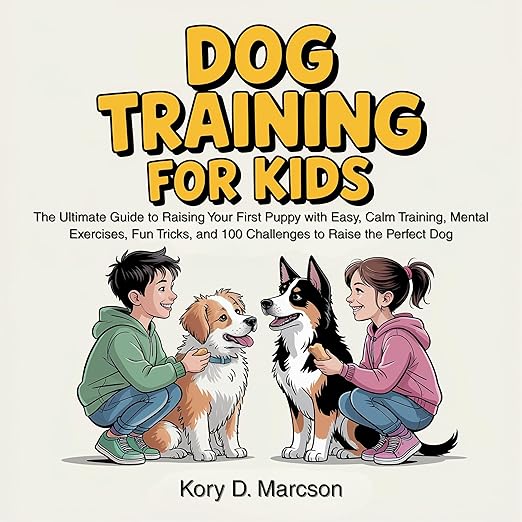
Kevin Wagner narrates Kory D. Marcson's Dog Training for Kids, an audiobook that takes a genuinely novel approach to the young-listener guide genre by refusing to treat its audience as passive recipients of advice. The 22-chapter structure Marcson has built is explicitly gamified through the 100 Challenges System, a checklist-based framework that turns each training milestone into a mission rather than a chore, and Wagner's narration captures the energetic, respectful tone that makes the approach credible rather than patronizing. At three hours and twenty-six minutes, this audiobook is pitched at exactly the right length for a child who has a new puppy and wants to do something about it today rather than someday.
Learn the Dog's Perspective Before Any Command
What distinguishes this guide from comparable children's dog books is the emphasis on understanding the dog's perspective before beginning any training. Marcson opens with dog body language, a choice that reframes the child's role from commander to communicator before a single command is introduced. The Super Trainer philosophy built around this approach, positive reinforcement and kindness as the only tools, is not just ethically sound; it is developmentally appropriate for young trainers who lack the physical and psychological leverage that some adult training methods assume. Wagner narrates the body language sections with particular clarity, which matters here because this is information young listeners need to visualize accurately to apply correctly during actual sessions with their dog. The accompanying PDF, which includes the visual illustrations referenced in the synopsis, is an important complement to the audio; parents should be aware that the full educational value of the audiobook is realized alongside that download rather than through the audio alone. The Brain Games and DIY puzzle projects mentioned in the synopsis add a creative dimension that extends the audiobook's practical reach well beyond simple obedience training, suggesting Marcson is interested in developing the entire relationship between a child and their dog rather than just producing a well-behaved animal. The 100 Challenges System is the guide's most distinctive structural feature: each challenge functions like a level in a game, building the child's confidence and sense of responsibility incrementally rather than front-loading expectations. Wagner delivers this gamified material with the right energy, making the challenge completions feel like real achievements rather than arbitrary checkboxes. Parents supervising younger children through the audiobook should plan to listen alongside and reinforce the patience sections, which address frustration honestly but require adult support when a seven-year-old's puppy simply will not cooperate. The 5.0 rating across twenty-five reviews is unusually strong for a practical guide in this category and reflects the combined effect of Wagner's accessible narration and Marcson's structured, evidence-based approach to building real skills in young handlers.
Pause and Replay Wagner's Narration Mid-Session
The audiobook format is a surprisingly strong fit for a training guide aimed at children. Wagner's narration can be paused at any point, replayed during an actual training session, and listened to away from the dog before a training attempt, giving young handlers a chance to absorb the instruction before applying it in the moment. The 22-chapter progression from understanding dogs to advanced tricks is well-paced for audio: each chapter builds on the previous one without overwhelming the listener with information before the earlier lessons have had time to settle into practice. The video links referenced in the PDF add a visual demonstration layer for those who want it without making the audio experience incomplete for those who prefer to rely on Wagner's verbal instruction alone. This flexibility for different learning styles and different household setups makes the collection practical across a wider range of family contexts than a video-only or print-only guide would achieve.
The High Five Trick Teaches a Relationship
The leash-walking and jumping sections are where many young dog owners struggle most, and Marcson addresses both with specific step-by-step guidance rather than general principles. These are the chapters worth replaying during actual training sessions rather than treating as one-time listening. The safety rules module, which comes early in the structure, is important not just for the dog's benefit but for children who may not have considered that training requires consistent behavior from the handler as well as the animal. The High Five trick sequence, used as a demonstration example in the synopsis, illustrates Marcson's approach well: the focus is on showing the child exactly how to position themselves and communicate through movement, not just on the verbal command. The difference between a guide that teaches tricks and one that teaches a relationship is what this book is aiming for, and Wagner's narration consistently sustains that distinction throughout the chapters.
Gentleness Is a Deliberate Design Choice Here
This audiobook is aimed at children aged seven to twelve who have a dog, are getting a new dog, or want to improve their relationship with a family pet. The positive reinforcement framework makes it appropriate for all ages within that range, and the gamification makes it motivating for younger listeners who need external structure to sustain engagement. Parents should plan to access the accompanying PDF alongside the audio, as the visual illustrations are a meaningful part of the learning design. Families with older dogs will find the training principles apply beyond puppyhood, though the framing is clearly written with a new puppy in mind. Adults looking for a comprehensive adult dog training resource should seek one of the professional training guides; this one is specifically calibrated for young hands and developing patience, and its gentleness is a deliberate feature of the design.
Good to Know
Does the Dog Training for Kids audiobook include the PDF companion with illustrations, and is it accessible through the audiobook platform?
Yes, the accompanying PDF is included with the purchase and accessible through your audiobook library alongside the audio. The illustrations are referenced throughout the narration as visual supplements, so downloading the PDF before listening is recommended.
Is this audiobook suitable for children training older dogs, or is it specifically designed for puppies?
The guide is framed primarily around new puppy ownership, but the positive reinforcement principles and the body language fundamentals apply to dogs of any age. Families with older dogs who have behavioral issues can use the framework effectively.
How does the audiobook format work for a practical skills guide like dog training, where hands-on demonstration would normally be expected?
Kevin Wagner's narration is designed to be used both before and during training sessions. The video links in the accompanying PDF provide the visual demonstration component the audio cannot, and the chapter structure allows young trainers to absorb one skill at a time before attempting it with their dog.