Quick Take
- Subjects: Animal locomotion, science curiosity, early childhood discovery
- Tone: Playful and gentle
- Bottom line: A four-minute Animals All Around audiobook that uses the delightful absurdity of its title question to walk young children through the surprising variety of ways animals move through the world.
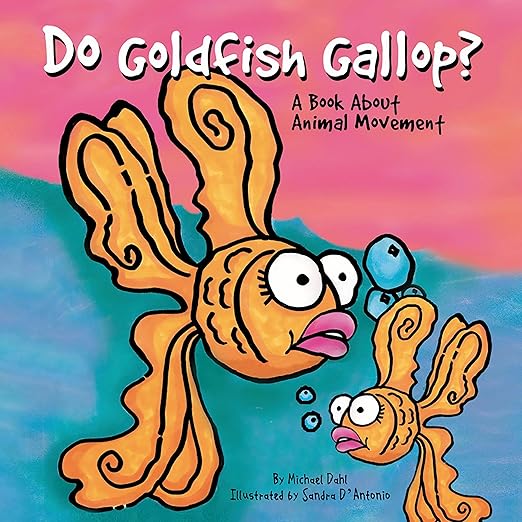
Do Goldfish Gallop? by Michael Dahl, part of the Animals All Around series, presents one of the more winning conceits in early-childhood science audio: frame the central question as the kind of absurd curiosity a four-year-old would actually ask, then spend four focused minutes answering it with genuine scientific content. This audiobook describes how different animals get from one place to another, which sounds like a modest premise until you consider how many ways that question opens up: fins, wings, slithering, hopping, galloping, gliding, burrowing. The narrator credit for this production is anonymous, which is a genuine limitation of the audio experience worth acknowledging in the prose, since young children respond strongly to performer personality in read-aloud formats and knowing the voice behind the content helps listeners evaluate the quality of the delivery.
The Animals All Around series has built its appeal on titles that begin with exactly this kind of question: Do frogs have fur? Do insects talk? Do snakes have legs? The question format serves both as a comprehension hook and as a model for scientific thinking, training young listeners to ask precise questions about the natural world. Do Goldfish Gallop? uses the locomotion focus to range across multiple animal types, which means a child listening through the four-minute runtime encounters aquatic, aerial, and terrestrial animals compared against each other. That comparative structure is what distinguishes good early science content from mere fact recitation: it shows that understanding one animal requires understanding others, that zoology is fundamentally a relational discipline even at the introductory level where these titles operate.
The anonymous narration is a limitation rather than a fatal flaw. Reviewer Anoushig Design notes that kids get a kick out of the animals and finds it very funny, which suggests the content itself is generating engagement rather than the vocal performance. At four minutes, the narrator's primary task is pacing and clarity rather than sustained character performance, so the anonymity matters less than it would in a longer production. Parents evaluating this audiobook should treat the narrator as a delivery mechanism for Dahl's writing rather than as a co-creator of the experience. The humor in the material comes from the title's inherent absurdity and from the contrast between the question's premise and the real answers the audiobook provides about how fish actually move.
Morning Routines Get a Brief Science Listen
Dahl's Animals All Around series fills a specific slot in the early-childhood audio library: the brief, high-engagement science listen that can anchor a morning routine, a car seat moment, or a short-attention-span reading session. At four minutes, this audiobook is not competing for the same parental investment as a chapter audiobook or a full-length story production. It is designed to be replayed, to generate the kind of repetitive engagement that young children use to consolidate new vocabulary and concepts. The locomotion question is scientifically concrete enough to produce real learning: children will understand that different animals move in fundamentally different ways adapted to their environments, a foundational concept in zoology. That learning is presented through the humor of the title's absurd premise, which is the pedagogically correct approach for this age range.
The series context matters for parents building an audio library. Each Animals All Around title focuses on a distinct biological question, which means the collection as a whole provides broad early science coverage through individual focused listens. Do Goldfish Gallop? works as an entry point for the series or as a standalone addition to an existing collection. Children who respond enthusiastically to this title are good candidates for other series entries that approach biological variety through similarly focused questions, building a cumulative early science foundation through brief repeated encounters with individual topics rather than through one extended treatment.
Funny Question, Real Lesson in Locomotion
Young listeners will likely respond most to the title question itself as a recurring touchstone: the answer to whether goldfish gallop is funny and concrete, and Dahl uses that humor to create a memorable contrast with the actual locomotion methods fish use. The structured comparison between animals grounds the learning in a clear framework that children can apply outside the audiobook. At this age level, the distinction between swimming, flying, hopping, and crawling is genuinely new information that children can observe and test in their environment, making the audiobook a starting point for real-world attention to how the animals around them actually move through space. That transfer from audio to observation is the mark of effective early childhood science content.
The four-minute format means there is no narrative arc and no character development. This is informational content in picture-book audio format, and parents should approach it as such. The entertainment value comes from Dahl's question-driven writing and the inherent appeal of animals rather than from story structure. Children who enjoy it will typically want to hear it more than once, which is the reliable indicator of whether a very short educational audiobook is doing its job. A production that generates a request for replay within the same listening session has succeeded on its own terms.
Emerging Animal Fans, Ages 3 to 6
Children aged 3 to 6 are the natural audience for this audiobook, particularly those with an emerging interest in animals and the natural world. Parents looking for short-burst science audio that fits into brief listening windows will find this series a strong option. Kindergarten and pre-K educators building listening library rotations will find the Animals All Around format well-suited to classroom use, where the brief runtime allows multiple listens within a single session. Older children have generally outpaced the content level, and the four-minute runtime is insufficient for sustained engagement for anyone beyond early elementary age.
Frequently Asked Questions
How much science content does this audiobook actually cover in four minutes?
It covers locomotion across multiple animal types, comparing aquatic, aerial, and terrestrial movement. The content is genuinely educational at the early childhood level, not merely decorative.
Is the anonymous narrator a problem for young listeners in this audiobook?
At four minutes, the narrator's primary role is clear delivery rather than character performance. The content and question-format structure drive engagement more than vocal personality does at this length.