
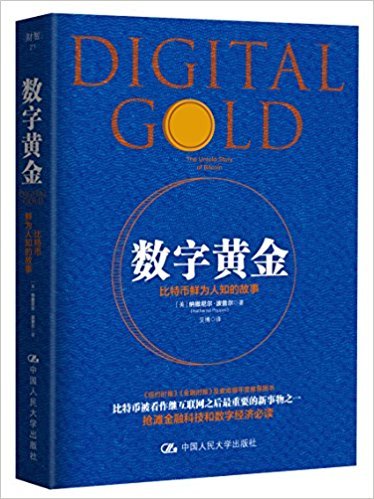
Nathaniel Popper's Digital Gold arrived in 2015 with a mandate to explain Bitcoin before the mainstream had any real vocabulary for it, and this audiobook narrated by Robert Fass stands as the most durable account of the cryptocurrency's early years available in any format. With nearly eleven hours of runtime and a 4.6 rating across more than two thousand listener reviews, it has earned its reputation as the entry point for anyone who wants to understand where Bitcoin came from and who the people were who built it into a movement before anyone was certain it would survive. As a title with limited supplementary data, what speaks most clearly is the combination of Popper's reporting credentials at the New York Times, Fass's narration track record in financial nonfiction, and an audience reception that has held strong across a decade of subsequent cryptocurrency history.
Is Digital Gold Worth Your Time?
Popper is a financial journalist at the New York Times, and Digital Gold reflects both the strengths and the discipline of that tradition. He did not write a technology explainer or an investment guide. He wrote a history built around the people who shaped Bitcoin's first decade: the idealists, the opportunists, the libertarian true believers, the hackers, the early investors, and the shadowy Satoshi Nakamoto - the pseudonymous creator who launched the network and then disappeared. The narrative choice to center human beings rather than technical architecture is what makes the book work for a general audience without sacrificing the specificity that makes it credible for readers with technical backgrounds.
The cast Popper assembles is one of the book's primary pleasures. The early Bitcoin ecosystem attracted a particular demographic - people with strong technical abilities, strong ideological commitments to decentralization and financial autonomy, and a level of organizational dysfunction that periodically threatened to destroy what they were building. The conflicts between these figures, the failed exchanges, the regulatory confrontations, and the persistent question of whether Bitcoin was a currency, a commodity, a technology platform, or a social movement are documented with the same rigor Popper would bring to any financial institution story. The difference is that the institution here was being invented in real time by people who had not planned for it to become an institution, and the gap between the founders' intentions and what actually emerged is one of the book's most interesting recurring tensions.
The Best Parts of Digital Gold
Robert Fass is among the more reliable narrators for financial and technology journalism in the audiobook space. The material Popper has written requires a delivery that can distinguish between technical exposition, character-driven narrative, and the setpiece journalism that makes complex events legible to non-specialist readers. Fass handles all three registers with consistency, and across nearly eleven hours, the performance never becomes monotonous - a real risk in a book where the subject matter could easily be rendered as a string of connected facts rather than a story with momentum and genuine stakes.
The timing of Digital Gold as a historical document adds a dimension that Popper could not have built in at the time of writing. Published in 2015, the book covers a period when Bitcoin's survival was genuinely uncertain, when the Mt. Gox collapse and regulatory scrutiny were active crises rather than historical footnotes. Listeners in 2026, with the perspective of over a decade of subsequent Bitcoin history, will find Popper's account particularly interesting in the moments where the future was most opaque to the people living through it. The ideological commitments and personal gambles of the early participants look different with hindsight, and Fass's narration of those moments carries an irony that the original text could not have anticipated.
Before You Commit to Digital Gold
The Satoshi Nakamoto question - who actually created Bitcoin - is present throughout the book but handled with appropriate journalistic caution. Popper does not resolve what remains unresolved; he presents what is known, documents the speculation, and allows the mystery the weight it actually has in the community's history. Listeners who arrive expecting a definitive answer will be disappointed, but those who appreciate that the mystery is itself historically significant will find Popper's treatment honest and more useful than the speculative answers others have offered.
The sections covering the early exchanges, particularly Mt. Gox and its eventual collapse, are among the most dramatic passages in the book and arrive with the structure of financial thriller. Popper builds the crisis character by character, and the result communicates both the human and systemic dimensions of what happened. Given the subsequent history of cryptocurrency exchange failures - a pattern that has continued well beyond the book's publication - these sections have an additional resonance that contemporary listeners will recognize immediately.
Should You Listen to Digital Gold?
Listeners with an interest in financial history and the social dynamics of technology disruption will find Digital Gold among the better-constructed examples in either genre. People who want to understand Bitcoin's cultural origins rather than its current investment profile will get more from this audiobook than from the many market-focused treatments available. Listeners who have followed cryptocurrency through its subsequent decade and want the foundational context for the movement's ideological commitments will find Popper's account essential background material. Those looking for investment guidance or technical blockchain documentation should look elsewhere - this is narrative history, not instruction. The audiobook works well on repeated listening as more of the subsequent history becomes available as interpretive context for the decisions documented here.
Before You Press Play
- Performance: Robert Fass delivers Nathaniel Popper's financial journalism with the measured authority the subject demands, keeping the narrative propulsive across nearly eleven hours of Bitcoin's early history.
- What it covers: Financial disruption and the mythology of decentralization, early adopter culture, the gap between idealism and execution
- Feel: Investigative and compellingly character-driven for a finance history
- Our call: Digital Gold remains the most readable account of Bitcoin's formative years, and Fass's narration makes the technical and ideological material accessible without simplifying it.







