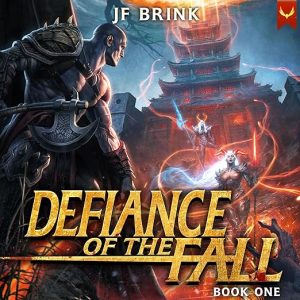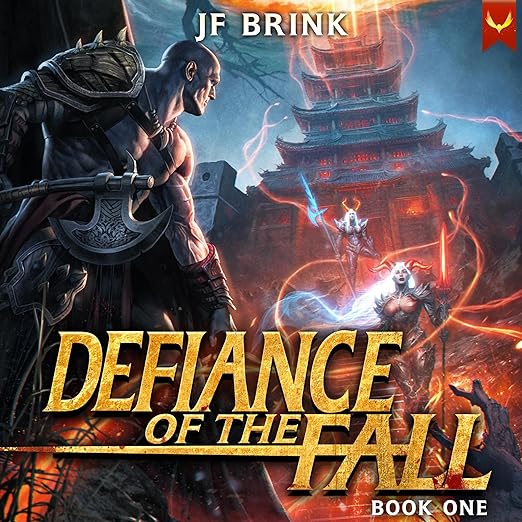
Zac has a hatchet and no explanation. That is the entire kit when an indifferent System, or God, folds Earth into a multiverse where an endless number of races have been fighting over power and dominion since long before anybody on this planet was consulted. Twenty-three hours and twenty-nine minutes of audiobook grow out of that opening image, and the distance between the smallness of the hatchet and the size of the thing it is pointed at is the engine of the whole book. TheFirstDefier is a pseudonym, the series has since passed its sixteenth volume, and this is where the corridor starts.
What TheFirstDefier Delivers
Begin with something the listing gets wrong about itself. The credit field names Pavi Proczko. The promotional paragraph further down the same description announces the book as narrated by Pavi Prozcko, with the c and the z swapped. One page, one recording, two spellings of the person who made it. Nothing about the audio changes because of a typing error, but it does tell you where the attention went on a title that arrived as part of a publishing engine rather than as a single considered object.
January 2026 produced the pool's only reservation, and it goes after the sentences rather than the story. The premise was good and the story arcs were good, that four-star says, but the writing style left a lot to be desired, and it closes with a hope that the author has cleaned things up somewhere across the sixteen volumes since. That is a fair description of what serial fiction often sounds like at volume one, and it is more useful to a buyer than any number.
Rating figures on this page reward a moment of arithmetic. Twelve ratings averaging 4.7 pins the running total to exactly fifty-six stars, because fifty-five would display 4.6 and fifty-seven would display 4.8. The five written responses account for twenty-four of those fifty-six between them, which leaves thirty-two spread across seven votes that never said a word. For once the numbers close cleanly, which happens less often on these pages than you would hope.
What TheFirstDefier Gets Right
September 2021 supplied the most technically useful account in the pool, and it is entirely about construction. The rules of the magic system arrive gradually rather than as one large block at the front. The protagonist ends up overpowered relative to the whole human race, but that account insists he is felt to earn it, and the threats scale to stay ahead of him. The progression system is complicated, though a few strong builds carry most of the weight. Anyone deciding whether this particular flavor of the genre will hold up over a long run can stop reading responses right there.
Progression fantasy asks something of a reader that no other genre asks. The text is full of interface. Skill names, tier numbers, System notifications, a class tree that sprouts a branch every few chapters. On the page those elements sit inside their own typographic fences and your eye decides whether to linger. Spoken, they arrive in the same voice and at the same speed as the forest, the demons and Zac's search for his family, so the separation has to be built out of pace and inflection alone. Proczko holds all of it on a single credit, with no second voice to hand a System line to.
Cultivation is the other reason to reach for this ahead of the dozen apocalypse-plus-levels books published the same season. Eastern cultivation and Western class systems do not naturally share a spine, and the description is upfront that it is welding them together on purpose. Zac is a mortal among cultivators, staking out a route to power that the setting was not built to give him, and that friction is where the book is most itself.
Where TheFirstDefier Loses Some Ground
December 2025 brought the most enthusiastic verdict on the page and buried the clearest warning inside it. That five-star ranks the series in a personal top five of progression fantasy, names four other series as company, and then observes that sixteen books in, the world still has an enormous amount of room left to build. Read that as a commitment estimate rather than a compliment. This is not a story that resolves; it is a story that accumulates.
Marketing copy leans on the serial's history rather than on the book, advertising the readership the run collected on the free web fiction site where it first appeared and listing the retail formats it has since reached. That is a publisher's framing, and it leaves an ordinary question unanswered: whether the text recorded here was revised on its way out of the serial or simply carried across. The page does not say, and the one critical response makes the question live.
Length is the last thing to sit with. Twenty-three hours is a long opening volume by any standard, and the description's own pitch is class systems, skill systems and endless choices for progression. Endless is doing real work in that sentence. If you want a self-contained apocalypse novel with a shape, this is structurally the wrong purchase, and no amount of goodwill toward the worldbuilding will fix it.
Should You Listen to Defiance of the Fall?
Video-game comparisons are usually lazy, but the January 2026 five-star that reaches for one earns it. That response describes a character who grows stronger and more skilled by beating things, gaining titles and unlocking quests, calls the result captivating and hard to put down, and admits to being surprised by how much fun it turned out to be. If that reads to you as a diagnosis rather than a recommendation, you have your answer already.
Reach for it if you want a long, systems-forward apocalypse with a cultivation spine and no risk of running out of sequels, and if you can accept prose that is functional rather than fine. Stay for it if the sound of a stat block read aloud is part of the pleasure and not an interruption. Skip it if you need a tight, finished first volume, if you came for sentences, or if you want a narrator to give you cues about which lines are the machine and which are the man.
Aethon Audio released this in June 2021 and the engine behind it has not idled since. What you are buying is the first door of a very long corridor, and the page is honest about that even while it misspells the person walking you through.
How much listening does the Defiance of the Fall audiobook actually commit you to?
This is volume one of a run that had reached sixteen books by early 2026, and a December 2023 five-star says it came to the series precisely because so many installments already existed, adding that this opener alone ran to nearly eight hundred pages in print. The recording covers that opening volume only.
Do you need to know LitRPG conventions before starting this audiobook?
The description aims squarely at people who already enjoy levels, classes and cultivation, so it assumes a certain fluency. Nothing on the page offers a glossary or a primer, which means a genre newcomer will be learning the vocabulary and the setting at once, by ear.
Does the audiobook match the free serial version of the story?
The description says the book has reached these formats for the first time and points to the readership the serial gathered chapter by chapter, but it never states whether the text was edited on the way. For a story that ran publicly for years before this release, that is not a trivial silence.