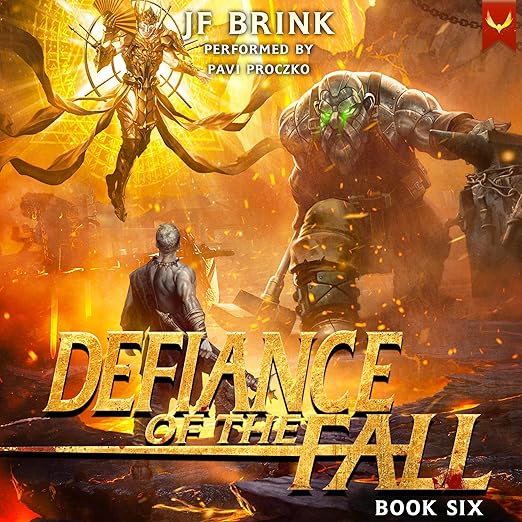
By the time a LitRPG series reaches its sixth book, the author and the dedicated audience have an established contract. Defiance of the Fall 6 operates entirely within that contract. TheFirstDefier's audiobook series, which merges apocalyptic LitRPG elements with eastern cultivation traditions and class and skill progression systems, has built a readership that knows what Zac's world looks and sounds like, understands the faction dynamics that have been established across the preceding twenty-three-hour average volumes, and arrives at this installment specifically to see what happens after the Lich King Adriel's defeat. This review is written for that audience, and for listeners considering whether to start the series from this entry point: the answer to the second question is no.
The context for Defiance of the Fall 6 is the aftermath of a significant victory. Earth has survived the Lich King Adriel. The deadly Miasma has been avoided. But the series title is not ironic; defiance is ongoing, and the respite is brief. The Great Redeemer now bears down on the planet, guided by Void's Disciple and his children. The mysterious Technocrat base holds both the key to resolving the threat and, potentially, the answer to the question of Zac's background and heritage that the series has been seeding since early volumes. At twenty-three hours and one minute, this installment is in the standard range for the series, and it uses that runtime to advance the worldbuilding and heritage mysteries while setting up what appears to be the final major conflict before Zac leaves Earth entirely.
What TheFirstDefier Delivers
Reviewer Frank Vergara's honest assessment that this is "not the best in the series" is the most useful critical data point available. His specific observation, that the plot moves forward more slowly here than in the high-water entries of the series, reflects a pattern common to the mid-to-late entries of progression fantasy series: the setup investment for the next major arc takes up narrative space that earlier volumes could spend on action and discovery. The Technocrat base and the Dominator conflict are being positioned rather than resolved, and readers who found the first three books most satisfying in their momentum may find this volume more deliberate.
That said, reviewer Amazon Customer's enthusiasm for the multiverse expansion and the revelation of Zac's mother in a virtual appearance points to what the series does here that earlier volumes could not. The heritage mystery, which has been a structural hook across the entire series, gets meaningful movement. The various factions and how they compete for power become more legible as the universe expands. For readers who invest in LitRPG series for the lore accumulation as much as the action, this volume delivers the kind of faction-depth and origin-mystery progression that the genre's most dedicated readers value precisely because it requires the patience to reach it.
What TheFirstDefier Gets Right
Pavi Proczko's narration has been the consistent audio asset of this series, and Defiance of the Fall 6 is no exception. The cultivation LitRPG genre makes specific demands on narration: skill descriptions, system notifications, class advancement sequences, and combat choreography all need to be delivered with clarity and appropriate energy. Proczko handles the system-heavy sequences without letting them become rote, and brings enough vocal differentiation to the expanding cast of factions and figures to keep the multiverse navigable over twenty-plus hours of listening.
The audio format is well-suited to the series' pacing. The interspersing of action sequences with progression mechanics and worldbuilding exposition is a deliberate genre choice, and listening rather than reading allows the momentum to carry across those transitions more naturally. The Technocrat base sequences and the Dominator-conflict setup benefit from audio pacing in the same way that LitRPG combat has always worked well as an audiobook genre: the forward momentum of narration prevents the system notifications from becoming a parsing exercise and keeps them as part of the story's texture.
Where TheFirstDefier Loses Some Ground
The power progression in this volume has been noted by at least one reviewer as less dramatic than earlier entries. Zac's gains here are real but measured, and the series seems to be calibrating for a larger conflict rather than front-loading another power jump. Readers who arrived for the class selection sequences and rapid skill acquisition of the earlier books will find the power curve more gradual here. This is a structural choice that serves the series arc, but it changes the texture of the reading experience in ways worth knowing in advance.
The wish for a beast companion or summoning mechanic, mentioned by reviewer KingNex21, reflects a real absence in the series design that has been noted across multiple volumes. TheFirstDefier has made choices about Zac's progression path that distinguish it from other cultivation LitRPG series, and those choices produce a specific kind of mortal-versus-cultivator tension that the series has always foregrounded. Listeners who have read this far are presumably engaged with that tension, but it is worth noting for newer listeners evaluating whether the series matches their preferences.
Who Should Pick Up Defiance of the Fall 6
This audiobook is exclusively for readers who have completed at least the first five books of the Defiance of the Fall series. The worldbuilding, the faction dynamics, the significance of Zac's heritage mystery, and the emotional weight of the Lich King's defeat all depend entirely on the accumulated context of the preceding volumes. Entering the series at book six will produce confusion rather than engagement, and no amount of synopsis can substitute for the twenty-plus hours of world-building investment that the series requires.
For established series readers, this is a solid but not exceptional installment that advances the critical heritage mystery, expands the multiverse, and positions the endgame conflict. The 4.6 rating across seven reviews, though a small sample, reflects satisfaction from the core audience. Readers who bounced off the series' slower pacing patterns in earlier books will find book six more of the same. Readers who are still deeply invested in where Zac's path leads will find this the necessary bridge to whatever the series builds toward next.
In Brief
- Narration: Pavi Proczko remains the definitive voice for the Defiance of the Fall series, bringing the right balance of endurance and intensity to Zac's continuing struggle.
- Themes: Apocalyptic LitRPG progression, cultivation versus mortal path tension, mystery of origin and identity
- Mood: Dense and expansive, series-deep investment required
- Verdict: Defiance of the Fall 6 delivers the worldbuilding expansion and heritage revelations the series has been building toward, though it functions exclusively as a series installment rather than a standalone entry point.