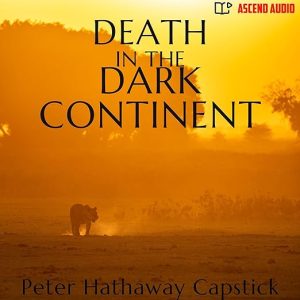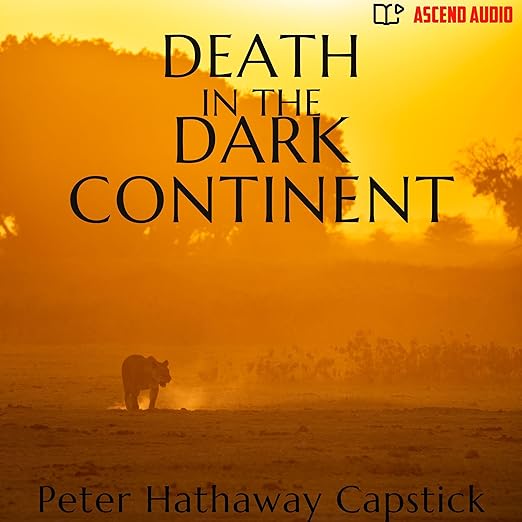
Death in the Dark Continent
Audiobook & Ebook

Death in the Dark Continent by Peter Hathaway Capstick | Free Audiobook

By Peter Hathaway Capstick

Narrated by Luke Oldham

🎧 8 hours and 10 minutes 📘 Ascend Audio LLC 📅 August 13, 2024 🌐 English
🎧 Listen Free on Audible 📖 Read on Kindle

Free 30-day trial · Cancel anytime

About This Audiobook

Critically acclaimed as a master of adventure writing for Death in the Long Grass and Death in the Silent Places, former professional hunter Peter Hathaway Capstick takes us back to Africa to encounter the world’s most dangerous big-game animals. After consulting African game experts and recalling his own experiences and those of his colleagues, Capstick has written chilling, authoritative accounts of hunting the five most dangerous killers on the African continent—lion, leopard, elephant, Cape buffalo and rhinoceros.

The classic big-game animals are unmatched as a test of a hunter’s skill and courage. With a command of exciting prose, Capstick brings us along on the chase. The warning snarl of a crouching lion, the swish of grass that reveals a leopard, the enraged scream of a wounded elephant, the cloud of dust that marks a herd of Cape buffalo, the earthshaking charge of a rhino are recreated in heart-stopping, nerve-racking detail. In Death in the Dark Continent, Capstick brings to life all the suspense, fear and exhilaration of stalking ferocious killers under primitive, savage conditions, with the ever present threat of death.

🎧 Listen Free on Audible

Free 30-day trial · Cancel anytime

Quick Take

  • Narration: Luke Oldham handles Capstick’s rich, sometimes theatrical prose with appropriate gravity, he earns the tension in the hunting sequences without over-dramatizing the style.
  • Themes: Human vulnerability in wild environments, the craft of dangerous game hunting, colonial-era Africa and its literary legacy
  • Mood: Visceral and immersive, with the specific texture of writing that predates contemporary content sensibilities
  • Verdict: One of the great adventure writing voices of the twentieth century in audiobook form, essential for admirers of Capstick, demanding for listeners who approach hunting writing without prior context.

I want to be direct about what Death in the Dark Continent is, because it is easy to misread the packaging. This is not a nature writing book. It is not a wildlife memoir. It is a hunting book, written by a professional hunter who spent years working as a safari guide in Africa, and it describes the stalking and killing of five of the most dangerous animals on the continent with the precise enthusiasm of someone who found that work meaningful and worth recording in sustained literary prose. Your relationship to that subject matter will determine almost everything about your experience of the audiobook.

Peter Hathaway Capstick died in 1996. Death in the Dark Continent was originally published in 1983. The audiobook edition, released in August 2024 through Ascend Audio, finally makes this text available in a format that suits Capstick’s prose, which is built for the ear, rhythmic, sometimes florid, always kinetic. Reviewer Dan Mock, who identified this as Capstick’s second book after Death in the Long Grass, described the writer’s ability to put you there, goosebumps and all. That quality, the physical immediacy of the hunting sequences, is what has kept Capstick’s reputation alive across decades among readers who care about outdoor adventure writing at a high level of craft.

The structure is organized by animal: lion, leopard, elephant, Cape buffalo, and rhinoceros. Each chapter functions not simply as a hunting account but as a naturalist’s study of the animal’s behavior under threat, combined with accounts gathered from Capstick’s own professional experience and from the oral history of the hunting community he worked within. This dual function, adventure narrative and behavioral documentation, is what elevates the material above pure sporting memoir.

The Five Killers and Why Capstick Chose Them

The five animals Capstick focuses on represent what the professional hunting world has long categorized as the Big Five: the animals most capable of killing a hunter rather than being passively killed. Capstick’s approach to each is different in emphasis. The lion chapter is partly about the animal’s psychology, its capacity to plan and wait and use cover in ways that make it genuinely dangerous even to experienced hunters. The leopard chapter is more about the terrifying compactness and speed of the animal at close range, the way grass movement telegraphs presence only moments before the charge. The elephant chapter deals with the particular horror of a wounded animal reversing direction at close range.

Reviewer Utah Blaine, who read this after Hemingway’s Green Hills of Africa, placed Capstick in that tradition of American outdoors writers who treated Africa as both subject and proving ground. The comparison is apt and useful. Both writers are interested in courage as a practical rather than romantic quality, what it actually requires, what it actually feels like, what it costs when it fails. Capstick’s accounts of moments when experienced hunters made errors in judgment, and what those errors cost them, are among the most instructive passages in the book.

The detail in these accounts is frequently sourced from colleagues and from the accumulated institutional knowledge of professional hunting culture. Capstick consulted African game experts extensively, and the resulting chapters have the authority of someone who has not just hunted these animals himself but has also gathered the testimony of everyone else who has. That breadth gives the book a documentary dimension alongside the personal narrative.

What the Prose Owes to an Earlier Era

Reading Capstick in 2024 or 2025 requires a certain historical calibration. His descriptions of Africa carry the vocabulary and assumptions of a white professional hunter writing in 1983, which is to say they are complicated by colonial-era framing that contemporary readers will notice and respond to differently depending on their own backgrounds and perspectives. The landscape itself is described with genuine reverence and deep familiarity. The ethical dimension of big-game hunting is engaged with on Capstick’s own terms, which are those of the professional hunter rather than the conservationist or the ecological scientist.

Reviewer bruce smith, who met Capstick on a trout stream in New Jersey and spent a day fishing with him, described his stories as funny, honest, and scary, all his stories are gems. That personal characterization is useful because it complicates the author’s reputation as simply a trophy hunter. Capstick was a complicated figure, and his prose reflects that complexity even when it is not explicitly examining it. The humor that runs through Death in the Dark Continent, often dry and self-deprecating, prevents the book from tipping into the chest-beating mode that lesser hunting writing defaults to.

Luke Oldham’s Performance Under Pressure

The hunting sequences in Death in the Dark Continent are sustained-tension passages that require a narrator who can manage pace without losing the physical reality of the scene. Oldham does this well. He does not rush the long grass sequence before a leopard encounter, and he does not underplay the moment when a wounded elephant reverses direction. His reading style is formal enough to honor Capstick’s prose without turning it into a period performance, which is the right balance for material that is already stylistically distinctive and does not need additional theatrical emphasis.

At eight hours and ten minutes, the audiobook is appropriately sized for the material. Capstick is a writer best consumed in chapters rather than marathons, the intensity of the hunting sequences benefits from breaks, and the organizational structure by animal makes that kind of segmented listening natural. Reviewer Dr. H described it as one of Peter Capstick’s best, well written and an engaging read, a succinct summary from someone familiar with the full body of work, which makes it more useful than a superlative from a first-time reader.

Who Should Listen and Who Should Skip

Listeners who already read hunting and outdoor adventure writing, who have come from Hemingway or Robert Ruark or Capstick’s own Death in the Long Grass, will find this a significant addition to their listening library. Anyone curious about African wildlife through the lens of a professional hunter’s accumulated experience, rather than conservation photography or safari tourism, will get substantive material here. Listeners who are not prepared for detailed accounts of hunting and animal killing should look elsewhere. The book does not soften or contextualize its subject matter through a modern ethical lens, and that is both its integrity and its limitation depending on who you are coming to it as. The 4.6 rating across 564 reviews reflects an audience that came knowing what they were getting and found that Capstick delivered it.

Frequently Asked Questions

Should I read Death in the Long Grass before Death in the Dark Continent?

Reviewer Dan Mock recommends both and considers Long Grass the first in Capstick’s sequence. They are not narratively connected, each stands alone, but Long Grass introduces Capstick’s voice and approach, which will make Dark Continent more immediately rewarding for new readers.

How does Capstick’s 1983 writing hold up for contemporary listeners given shifting attitudes toward hunting?

The prose quality is undiminished. The ethical and cultural framing is that of a professional hunter writing in 1983, which contemporary listeners will engage with differently depending on their own perspectives. The book does not defend or interrogate its subject matter from outside its own era, it documents from within the culture it describes.

Is Death in the Dark Continent appropriate for listeners interested in African wildlife but not hunters themselves?

Some wildlife enthusiasts find Capstick’s naturalist detail on animal behavior compelling independent of the hunting context. But the hunting is central to every chapter, not incidental. Listeners for whom hunting content is genuinely distressing should look elsewhere.

How does Luke Oldham’s narration compare to reading Capstick on the page?

Capstick’s prose is strongly rhythmic and built for the ear, so the audiobook format suits it well. Oldham’s formal delivery honors the period style without over-dramatizing it. The physical tension in the hunting sequences, the moments before a charge, translates particularly well to audio because pacing and breath carry meaning that punctuation alone cannot.

Ready to listen?

🎧 Listen to Death in the Dark Continent for free

Free 30-day trial · Cancel anytime

What Listeners Are Saying

★★★★★

Gripping

Amazing book and a great read

– Corey J. Molinelli
★★★★★

Truth about Africa hunting danerouse animals

The best African hunting stories written. The writer can put you there, goose bumps and all. These are stories he gathered over years of hunting an writing. Manyy are his adventures. This is book #2. Death in the Long Grass is #1. Both Fantastic reading.

– Dan Mock
★★★★☆

Tales about the dangers of hunting the Big Five in Africa

Originally published in 1983, this book describes big game hunting in Africa. After a brief introduction, each subsequent chapter contains details and anecdotes about hunting each of the Big Five game animals of Africa (Cape Buffalo, Rhino, Elephant, Leopard, and Lion). In particular, this book is largely about the dangers…

– Utah Blaine
★★★★★

Sad that he passed too early, brilliant outdoor writer

Lucky enough to have met Capstick on a trout stream in his native New Jersey. For the price of a simple trout lure I got to share a day and a beer with this remarkable man. As a promise I made certain to read all of his writings and one…

– bruce smith
★★★★★

classic Africa

One of Peter Capstick's best. Well written and an engaging read

– Dr. H

Start Listening: Death in the Dark Continent


Free 30-day trial · Cancel anytime

Alexandra Reed

Written by Alexandra Reed

Founder & Literary Critic