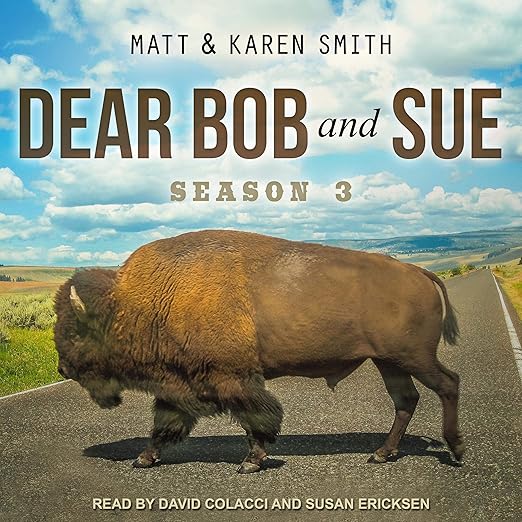
- Narrator: David Colacci brings warmth and dry wit to Matt and Karen's adventures in Dear Bob and Sue: Season 3 - he handles the epistolary format's breezy tone well and keeps the humor from tipping into self-congratulatory.
- Subjects: National and public lands exploration, middle-age adventure, travel as relational test
- Tone: Light, funny, and unexpectedly informative
- Bottom line: Dear Bob and Sue: Season 3 is for listeners who want to feel like they are traveling with friends who make better company than most guidebooks.
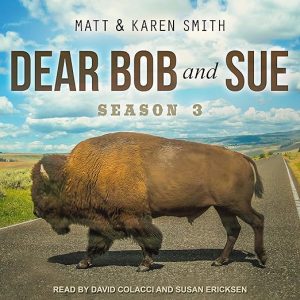
The Dear Bob and Sue series by Matt Smith takes a structural premise that sounds like it should get old quickly and somehow keeps producing books that readers reliably describe as impossible to put down. Dear Bob and Sue: Season 3, narrated by David Colacci and running eleven hours, is the third installment following Matt and Karen as they continue their exploration of America's public lands - this time working through the western United States, visiting lesser-known national monuments and parks, and returning to some favorites, all reported through a series of emails to their friends Bob and Sue. The audiobook format suits the epistolary structure well; the emails have the informal, conversational energy of actual correspondence rather than the polished retrospection of traditional travel memoir.
This is a series with established readership who have tracked Matt and Karen through the original Dear Bob and Sue (which chronicled all 59 national parks) and through Season 2. New listeners can enter here, since the western US itinerary stands on its own, but fans of the series will find the third book delivers the same pleasures as its predecessors with new locations and a new logistical challenge: the RV trip through Arizona that first-time RV drivers will recognize with either nostalgia or dread.
What Smith does that most travel writing does not is maintain a genuinely non-promotional relationship with the places he visits. The series has always been honest about when something was disappointing, difficult, or not worth the effort, which is what makes the enthusiastic recommendations credible. Season 3 continues this pattern with the western parks - the descriptions of hiking and landscape are specific enough to function as partial trip planning, and the humor that runs through the emails keeps even the scenic passages from tipping into brochure language.
The Alaska section - hiking the same trail that Klondike Gold Rush prospectors took - is one of the strongest sequences in this volume. Smith brings enough historical context to give the trail weight beyond physical challenge, and the contrast between the nineteenth-century prospectors' desperation and the twenty-first-century tourists' recreational difficulty is a running thread that generates both comedy and something closer to reflection. Reviewers who have read all three books consistently note that each volume finds slightly different material to work with even within the consistent format.
Why It Works in Audio
David Colacci's narration is the right match for this material. The epistolary format creates a risk that the humor will feel written rather than spoken - the jokes are in the writing, after all, not in the situation. Colacci's reading keeps the emails feeling like actual correspondence rather than performed comedy, which is the harder trick. He does not oversell the punchlines, which is the correct instinct. Travel humor that is oversold becomes insufferable, and Colacci trusts the material to do its work at normal speaking pace.
The practical information embedded in the humor is genuinely useful. Reviewers have noted they are using the book as an actual travel guide for planning their own western US trips, which is the best compliment a travel memoir can receive. Smith does not write a guidebook, but the accumulated specifics of where to go, what to expect, and what to avoid add up to something more reliable than the promotional information that park websites typically provide. Season 3 extends this usefulness to the RV format and to some of the less-visited monuments that do not get much attention in standard national parks literature.
Things to Know Before Starting Dear Bob and Sue: Season 3
The series' humor depends on the reader's tolerance for a particular kind of self-deprecating middle-age comedy. Matt and Karen are not presenting themselves as heroic adventurers. They are presenting themselves as reasonably fit people in their fifties who occasionally make logistical mistakes, occasionally find the experience harder than expected, and consistently find it worthwhile. That self-presentation will resonate strongly with some listeners and seem insufficiently ambitious to others. The adventures described are genuine, but they are not extreme, and readers expecting the tension of true wilderness survival will find the series too gentle.
The email format means there is no extended narrative arc across the book. Each email is a self-contained unit, which makes the audiobook unusually pause-friendly - you can stop at the end of any email without losing the thread. For listeners who consume audiobooks in short sessions, this is a practical advantage. For listeners who prefer building narrative momentum, the episodic structure may feel like a limitation rather than a feature.
Who Will Get the Most From It
This audiobook is for two overlapping audiences: readers of the first two Dear Bob and Sue books who want to continue the series, and independent listeners interested in accessible travel memoir about America's public lands. The western US focus and the RV component give Season 3 its own identity within the series, and the combination of humor, specific trail information, and genuine affection for the places visited makes it useful as well as entertaining.
Skip it if you want travel writing with literary ambitions or if you prefer travel memoirs built around genuine hardship. Smith is a funny, honest, warmly observational writer whose pleasures are entirely accessible. Listeners who have ever dragged out hiking boots after reading a travel book will find Season 3 does exactly that, which is precisely what the best travel audiobooks should accomplish.
Good to Know
Do I need to have listened to the first two Dear Bob and Sue audiobooks before starting Season 3?
No, Season 3 is followable without the prior books. Matt and Karen's western US itinerary stands on its own. That said, listeners who have spent time with them in the first two books will have more context for the running jokes and the character dynamic.
Is this audiobook accurate enough about the parks and trails to use as actual trip planning?
Reviewers consistently report using it exactly that way. The practical details - trail descriptions, difficulty levels, what to expect at lesser-known monuments - are specific enough to inform planning, though Smith never positions himself as a guidebook author.