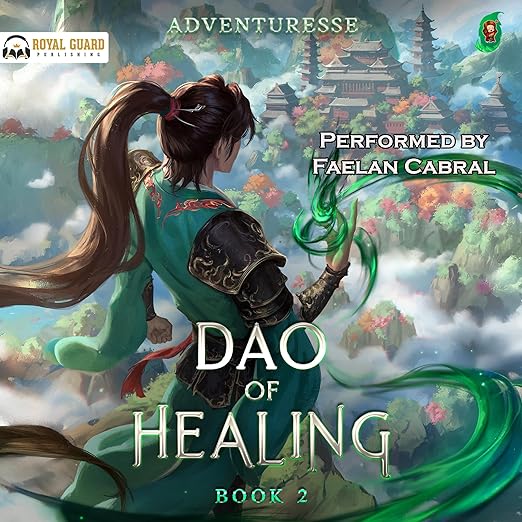
I am not a native cultivation fantasy reader. My path into the genre came through a long stint with translated Chinese web novels that a colleague pressed on me a couple of years ago, and since then I have developed a genuine appreciation for the particular satisfactions the form offers: the accumulated power, the layered faction politics, the moral questions that arise when a protagonist with medical knowledge enters a world organized around violence and hierarchy. Dao of Healing sits in this tradition, and Book 2, which I came to directly after finishing the first installment, wastes no time getting complicated.
Zhao Dan has survived Three River City and established the Grasping Life Sect on the Million Flowers Celestial Peak. That sounds stable, but the synopsis is accurate: the frying pan to fire dynamic is almost immediate. The sect is new, vulnerable, and surrounded by forces that have not decided whether to tolerate or eliminate it. The arrival of news about the Blossoming Heavens secret realm, a legendary space filled with treasures and lethal challenges, forces Zhao Dan into a classic cultivation dilemma: stay home and consolidate, or take the risk that could accelerate everything.
The Verdict, Briefly
The medical cultivation angle is what distinguishes this series from the broader field. Where most cultivation protagonists build power through combat mastery or cultivation speed, Zhao Dan's edge is healing ability: his capacity to preserve allies, treat sect members, and position the Grasping Life Sect as a medical powerhouse in a world where most power structures are organized around destruction. That inversion generates interesting tactical questions that the book explores with genuine inventiveness.
The sect-building strand of the narrative is the most engaging new element in this volume. Book 1 was primarily about survival and escape; Book 2 expands the scope to include the logistics of institution-building, managing relationships within the sect, establishing the Grasping Life Sect's identity and reputation externally, and dealing with the first serious political consequences of Zhao Dan's choices in Three River City. These threads are handled with more sophistication than many debut cultivation series manage at this stage.
The Best Parts of Dao of Healing: Book 2
Faelan Cabral's narration is steady and consistent, which matters in a subgenre where the vocabulary can be demanding for newcomers. He handles the cultivation rank terminology, the sect naming conventions, and the action sequences with equal clarity, never losing track of the energy the story requires. At over fifteen hours, this is a substantial listen, and a narrator who maintains focus across that span is essential. Cabral delivers that reliability.
The audiobook format suits cultivation fantasy particularly well because the genre tends toward extended sequences of action and internal reflection that benefit from continuous listening rather than fragmented reading sessions. The momentum of Zhao Dan's decisions, the accumulation of risk and reward, lands harder when experienced without interruption.
Points to Consider
The Blossoming Heavens sequence is where the book opens its scope most dramatically. The secret realm trope is a cultivation fantasy staple, but Adventuresse uses it to force Zhao Dan into situations where his healing-centric approach is tested against threats designed for combat specialists. Those sections are the most exciting in the book and also where the medical cultivation premise pays off most visibly.
Because there are no listener reviews available for this volume yet, it is worth noting that Book 2 appears designed for readers who have completed Book 1. Character relationships, sectarian history, and Zhao Dan's specific power system all carry assumptions from the first book. The synopsis covers the essential setup, but the emotional stakes of the early sect-building sequences depend heavily on knowing who survived the events of Three River City.
The Right Listener for Dao of Healing: Book 2
Readers who finished Book 1 and want more should start immediately. The pacing is tighter than many cultivation series manage at the second installment, and the medical-sect framing continues to offer a perspective that separates Dao of Healing from the larger cultivation fantasy field. New listeners to the genre who are curious about cultivation fantasy should begin with Book 1 and work forward; the series is a reasonable entry point for those without prior exposure to the form. Anyone who finds extended sect-politics and power-system mechanics tedious should approach cautiously, since both are central to this volume's strongest material.
Can I start the Dao of Healing series with Book 2, or do I need to read Book 1 first?
Start with Book 1. The sect relationships, Zhao Dan's power system, and the political fallout from Three River City all carry assumed knowledge from the first volume. Book 2 does not re-establish those foundations, and skipping ahead will reduce the emotional impact of major developments.
What distinguishes the medical cultivation premise from standard cultivation fantasy?
Where most cultivation protagonists build power through combat speed or elemental mastery, Zhao Dan's strength is healing ability. This creates a tactical inversion: he strengthens allies, treats the sick, and builds the Grasping Life Sect's reputation as a medical institution rather than a combat faction. The strategic questions that arise from that difference are central to what makes the series distinctive.
Faelan Cabral is narrating, how does the performance hold up across 15-plus hours?
Consistently well. Cabral maintains focus and energy across the full runtime, handling the cultivation vocabulary and action sequences without losing clarity. For a long audiobook in a subgenre with demanding terminology, that reliability matters considerably.
Is this series appropriate for listeners new to cultivation fantasy, or does it assume genre familiarity?
Adventuresse explains her power system clearly enough that genre newcomers can follow. Some familiarity with cultivation concepts like qi cultivation, sect hierarchies, and secret realms will enrich the experience, but the series does not assume deep prior knowledge of the subgenre.