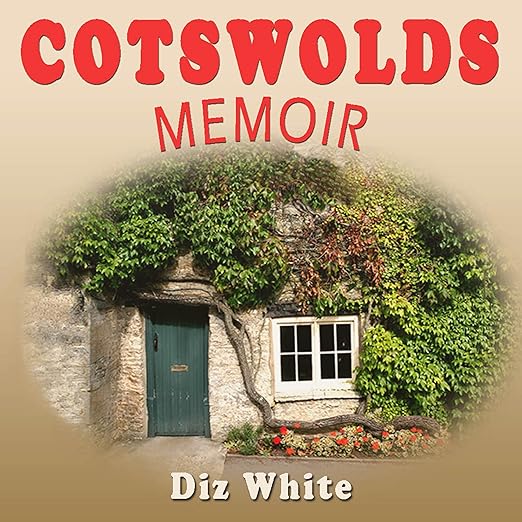
- Voice: Diz White narrates her own memoir and performs 70 distinct characters throughout; as a professional actress, she brings genuine theatrical range to the material that a hired narrator could not replicate.
- Big ideas: Place-love and belonging, the comedy of cross-cultural real estate, the tension between urban ambition and rural longing
- Atmosphere: Warm, theatrical, and affectionately chaotic
- Worth it?: A genuinely unusual audiobook experience thanks to White's performance; the memoir itself is slight but charming.
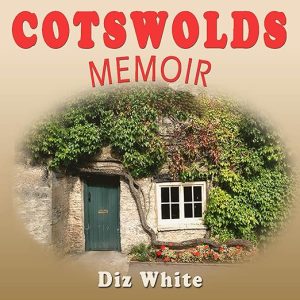
I found Cotswolds Memoir on a lazy Sunday afternoon when I was missing England in the way you miss a place you have only visited twice but somehow feel you belong in. The Cotswolds is one of those regions that operates almost mythologically for a certain kind of reader: honey-colored stone walls, sheep on hills, pubs with low ceilings, the specific quality of damp English light on a summer morning. Diz White knows exactly what she is doing when she positions her book inside that mythology, and she has the wit to find the comedy in her own devotion to it.
The memoir follows White, a British-born actress living in Los Angeles, through her quest to buy a 17th-century cottage in the Cotswolds while continuing to take acting work in Hollywood to fund the purchase. The financial logic involves a parade of odd jobs, including, yes, playing a horse's hind end and appearing in a bear suit at a children's event, interspersed with house-hunting trips across the English countryside. The result is part travel memoir, part comedy of errors, part love letter to a region.
White narrates her own memoir and voices 70 characters throughout, a claim that sounds like marketing hyperbole until you actually listen. White is a professional actress (Star Trek: The Next Generation, Bullshot) with genuine range, and the audiobook is produced with real care: Emmy Award winner Marsha Goodman co-produced and directed the recording. What you hear is not a writer reading her own book; it is a theatrical production built around one. The sellers, the solicitors, the eccentric locals, the fellow house-hunters, each gets a distinct voice, and the switching is nimble enough that you are rarely confused about who is speaking.
This distinction matters because the written memoir, stripped of White's performance, is relatively thin. The plot moves episodically rather than dramatically. There are highs and heartbreaks, as the synopsis promises, but they arrive without the kind of narrative architecture that would make them land hard on the page. In audio, White's voice fills the structural gaps. The humor that might read as breezy in print has genuine comic timing when delivered by someone who has spent decades making audiences laugh.
What Works
White's description of the landscape is the part of the memoir that would survive in any format. Reviewer Jim Yeomans called it "a travelogue to savour," and the embedded travel content is where the book is most reliably enjoyable. White writes about the Cotswolds with specific affection rather than tourist-brochure generality: particular villages, particular B-roads, particular pubs. Reviewer Sarahpilot noted the "vivid descriptions of the delectable food all through these pages," and this is not an exaggeration. White is a committed foodie, and her attention to the meals she eats while house-hunting gives the book a sensory texture that pure real estate memoir would lack.
The region itself, its pace, its architecture, its social rhythms, is honestly represented. White does not romanticize it past the point of credibility. The legal complications of buying English property as an American resident, the slow bureaucratic rhythms of conveyancing, the occasional cold shoulder from locals who have opinions about outsiders buying up cottages: these are rendered with the rueful humor of someone who experienced them rather than the breezy idealization of someone who did not.
Things to Know Before Starting Cotswolds Memoir
Reviewer mizjean raised a fair structural criticism: the book rambles across time periods in ways that occasionally confuse rather than enrich, and when the cottage is finally found, its revelation is somewhat anticlimactic. The journey is the point more than the destination, which is fine as a structural choice but needs to be understood going in. Listeners expecting a satisfying narrative arc, problem, complication, resolution, will find the resolution less complete than they hoped.
The book also exists in an interesting middle space between travel memoir and property memoir, and it does not fully commit to either. Some listeners will find this freedom charming; others will find it unfocused. Reviewer HMS Warspite put it diplomatically: "the story may not be to every reader's taste, but along the way, there is a nicely embedded travel guide." That is accurate.
Who It's For
Listen if you have affection for the English countryside and enjoy theatrical, character-rich audiobook performances. Listen if you find comedy memoir more appealing than structured narrative. Skip if you want a tight, plot-driven story with a clear arc. Skip if you are likely to be frustrated by a narrator who occasionally privileges the theatrical set piece over narrative momentum.
Good to Know
Does Diz White really voice 70 different characters in this audiobook?
She does, or something very close to it. White is a professional actress with extensive voice-acting credits, and the memoir was produced with Marsha Goodman directing. The character voices are distinct and theatrically competent throughout.
Is the PDF travel guide mentioned in the synopsis actually included with the audiobook purchase?
The synopsis references a supplemental PDF travel guide to the Cotswolds region. Whether this is accessible depends on the platform you purchase from; Audible listeners should check their supplemental materials section after purchase.
Is Cotswolds Memoir part of a series, and does it end satisfyingly on its own?
It is listed as Book 1 in the Cotswolds Memoirs series. It does arrive at a conclusion regarding the cottage quest, though some reviewers found the ending somewhat abrupt. White was writing a sequel at the time of the original publication.
How much does the book focus on the actual logistics of buying property versus the travel and character experiences?
The property search is the narrative spine but not the main focus. White uses the house-hunting trips as a frame for encounters with locals, reflections on the landscape, and comic detours. Readers who want a detailed guide to English property law will be disappointed; readers who want an affectionate portrait of a region will be satisfied.