Quick Take
- Voice: Bosker is credited reading her own first-person immersion, though not one written response on the listing reports on the recording.
- Big ideas: Expertise as trainable rather than innate, taste under laboratory conditions, industrial wine against the tasting group
- Atmosphere: Wry, curious, and increasingly obsessive as the training takes hold
- Worth it?: The rare wine book that is skeptical and enthusiastic at once, and the best available account of what a trained palate actually is.
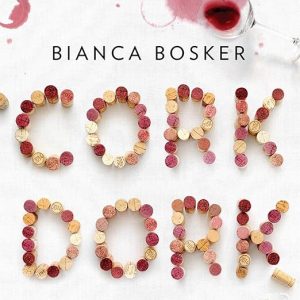
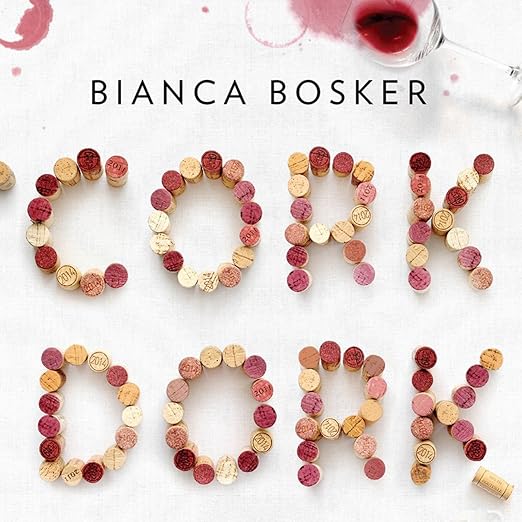
Wine writing tends to arrive in one of two postures, reverent or debunking, and this audiobook refuses both by turning the author into the experiment. Bianca Bosker was a technology journalist who drank wine without knowing much about it. Then she found a subculture of sommeliers whose sensory precision looked less like expertise than like a differently wired nervous system, and she set out to acquire it herself: underground tasting groups, service floors in exclusive New York restaurants, a California mass-market wine plant, and eventually a neuroscientist's scanner to watch what a trained palate does inside a brain.
Our Take on Cork Dork
Intimidation is the emotion a May 2017 response leads with, and it is the right entry point. That reader arrived able to name a few preferences, Sauvignon Blanc from California and New Zealand, Chianti Classico, Australian Shiraz, while feeling shut out by the fancy talk and the people deploying it. Bosker writes directly to that reader. She is not a convert explaining the faith; she is a skeptic who went in to find out whether the superhuman sensory powers were real, and who reports what she found.
The answer turns out to be more interesting than either yes or no. Trained tasters really can do things untrained ones cannot, and the training is brutal, repetitive, and much closer to athletics than to connoisseurship. Bosker submits to it, fails publicly and often, and passes the certification exam at the end. The memoir spine holds the reporting together, but the reporting is what gives the memoir stakes, because her own improving palate becomes the running evidence.
Neuroscience is where the book stops being charming and starts being serious. Putting a sommelier's brain under imaging to ask what expertise physically consists of is the kind of move that could easily be a stunt, and Bosker treats it instead as the natural end of her question. If taste can be trained into a measurable difference in the tissue doing the tasting, then the whole snobbery argument has been conducted on the wrong terms for a very long time.
Why Listen to Cork Dork
A July 2019 entry gets at the practical virtue: the prose reads easily and the scenes are easy to picture. That same reader pushes back on a common complaint, that the people in the book are insufferable, by pointing out that Bosker deliberately went to the far end of the oenophile distribution, where obsession is the qualifying trait. Both observations matter in audio, where scene-setting has to do the work of illustration and where an unlikeable cast has nowhere to hide.
Bosker reads it herself, which is structurally the right call for a book written in the first person about her own humiliations at the tasting table. The self-deprecation, the moments of dawning competence, and the reporter's aside are all hers by authorship, and hearing them in the author's voice removes the layer of interpretation an actor would inevitably add to a memoir about learning to trust one's own perception.
Mass production is the honest center of the thing. Having spent months among people who treat wine as a discipline, Bosker walks into a California plant producing it at industrial scale and refuses to sneer. The tension between those two worlds, the tasting group and the production line, is what the book is really about, and it survives being listened to because it is an argument rather than a set of tasting notes.
What to Watch For in Cork Dork
The rating on this listing is built from two votes, and that is worth establishing before you weigh it. An average of 4.5 across two whole-star ratings has exactly one solution: one five and one four. No other combination of two star ratings arrives there. Meanwhile five written responses sit beneath it, four of them fives and one a four, so the visible discussion is considerably larger than the number the average was calculated from.
Anyone hoping for a report on the performance will not find one on this page. Across all five written responses, not a single line addresses the recording, its pacing, or the experience of hearing the author read her own work. Every entry describes reading. For a title where the credit and the byline are the same person, and where the whole subject is the training of perception, that gap is a genuine shame rather than a technicality.
The April 2020 four-star entry raises the fairest structural objection: Bosker sets out to become a sommelier in a very short time, and compression is both the book's engine and its limit. What she can demonstrate is that a determined outsider can be trained fast. What she cannot demonstrate is what twenty years in the trade does to a person. The 2017 publication date is worth holding in mind too, since the wine business has moved since.
Who Should Listen to Cork Dork
Someone filing five stars in April 2025 describes finishing the book and coming away reconnected to parts of the sensory system that shape all experience, written by someone claiming both the scientist and the enthusiast label. That double audience is real. The book works for people who want the neuroscience of taste and equally for people who simply want to stop feeling stupid in front of a list, because Bosker keeps refusing to let either register dominate the other.
Skip it if you want a buying guide. Nothing here will tell you what to open on Friday, no regions are surveyed systematically, and vintages appear only when they serve a scene. Listeners who dislike immersion journalism as a form, where the writer's transformation is the organizing device, will find the memoir apparatus intrusive rather than earning its place alongside the reporting.
You will finish this one drinking more attentively and probably more cheaply, which is a better outcome than most wine books aim for and a considerably rarer one than the shelf would suggest.
Good to Know
Bosker reads the audiobook herself. Why does that matter for a book like this?
Because the book is a first-person account of her own failures and slow improvement, and the comic timing belongs to the writer rather than to a performer. Author-read memoir removes a layer of interpretation, which suits a narrative whose central question is whether she can learn to trust her own perception.
Do I need to know anything about wine before starting?
Nothing at all, and the book is built for that. Bosker begins as an amateur drinker who could not explain why one bottle was considered better than another, and the reader learns as she does. Regions and grapes appear inside scenes rather than as vocabulary you are expected to have already.
How much of the book is science and how much is reporting from the trade?
Roughly balanced, with the trade material dominating the first half and the sensory science arriving later, including a session in a neuroscientist's scanner. A May 2025 response describes the mix as investigative journalism, memoir, and cultural deep dive at once, which is an accurate division of the book's attention.
Is the audiobook still worth it given that it came out in 2017?
Yes, because the subject is perception rather than the market. What has dated is the specific restaurant scene and the state of the industry; what has not is the training regimen, the physiology of taste, and the argument about whether expertise is real. The 2017 vintage shows in incidentals only.