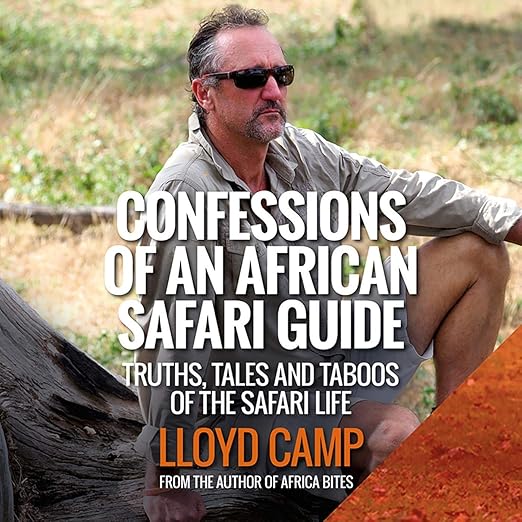
In Brief
- Read by: Lloyd Camp narrates his own memoir, and the South African cadence, the professional guide's measured authority, and the storyteller's instinct for timing all come through in thirteen hours of completely earned audio.
- At its heart: The hidden labor of wonder, human frailty in the wilderness, the ethics of the safari industry
- Vibe: Warm and observational with a dry edge, occasionally darkening into genuine moral weight
- Short version: Camp is the rare memoirist who can be both revealing and fair-minded, and his self-narration makes this one of the most authentic travel memoir audiobooks available in the genre.
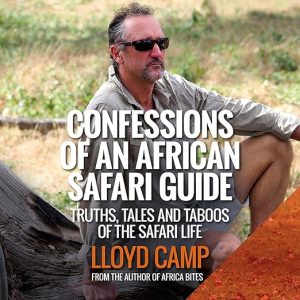
I started Confessions of an African Safari Guide on a long-haul flight, which felt appropriately thematic. By the time I landed, I was about four hours in and sufficiently transported that the airport terminal required a moment of readjustment. Lloyd Camp writes with the ease of someone who has been telling these stories for years, refining them through hundreds of campfire conversations and game-drive silences, and the audiobook preserves that quality because he reads his own material in the voice that clearly generated it in the first place.
Camp's first book, Africa Bites, established his terrain: the daily life of an African wildlife guide, the beauty and absurdity and occasional danger of the safari industry, the complicated relationship between the guide in khaki and the guests in their carefully curated adventure gear. Confessions deepens that territory by going places Africa Bites apparently held back from: the truths, tricks, and taboos that ensure a safari feels magical when the machinery behind it is considerably more human and imperfect than the experience is designed to suggest.
Where This One Lands
Camp's central project in this book is an honest portrait of the safari guide as professional, as person, and as performer. The safari guide is a figure built around the sustained performance of competence and calm. The guide knows where the animals are, interprets the signs, maintains safety, and curates the narrative of the wilderness for people who are spending significant money to encounter something they have never seen before. What Camp does is pull back the curtain on all of that without destroying it. He lampoons himself with the same directness he applies to colleagues and guests, which prevents the book from becoming an insider's resentment exercise dressed up as memoir.
The stories cover the full spectrum: there are tales that are genuinely funny, others that are quietly heartbreaking, and some that are sharply critical of the assumptions that guests bring into the bush. Camp is particularly good at the moments when those assumptions collide with reality, when the guest who has read extensively about Africa discovers that reading and being there are entirely different things, and when the guide has to manage that collision while keeping everyone safe and the experience intact. One reviewer described the book as touching nerves and cutting close to the bone, and that is accurate. The confessions are real confessions, not performed intimacy packaged for marketing purposes.
The Best Parts of Confessions of an African Safari Guide
The book's most serious passages concern poaching, wildlife conservation, and the complicated relationship between the safari industry and genuine ecological stewardship. Camp does not pretend that everything in the industry is ethically aligned with the conservation values it markets. A reviewer born in Namibia with extensive experience throughout the region praised Camp's treatment of species threatened by poaching, particularly rhinos and pangolins exported to Eastern markets, as grounded and honest rather than sentimentalized. That ground-level understanding of what conservation actually looks like in practice, as opposed to in promotional materials, is one of the book's genuine contributions to the travel memoir genre.
The section on the guide's relationship to truth, which lies at the heart of what the book calls the taboos of safari life, is where Camp is most philosophically interesting. Guides tell stories. Some of those stories are true. Some are embellished. Some are outright fictions that have calcified into tradition and are now repeated as inviolate facts. Camp examines his own participation in this with enough self-awareness to make the examination meaningful rather than self-exculpatory.
What Gives Us Pause
Camp narrates his own material across thirteen hours and forty minutes, which is a significant commitment and would fail immediately if the voice were not up to the material. It is. The South African accent carries authority without becoming a performance. Camp reads like someone who knows which moments in the story deserve silence and which deserve emphasis, which is exactly the skill set his profession requires. One reviewer noted that the storytelling talent that makes Camp a brilliant guide also makes him a compelling narrator, and that observation holds up across the full runtime. The same instinct that holds a group of tourists in attentive silence around a campfire holds the listener through the quieter passages of this memoir, and there are many quieter passages that a lesser narrator would rush through or flatten.
The Right Listener for Confessions of an African Safari Guide
Confessions of an African Safari Guide rewards three specific kinds of listeners: those who have been on safari and want the insider account of what they actually experienced; those who are planning a safari and want to understand what they are about to enter more honestly than the brochures suggest; and those who simply love well-told stories from an unfamiliar world. Those who want their travel memoirs to be purely inspirational, without the self-examination and occasional darkness that Camp brings to the genre, may find the confessional dimension uncomfortable. This free audiobook is particularly recommended in audio format because Camp's voice is the book's single most important element, and the text on its own would be a lesser experience without it. The thirteen-hour runtime feels appropriate rather than indulgent: the safari experience is built on accumulation, on the slow attention that suddenly resolves into a lion crouching twenty meters away, and Camp's pacing understands that what you are really listening for requires patience before it reveals itself.
Common Questions
Does Confessions of an African Safari Guide require reading Africa Bites first, or does it stand alone?
Camp's second book stands alone completely. He references Africa Bites occasionally and the context is clear from those references, but Confessions was written to be readable without prior familiarity. Listeners who enjoy this book will likely want to seek out Africa Bites afterward rather than before, in which case they get two books instead of one.
Which region of Africa does Camp primarily work in, and is his experience geographically specific?
Camp's experience spans multiple southern and eastern African regions, and the stories in this book draw from a broad geographic range rather than a single country or park. Reviewers with specific regional experience, including a Namibia-born listener, found his descriptions accurate and resonant. The book is not tied to a single safari destination and is relevant across the broader southern African wildlife tourism industry.
Is this book appropriate for readers interested in wildlife conservation, or is it primarily a personal memoir about the guide experience?
Both dimensions are present and intertwined. The conservation content, particularly the sections on poaching and the gap between industry marketing and ecological reality, is substantive rather than decorative. Camp writes as someone who genuinely cares about the animals and landscape he has spent his career in, and that care gives the conservation passages weight without making them didactic interruptions to the story.
How honest is Camp about the less flattering aspects of safari guiding, including his own mistakes?
Very honest, by the standards of professional memoir. He lampoons himself explicitly and does not spare colleagues or the industry from criticism where warranted. The book's title delivers on its promise: the confessions are real. One reviewer specifically noted that Camp's willingness to reveal the backstage machinery of the safari experience, including the legends told as inviolate truths, sets this apart from more promotional accounts of the profession.