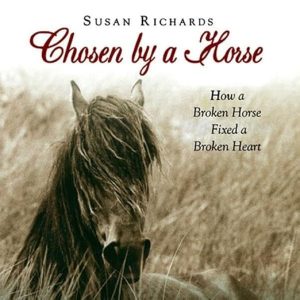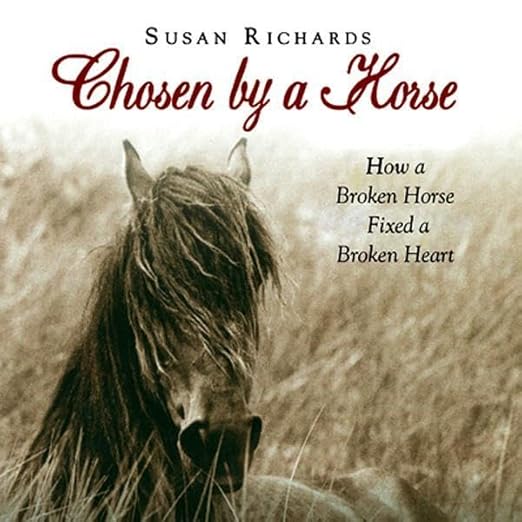
Rescue stories usually run in one direction, and this one turns around in its first paragraph. Susan Richards went to collect a horse and a different horse walked up the trailer ramp instead: Lay Me Down, a former racehorse with a foal close on her heels, malnourished, sick with pneumonia and an eye infection, and somehow still generous with her attention. The audiobook runs six hours and twenty-five minutes, and anybody shopping the pets and animal care shelf where this record sits should understand they are buying a book about grief.
Impossible is the word for the rating here, and one of the written entries proves it. The counter says one rating while the average says 4.6, which no single vote can produce, since one voter is choosing among whole stars. Then a five-star entry from 2019 sets out the distribution in percentages: four- and five-star ratings account for ninety percent of the reviews, that entry reports, with the ones and twos making up a mere ten percent. Those proportions describe a population of hundreds. Whatever this counter is measuring, it is not the audience the people writing here could see.
Five full paragraphs sit underneath that counter of one, which is the second contradiction on the page. They were written years apart, they agree with each other more than most reception columns manage, and they were clearly looking at a far bigger record than the one now displayed. Where they part company is on what kind of book this actually is, and that disagreement is the useful part, because it comes down to how much of the six and a half hours is really about the horse.
The reading falls to Lorna Raver, and the assignment is a particular one: a first-person memoir whose destination the description carefully avoids naming. This is a book about an animal that arrives sick and a woman who did not plan on being rescued in return, told at the pace of daily care rather than at the pace of a story. Spend three minutes on a passage from somewhere in the middle rather than on the opening, because the blurb covers only the arrival, and everything that makes this book what it is happens after the trailer ramp.
Care and Attention Matter More Than the Horse
One recommendation here comes from a reader who is not a horse person at all. A 2008 write-up describes buying the book on a whim, on the strength of the photograph on the cover and other people's opinions, while admitting to never having owned a horse and having no idea how to read one. That reader was not disappointed, with a single qualification attached: it was not as much about the horse as expected. That qualification is what a buyer most needs to hear before starting.
What the book is actually about is attention. Lay Me Down arrives with a foal, pneumonia and an infected eye, and the daily work of nursing an animal back to health becomes the frame Richards hangs everything else on: the routine of a paddock, the practical intimacy of caring for something that cannot explain itself, and what that does to a person who has stopped expecting a great deal from anything. It is a quiet book, and six and a half hours is exactly the right length for it.
Six Hours and Twenty-Five Minutes, Mostly About Print Reviews
Prepare for the ending. One entry suggests keeping a box of tissues within reach for the last two chapters, which tells you where this is heading without spelling it out, and the tenderness of everything preceding it is precisely what makes the final stretch land. This is not a book that surprises anyone. It is a book that lets you watch what is coming and asks you to stay anyway, which is a reasonable description of what people who love animals sign up for in the first place.
Print is what much of this column is describing. Two of the five use the reading verb outright, chapters get counted where hours might be, and one entry is dated three days before this recording was released, which places it firmly on the paper edition. None of that is unusual for a 2008 audio release of an existing book. It does mean a good part of the column beneath the stars is evidence about a text, while the six hours and twenty-five minutes on sale here are a separate product with a separate history.
The filing is the last thing. This record sits under home and garden with a topical tag reading pets and animal care, which is where a browser looks for a book about keeping horses, not for a memoir about losing one. The description reinforces the error: three sentences long, entirely about the animal, with nothing to suggest the woman telling the story has as much at stake as the mare does. Anyone browsing that category finds a book much heavier than the shelf implies, and anyone browsing memoir never finds it at all.
Readers in the Middle of Their Own Loss
Grief is the real subject, and an account from a reader who came to the book after losing a husband says exactly that: horses can mend a broken heart or a grieving soul, and that reader's own horses did precisely that job. People in the middle of a loss are the audience this book keeps finding, and it finds them many years after publication, which is why a memoir from 2008 is still collecting new entries from readers who clearly needed it when they arrived.
Steer clear if what you want is a practical horse book, if a sick animal is more than you can take at the moment, or if you need a memoir to explain itself rather than circle its own subject at the speed of chores. Everyone else gets a short, plain, unusually tender account of being chosen by something that had every reason to trust nobody. Hold the last hour for a time when you can afford to be quiet afterward, because a book this gentle has earned the right to leave a mark.
Good to Know
Do you need to know anything about horses to follow this audiobook?
Nothing at all. The care Richards describes is practical and explained as it happens, feeding, medication, an infected eye, a foal underfoot, and the vocabulary never assumes a reader who has been near a paddock. If anything the book works better on someone with no expertise, since the learning happens alongside the writer.
How much of the book is about Susan Richards rather than the horse?
More than the summary admits. One written entry addresses Richards directly to thank her for the transparency and courage of telling it, and describes someone facing the truth of her own trauma while rescuing another creature from the grip of death. That is a memoir with an animal in it, not an animal book with a narrator attached.
Does the audiobook feel long enough at six and a half hours?
It is the right size. A single narrative thread, one animal, one paddock and one recovery do not need twice the length, and the compression keeps the daily routine from turning repetitive. Two sittings will cover it comfortably, which suits a book asking for attention rather than stamina.