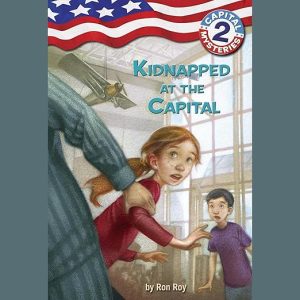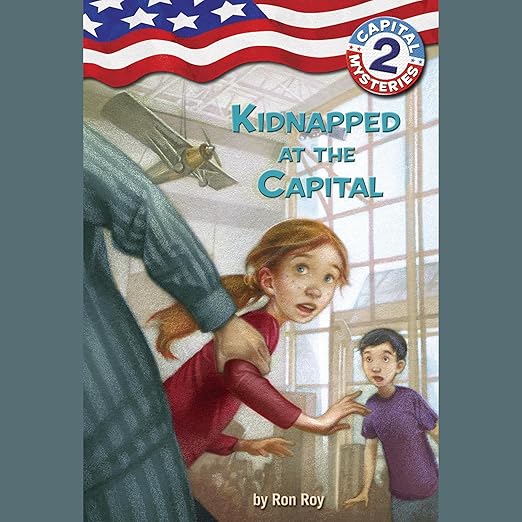
KC and Marshall return in Capital Mysteries #2: Kidnapped at the Capital, and Ron Roy wastes no time escalating from the first book. The audiobook, narrated by John H. Mayer and running under an hour, starts from a premise almost perfectly suited to its audience: KC's mother and the President of the United States are kidnapped at the Cherry Blossom Festival, and when KC discovers that the FBI is on the case, her response is that she does not care. She is going to find her mom anyway.
Roy is the author behind the long-running A to Z Mysteries series, which means he brings genuine expertise in what works for the young readers this chapter book series targets. The Capital Mysteries books add a specific educational layer by setting each entry against a real Washington D.C. landmark or event, here the Cherry Blossom Festival and the institutional geography of the capital, giving them a dual function as both entertainment and informal civics introduction.
No One Cares as Much as You Do
The book's core appeal is its proportions. At under an hour, the audiobook is sized exactly right for a single focused listening session with an early-chapter-book reader, approximately seven to nine years old, who cannot yet sustain attention across a longer narrative but wants a story that respects their hunger for real plot. Roy does not pad. The mystery is established quickly, the investigation has logical steps that a child can track and anticipate, and the resolution arrives without requiring the reader to hold too many variables in mind simultaneously.
KC's character is well-drawn within the constraints of the format. Her refusal to defer to institutional authority, including the FBI, in the matter of finding her own mother is both developmentally plausible and satisfying for young readers. Children understand the logic that no one cares as much about the people you love as you do, and Roy builds his plot around that logic rather than asking KC to wait patiently while adults handle things. Reviewer KayBee629 noted that her seven-year-old daughter finished the book within a day and talked about it for days after, which is specific evidence that the emotional hook works.
Mayer Keeps KC Energetic, Never Frantic
John H. Mayer's narration is energetic without being frantic, calibrated to the pace of a young listener's attention. He gives KC a voice distinct enough to be engaging without the kind of exaggerated character performance that can tip into caricature. The dialogue scenes, particularly the moments when KC asserts herself against adults who underestimate her, are read with enough conviction to make the character's determination feel real rather than merely scripted.
The Washington D.C. setting is woven into the plot rather than bolted on as a geography lesson. The Cherry Blossom Festival is not simply named and then ignored; it functions as the scene of the kidnapping and shapes the initial confusion and witness accounts that KC has to work through. Reviewer Jess noted that the audiobook is both exciting and educational, which is accurate, but the educational dimension is earned through integration rather than delivered through expository asides. This is the correct approach for a series aimed at emerging readers.
Emotional Investment Runs Deeper After the First Book
The under-an-hour runtime means there is essentially no space for complexity. The mystery is clean and linear: a clear problem, a motivated protagonist, logical investigative steps, and a resolution. That economy is appropriate for the audience and skillfully executed, but listeners who come in expecting the layered ambiguity or character depth of adult mystery fiction will find the architecture deliberately simplified. This is not a limitation of execution; it is a genre and audience requirement that Roy meets with evident craft.
The series functions best as a sequential read, and this second entry builds on the reader's established relationship with KC and Marshall. While newcomers can understand the plot, the emotional investment in the characters is richer if you have spent time with them in the first book. Reviewer Di Lynn noted her fourth-grader loves the series even though it is below her reading level, which suggests the character and mystery dynamics retain appeal across a broader age range than the marketing targeting might imply. The 4.6 rating across 229 reviews reflects consistently satisfied readers across that range.
First Through Third Grade, Nothing to Lose
This audiobook is designed for listeners in the early chapter book stage, roughly first through third grade, who are ready for a plot with genuine stakes but still need a narrative short and clear enough to follow comfortably. It is a strong option for parents or teachers looking for a listening experience that introduces Washington D.C. geography and civic institutions through story rather than instruction. The series also has clear cross-appeal for confident young readers who love mysteries and want one that can be finished in a single sitting.
Older children who have outgrown the chapter book format and adult listeners will not find the complexity they need here. That said, as a family listening experience for a car trip or quiet afternoon, the story is entertaining enough that the adults in the room will not find it tedious. The mystery logic is sound, the Washington D.C. civics are painlessly absorbed, and Roy's economy with plot is something any writer across any genre can appreciate. At under an hour of runtime, there is genuinely nothing to lose by trying it.
- Narration: John H. Mayer brings an energetic, age-appropriate enthusiasm to KC and Marshall's adventure, keeping the pace quick enough for young listeners without talking down to them.
- Themes: Problem-solving and perseverance, friendship, Washington D.C. landmarks and civics
- Mood: Lively and reassuring, with the satisfying urgency of a mystery where kids outpace the adults
- Verdict: A fun, tightly plotted entry in Ron Roy's accessible mystery series that pairs real Washington D.C. geography with a plot young listeners will find genuinely engaging.