Before You Press Play
- Narration: Jane Branch's clear, instructional delivery suits the step-by-step format well and makes technical material on wax types, wicks, and safety protocols easy to follow while listening.
- Themes: craft-to-business transition, materials and technique, entrepreneurial marketing
- Mood: Practical, encouraging, and methodically structured
- Verdict: A thorough entry-level guide for anyone considering turning candle making from a hobby into a business, covering craft technique and commercial basics in five focused hours.
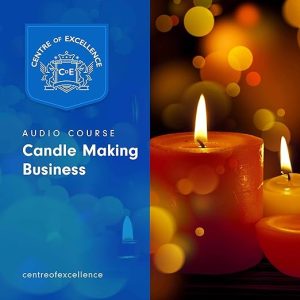
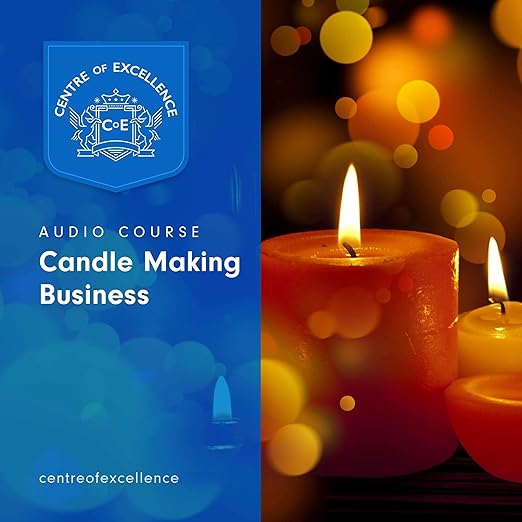
Candle Making Business 101 by Grace Holmes operates from a premise that more how-to books should adopt upfront: the craft and the commerce are not separate subjects. Too many entrepreneurship guides assume you already know the making part and skip to the selling. This audiobook, narrated by Jane Branch, treats them as a single integrated project. You learn about beeswax and paraffin properties in the same course of listening where you learn about marketing channels and supply sourcing, and the sequencing makes a kind of intuitive sense. You cannot sell what you do not understand how to make.
At 5 hours and 36 minutes, this is a compact audiobook that moves efficiently through a substantial amount of technical and practical content. The craft coverage is genuinely thorough: Holmes walks through different wax types, wick varieties, safety precautions, workplace setup, container selection, additives, and colorants before moving into specific candle forms. Birthday candles, beeswax candles, Danish tapers, twisted tapers, scented candles, floating candles, multi-wick candles, hand-molded candles, and beaded candles all receive dedicated attention. That breadth is impressive for a five-hour format, and Jane Branch's narration keeps the technical detail accessible rather than overwhelming.
The book is making an argument by its very structure: that the skills required to produce beautiful candles and the skills required to build a business around them are learnable in sequence, with patience and the right information. Holmes does not suggest the transition from hobbyist to entrepreneur is automatic or easy. The business section covers supply sourcing, equipment procurement, and marketing techniques with the same methodical care as the craft section, which tells you that the author understands the gap between making a candle you are proud of and making a candle someone will pay for.
The safety emphasis throughout is worth noting specifically. A significant portion of the craft instruction is dedicated to safety precautions during the candlemaking process and protocols for making the workspace safe. This is not boilerplate. Candlemaking involves hot wax, open flames, and potentially flammable additives, and a guide that treated safety as an afterthought would be a genuinely poor guide. Holmes gives it early and repeated attention, which signals the kind of practical seriousness that distinguishes useful instructional audiobooks from enthusiastic but incomplete ones.
Branch Makes Conceptual Wax Knowledge Portable
The audiobook format works for this material, perhaps counterintuitively. Candlemaking is a hands-on craft, and some instructional content genuinely requires a visual component. But the foundational knowledge Holmes is conveying, the properties of different waxes, the logic of wick sizing, the chemistry of scent blending, the economics of direct-to-consumer versus wholesale, are conceptual rather than procedural. You can absorb them while listening, process them, and then apply them when your hands are free. Jane Branch's instructional delivery keeps the content organized and retrievable rather than flowing past you in an undifferentiated stream.
For listeners specifically interested in the business side, the marketing section is the most distinctive part of the guide. Holmes covers promotional techniques with the understanding that candlemaking businesses operate largely through visual platforms and gift-market channels, which means the marketing conversation is specific to the product rather than generic entrepreneurship boilerplate. That specificity adds real value for listeners who already know the basics of small business but need guidance tailored to a craft-product context.
Soy, Paraffin, and Beeswax Change Everything Downstream
Holmes organizes the material in a logical progression from raw materials to finished product to commercial operation, but the density of technical detail in the early craft sections requires attention. The distinctions between different wax types, specifically soy, paraffin, beeswax, and blended options, matter because they affect burning time, scent throw, appearance, and cost calculation. Listeners who absorb those distinctions early will find the subsequent candle-type sections much more useful, because Holmes frequently refers back to material properties when explaining why a particular technique works for a particular candle form.
The transition from the craft instruction to the business instruction in the latter portion of the audiobook is the moment to listen with full attention. Holmes is careful to position the business content in relationship to the craft knowledge built in the earlier sections: the reason you need to understand your supply chain is that your wax costs directly determine your pricing model. Listeners who treat the two sections as independent chapters will miss the integrative logic that makes this guide more coherent than its length might suggest.
For listeners working through the craft sections while driving or doing other tasks, the formatting of the candle type surveys repays repeated listening. Holmes does not simply describe what each candle type is; she explains why you would want to make it, what occasions it serves, and what technical adjustments it requires relative to simpler forms. The beaded candle, for instance, demands different container considerations than a standard poured candle, and the birthday candle's specific wick requirements relate directly to the short burn time expected of a celebratory candle rather than an ambient one. These details accumulate into genuine practical knowledge rather than a catalog of possibilities you could find on any craft website. The audiobook earns its instructional credentials by being specific rather than comprehensive at the surface level.
Craft and Business Treated as One Continuous Skill
Hobbyist candlemakers who are seriously considering whether to take the business step will get the most from this audiobook. It covers enough foundational craft material to be useful to complete beginners, but its distinctive value is in treating craft knowledge and business knowledge as continuous rather than separate. Total beginners to candlemaking may want to supplement with more hands-on visual resources before their first batch. Experienced makers who already have their craft dialed in and are primarily interested in the commercial side can skip into the latter sections without losing too much context. At under six hours, Candle Making Business 101 is an efficient use of listening time for anyone in the hobby-to-business transition zone.