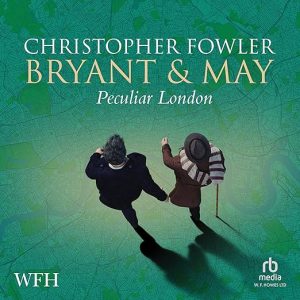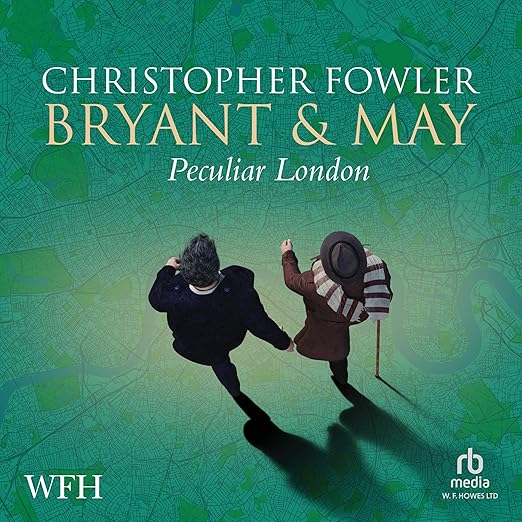
I have been reading Christopher Fowler's Bryant and May novels for years, so when I heard about this companion volume I downloaded it immediately. I listened to the first three hours on a single evening walk that was supposed to be forty minutes. Tim Goodman's voice, carrying Fowler's voice, carrying Bryant and May's voices, is simply good company. You walk further than you intended because you do not want to stop.
Bryant and May's Peculiar London is not a mystery novel. That distinction matters and one reviewer flags it fairly: if you come looking for a crime at the center of things, you will not find one. What you will find is something rarer and more personal: Christopher Fowler, writing while seriously ill, using the familiar voices of his two oldest detectives to conduct what amounts to a final tour of the city he loved most. That context shapes how the book lands, and if you know it going in, the warmth of the whole project becomes even more apparent.
What We Made of It
The book operates as a kind of annotated ramble. Bryant and May lead you through streets with genders, theatres stranded in time, buildings that vanished in plain sight, the two Londoners who ever met Dracula, Charlotte Bronte's excitement about the city, and the hiding places of London's devils. The historical research is genuinely impressive and consistently surprising. Fowler spent decades accumulating this material, and the intelligence behind the curation is evident on every page.
What makes the book work beyond mere trivia accumulation is Fowler's voice as filtered through his characters. Bryant is the more eccentric, wilder, memory-excavating presence. May is the foil who keeps things from flying off entirely. That dynamic provides comic structure even without a plot. The arguments and digressions between them feel earned by two decades of novels in which we have come to know exactly who these men are and how they move around each other.
One reviewer describes it as capturing 'something of the city's restless spirit,' and that phrase from Fowler's own introduction is the most accurate description of the book's ambition. London resists complete understanding, and Fowler's method of deliberately wandering off course, bluffing and bamboozling along the way, is the only honest way to approach a city that size.
Why Bryant & May’s Peculiar London Works as an Audiobook
At nearly nineteen and a half hours, this is a substantial commitment. But the format rewards that length. Fowler is not trying to argue a thesis or construct a plot. He is meandering, and that meandering is the point. The audiobook format is ideal for this kind of material: you can let it wash over you on a walk, a commute, a long drive, and the accumulation of eccentric detail creates an almost dreamlike portrait of a city that simultaneously resists and rewards knowing.
One reviewer describes the series resting on their shelf, waiting to be revisited, and notes that Fowler's passing makes that anticipation elegiac. The book carries that quality throughout, particularly in the moments where Bryant and May admit how much they have forgotten.
What Might Not Land
If you have not read the Bryant and May mystery novels, you can still enjoy this book, but you will miss some of the emotional texture. The in-jokes, the character quirks, the specific way Bryant approaches a digression and May sighs at it, all of that lands differently for readers who know these men from a decade or two of crime novels. First-timers will still find London richly rendered, but the experience is fuller for series veterans.
The book also bluffs occasionally, as Fowler promises it will. He is playing with the boundary between fact and fiction, and not everything presented as historical is entirely verifiable. That unreliability is deliberate and part of the charm. Go in expecting an eccentric interpretation of London rather than a scholarly guide, and you will be appropriately delighted.
Who Should Listen to Bryant & May’s Peculiar London
Bryant and May series fans will treasure this. London obsessives of any background will find real pleasures here. Those who want linear narrative, crime plots, or strict factual reliability should look elsewhere. This is a farewell from a writer who loved his city and his characters, and it works best when received in that spirit, as something to be savored in pieces rather than consumed for plot.
The Short Version
- Narration: Tim Goodman is well-matched to the dual-narrator voice of Bryant and May. He captures the bickering, digressive quality of the prose without letting it become exhausting over nearly nineteen hours.
- Themes: hidden London history, the unreliable narrator as guide, a writer's farewell to the city and characters he loved most
- Mood: Eccentric and affectionate, like being led astray by a very well-read friend who keeps forgetting the point
- Verdict: A deeply personal act of love for London from a dying author. Best appreciated by readers already invested in Bryant and May, though it holds its own as a London curiosity for any willing wanderer.
Before You Listen
Is this a nonfiction guide to London or a work of fiction?
It is deliberately both and neither. Fowler uses his fictional detectives as narrators to explore real London history, but he freely blends fact, legend, and invention. Think of it as an eccentric love letter to a city rather than a reliable travel guide.
How does Tim Goodman handle the dual-voice structure of Bryant and May narrating together?
Goodman distinguishes the two voices clearly enough to maintain the sense of dialogue without resorting to exaggerated characterization. Over nearly nineteen hours the performance holds up, keeping the bickering tone lively rather than tiring.
Was this book completed before Christopher Fowler passed away?
Yes. Fowler completed the manuscript before his death, and the book was published as intended. Many readers describe it as a farewell to the city and characters he loved most, which adds particular weight to the final sections and to the book's gentle insistence on the pleasure of getting lost.