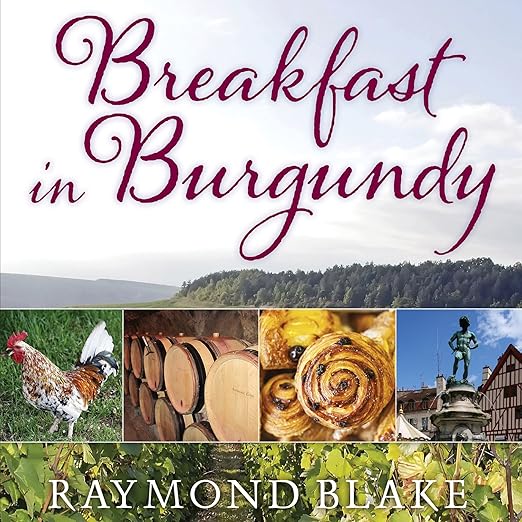
I first encountered Breakfast in Burgundy the way most people discover food memoirs: somebody mentioned it in passing while we were eating something good, and I filed it away for later. Later arrived on a Sunday evening when I needed exactly what this book delivers, the sound of a life organized around dinner, in a place where that is not considered unusual but simply correct. Raymond Blake's account of buying a house in Burgundy and building a life around its food and wine is the kind of audiobook that makes you hungry and slightly jealous in equal measure.
Blake is a wine writer by trade, which matters for understanding the book's register and its limitations. He brings to Burgundy the professional's eye for provenance, terroir, and the specific vocabulary of French culinary tradition. The hunt for the best jambon persillé is treated with the same seriousness as the water leak that cost a fortune, which is exactly the correct hierarchy of values for a book like this. One reviewer called it "part travel memoir, part foodie detective story, part love song" to Burgundy, and that three-part description is accurate in all its components.
Our Take on Breakfast in Burgundy
What Blake does exceptionally well is connect food to people and place in ways that feel specific rather than atmospheric. The story of Chicken Gaston Gérard, first cooked in Dijon in 1930 for the celebrated gourmet Curnonsky by the mayor's wife, and Blake watching a neighboring winemaker's wife prepare it while he stood at her shoulder is a perfect distillation of what the book offers: the sense that food is knowledge stored in hands and kitchens, passed between people who know each other and their land. The recipe tips embedded throughout reward attentive listening.
The prose is dazzling in places in a way that sustains an audio listen across nine hours and twenty minutes. One reviewer noted finishing the book and immediately leafing back through to favorite scenes, which is the highest compliment this genre can receive. John Keating's narration earns a share of that response, he reads without hurrying, with a quality of pleasure in the language that communicates itself to the listener.
Keating's reading is a genuine asset. He handles the French proper nouns, the wine names, the food terminology with the ease of someone comfortable in the language rather than someone phonetically approximating it. For a book so thoroughly embedded in French culinary vocabulary, that matters. The audio production from Audible Studios is clean and warm, matching the material's temperature.
What elevates this above generic food travel memoir is Blake's honest accounting of difficulty alongside pleasure. The water leak that cost a fortune. The moments of despair. The gap between the dream of Burgundy and the physical reality of owning a house in a foreign country with its attendant bureaucratic and infrastructural surprises. The book does not pretend the life it depicts is frictionless, which makes the pleasures it describes feel more real.
What to Watch For in Breakfast in Burgundy
Two reviewers independently raised the same flag: the wine coverage is dense and the wine names will slip past listeners without specialist knowledge. Blake is a professional wine writer, and his treatment of Burgundy's vineyards and their bottles reflects that background in ways that will delight oenophiles and glaze over general listeners. One reviewer described skipping sections; another described it as a book for francophone experts. That is somewhat overstated, but the wine dimension is genuinely central rather than peripheral, and listeners who came primarily for the house renovation story and the village characters may find themselves impatient during the cellar chapters.
This is not a book about the mechanics of expatriate relocation. The practical dimensions of buying property in France are present but not the focus. It is a sensory and cultural record rather than a how-to.
Who Should Listen to Breakfast in Burgundy
The ideal listener loves food and is interested in wine, has some curiosity about French regional culture, and does not need a narrative with conventional plot momentum to stay engaged. Readers who loved Peter Mayle's A Year in Provence will find a kindred sensibility here, though Blake is more technically specific about what he eats and drinks. Listeners who find wine coverage tedious or who came for adventure and dramatic incident rather than the pleasures of the table will struggle with the middle sections. At 4.0 stars with 117 ratings, this is a book that does not pretend to be for everyone, and the audience it is for tends to love it completely.
In Brief
- Narrator: John Keating reads with the measured warmth of someone who has spent time in French kitchens, his pace suits the unhurried pleasure of the material.
- Subjects: Expatriate life, food as cultural knowledge, wine as landscape
- Tone: Rich and sensory, occasionally dense with proper nouns
- Bottom line: A food memoir that earns its place beside the genre's best, though its wine obsession will lose listeners who came for the house and the village rather than the cellar.
A Few Questions About Breakfast in Burgundy
Do I need wine knowledge to enjoy this audiobook?
Basic enjoyment does not require expertise, but the wine sections are written by and for someone with professional knowledge. Listeners with no interest in wine will find significant portions of the text less engaging than the food and village narrative chapters.
Does John Keating handle the French food and wine terminology convincingly in narration?
Yes. He reads the French terms with ease rather than awkward approximation, which matters considerably in a book where the proper nouns are part of the atmosphere. It is one of the stronger casting matches in this genre.
Is this a good audiobook for someone who has never read food travel memoirs before?
It is a strong example of the genre but not the most accessible entry point if you are completely new to food memoir. Peter Mayle's Provence books or Bill Buford's Heat might ease a first-timer in more gently before returning to Blake's more technically specific pleasures.