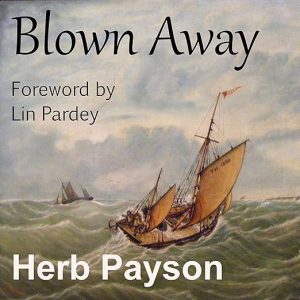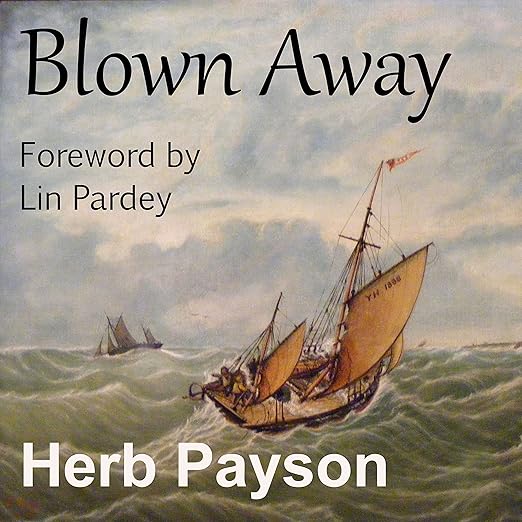
I found Blown Away through a chain of recommendations that tends to circulate among people who have either done long offshore passages or spent significant time fantasizing about them. It has the quality that the best sailing memoirs share with the best mountaineering writing: the ability to make you simultaneously relieved not to be there and genuinely envious of the people who were.
Herb Payson and his wife Nancy, with their teenage children aboard the 36-foot ketch Sea Foam, cruised the Pacific for six and a half years after leaving their jobs in the Los Angeles entertainment industry. The book originally published in 1995 and was reissued in this anniversary edition with a foreword by Lin Pardey, a canonical figure in cruising literature, plus Payson's own reflections on what the voyage did to his children and to the marriage that made it possible. Those additions are more than marketing; they give the book a reflective dimension that the original lacked.
What Herb Payson Delivers
Payson's style is direct, self-deprecating, and genuinely funny. He doesn't write about himself as a visionary who saw through the conventions of shore life. He writes as someone who made a decision that was partly brave, partly naive, and entirely worth making, even though it contained stretches of what he describes without euphemism as stark terror. The close-quarters family dynamics aboard Sea Foam are treated with the same wry honesty. Reviewer Xanthar credits the book with demonstrating that real people actually do sail across oceans, which sounds like faint praise until you consider that the biggest psychological barrier to the cruising life is exactly this abstraction: people understand it intellectually but cannot quite make it feel real. Payson makes it real, in all directions.
The Pacific as a setting is vast and variable in ways that Payson captures with the eye of a former entertainer who understands narrative pacing. The island-to-island structure gives the book a natural episodic rhythm, with each landfall bringing new dynamics. Reviewer Helen R. Cates describes a mixture of dread, excitement, and anticipation as the Payson family moves through their route, which is an accurate description of the emotional register the book sustains.
What Herb Payson Gets Right
Nick Hahn's narration suits the material well. Payson's humor is dry and quiet rather than slapstick, and Hahn finds the right register: someone telling stories at a dock bar rather than performing them on a stage. The nautical terminology, which reviewer Xanthar notes can be unfamiliar to non-sailors, is handled without condescension. Payson himself used jargon as a writer with the confidence of someone who knows his primary audience is sailing-adjacent, and Hahn navigates this without either over-explaining or leaving listeners behind.
At 10 hours and 59 minutes, the runtime is generous for what is essentially a memoir structured around the highlights of a six-year passage. The pacing does occasionally slow, as reviewer Jim G. notes, but the slower passages tend to be the ones where Payson is doing the most interesting reflective work: examining what the confinement and challenge of living aboard does to relationships between parents and teenagers, and between two adults who committed to a project together that neither could abandon unilaterally.
Where Herb Payson Loses Some Ground
The Lin Pardey foreword is worth treating as more than a publisher's endorsement. Pardey and her late husband Larry are themselves figures of considerable authority in offshore cruising culture, and her framing of the book's significance in the context of cruising literature gives the material useful historical placement. Listeners unfamiliar with the genre will learn more about why Blown Away matters; listeners who know the genre will appreciate the specific points Pardey makes about what distinguishes Payson's voice from contemporaries.
Payson's reflections on how the voyage affected his children are honest in ways that both support and complicate the romanticization of the cruising life with a family aboard. He doesn't pretend it was universally transformative in positive directions, and that honesty is part of what gives the book lasting value beyond the adventure narrative surface.
Should You Listen to Blown Away?
This is for anyone with an interest in the cruising life at any level of seriousness, from the actively planning sailor to the committed armchair voyager. Reviewer Sam specifically recommends it to people with no intention of ever setting foot on a passage-making yacht, noting that it works as literature independent of genre interest. That's an accurate assessment. The sailing context is specific, but the questions Payson wrestles with about how to live and what to trade away for freedom are not.
Listeners who want more technical instruction or route-planning guidance will need to look elsewhere. Blown Away is memoir, not a passage-planning manual. There is enough practical texture to feel authentic, but the project is primarily narrative and human rather than instructional.
Good to Know
Do I need sailing experience to follow and enjoy Blown Away?
No. Reviewer Xanthar, who raised the nautical jargon question, confirms that the terminology doesn't impede the story. Payson writes for a broad audience, and Nick Hahn's narration handles the technical language without making non-sailors feel excluded.
What does the 35th anniversary edition add to the original 1995 book?
The edition includes a foreword by Lin Pardey, a significant figure in offshore cruising literature, and Herb Payson's own reflections on how the voyage affected his children and his marriage. These additions give the book a retrospective layer that the original lacked.
Is this primarily a family memoir or an adventure sailing book?
Both, genuinely. The Pacific passage provides the adventure structure, but the close-quarters family dynamics between Herb, Nancy, and their teenage children are treated with as much attention as the voyaging itself. The family dynamics are arguably the book's most distinctive element.
How does Blown Away compare to other Pacific cruising memoirs like those by the Pardeys?
Payson's tone is more self-deprecating and humorous than the Pardeys' more technically authoritative voice. Where the Pardeys write with the confidence of technical masters, Payson writes as a capable amateur who is honest about both competence and mistakes, which makes his book more accessible to non-specialist readers.