The Short Version
- Narrator: Taylor Mali carries a 2003 Blackstone recording of a book written for young listeners, material that asks for momentum rather than character work.
- Subjects: the Blizzard of 1888, civic response to disaster, the early history of weather forecasting
- Tone: Brisk and vivid, cold in every sense
- Bottom line: A tight two and a half hours of narrative history, minus the illustrations its readers keep praising.
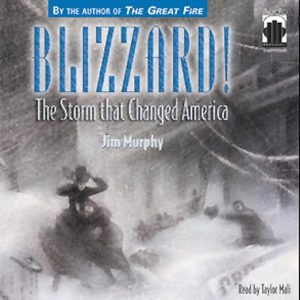
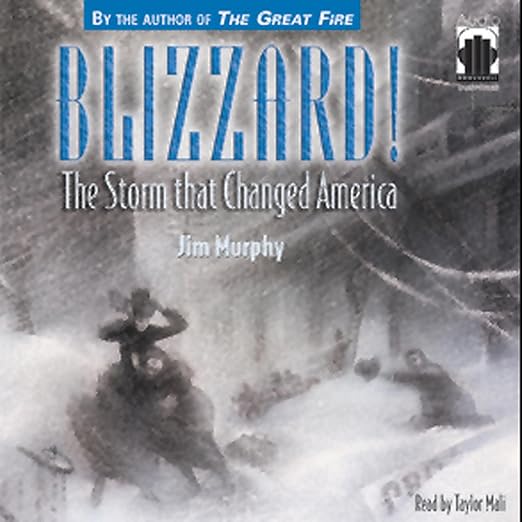
Snow arrived over New York City on March 12, 1888, at the tail end of one of the warmest winters on record, and nobody in the city expected what followed. Jim Murphy's account of that storm runs two hours and thirty-eight minutes as an audiobook, read by Taylor Mali for Blackstone and sitting on the listing since January 2003. It is filed under children's listening, its tag says History, and the written column underneath it is made up almost entirely of adults describing a printed book. All three of those facts are worth untangling before anyone buys.
Personal Accounts Against the Official Record
Attitudes are what Murphy is actually chasing, and a four-star from January 2014 named that better than the sales copy does. That reader describes the book as an overview of conditions during the storm and, more to the point, of how the disaster changed both public attitudes and the future direction of the country, assembled from personal accounts set against the official record. The double structure, individual voices on one side and institutional response on the other, is what lifts this above a straight disaster narrative. The blizzard is the occasion; the argument underneath is about what a country decides to do after one.
Twenty-one inches is the figure the description settles on, and it sounds modest until you read what the copy says the city did with it. People struggled along slippery streets and sidewalks, some heading home, some to work, some going out to care for the less fortunate, and within hours a metropolis had been brought to a ferocious standstill. Murphy's narrative style is the first thing the publisher sells, and the material rewards it. Two hours and thirty-eight minutes leaves no room for digression and the book wants none, moving from the first flakes to the aftermath at the pace of a strong feature article.
Fifty Inches in Boston, Sixty in 1888
Boston is where the December 2018 response came to this book from, and the route is worth repeating. That reader lived through the back-to-back nor'easters at the start of 2015, watched almost fifty inches fall in two days, and heard the news coverage reach back to 1888 for its comparison, citing nearly sixty inches for the older storm. What followed was a mild disappointment that Murphy stays on New York rather than Boston, then a full endorsement anyway, with the jacket line quoted approvingly: a region brought to its knees by three days and nights of hurricane-force winds and unrelenting snow. Historical weather writing works exactly that way. You arrive for the storm you remember and stay for the one you did not.
Trains and snow are the two things a March 2026 five-star says will pull a listener in, and the recommendation is broader than it first sounds. Anyone who has ever seen snow or ridden a train, that entry argues, should read this. It describes the appeal accurately, because the book runs on infrastructure as much as on weather, on what happens to a city when every system people depend on stops at the same moment. For a listener that means the interest does not require caring about the nineteenth century in advance. It is also one of the older recordings you will find on this subject, and one of the shortest.
A Paperback Line That Means Nothing Here
Illustrations are the first casualty, and the record admits it if you read the column carefully. A five-star from June 2013, written by a teacher who used the book with fifth graders, praises the detail, the engaging text and the illustrations in one breath, and describes students going on to do their own primary research online about the period. Those pictures cannot exist in a recording. The description compounds the problem by announcing that the book is available for the first time in paperback, a line written for a print buyer that has been carried onto an audio listing where it means nothing whatsoever.
Children's is where the catalog files this, while the tag beside it says History, which is closer to the truth of who buys it. The people writing here are adults throughout: teachers, weather-watchers, readers setting personal testimony against official records. None of them writes as a child, or as a parent buying for one. One entry from July 2025 is a single word, filed under a headline counting the dead. Murphy writes with a young reader's clarity, but the storm's human cost is part of the story, and a parent shopping the children's shelf on category alone will not learn that from anything on the page.
Buy the Paperback First, the Recording Second
Classrooms are the obvious home for this and the format cooperates. Two and a half hours fits inside a school week without displacing anything, the sections are short enough to stop and discuss, and the subject links science, history and civics without anyone having to force the connection. Homeschooling families running a weather unit or a nineteenth-century unit will get more per minute here than from almost anything longer. Listeners who simply like disaster narrative will find that the storm does the work, and the writing never talks down, which is why adults keep showing up in the column.
Adults wanting the definitive account of 1888 should look for a full-length history instead, since this is a compact retelling written with young listeners in mind and it makes no claim to be exhaustive. Anyone who wants the pictures should buy the paperback the description keeps advertising, and treat the recording as the second copy rather than the first. What the audio delivers is a fast, well-built piece of narrative history that a family can take in together on a single trip, and at this length the experiment costs almost nothing.