In Brief
- Voice: One voice for three young leads and the adult stranger who unsettles them, on a runtime short enough to finish inside a single car trip.
- Big ideas: A prince off duty, friendship across two continents, a charismatic newcomer and a missing neighbor, Southern history seen by a visitor.
- Atmosphere: Sunny on the surface with a slow creep working underneath it.
- Worth it?: A strong middle-grade mystery for listeners who want the character before the costume, though returning readers may find the shape familiar.
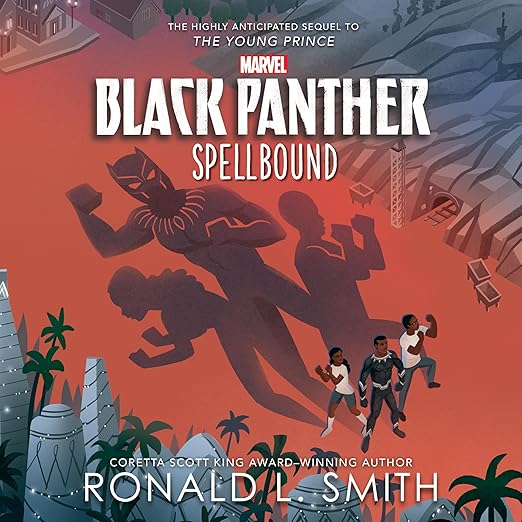
T'Challa returns to Alabama for summer break, which is not a sentence I expected to write about the Black Panther, and it is precisely why this audiobook works. He is thirteen. He is on vacation from being a prince. The town is Beaumont, the friends are Sheila and Zeke, and for the opening chapters the most pressing item on his agenda is the food.
Wakanda Stays Offstage and That's the Whole Idea
Wakanda stays offstage for most of this book and the absence is the entire idea. Ronald L. Smith is writing the prince before the mantle, and this second volume plants him somewhere he holds no authority whatsoever. A thirteen-year-old with a nation waiting on him is still a thirteen-year-old on somebody's grandmother's porch, and the book keeps that tension humming quietly underneath the mystery it is telling.
Beaumont is where the mystery starts. A man calling himself Bob keeps turning up wherever T'Challa happens to be, residents begin flocking to the message he is spreading, and a prominent citizen goes missing. A five-star response that opens on a line from Cicero about a room without books calls this the perfect middle-grade adventure mystery, and that reader had never met the character in a film or a book beforehand, which is a useful data point for anyone buying a gift: the story does not require the franchise to land.
Middle-grade mystery has strict rules about what it can put in front of a reader, and Smith works inside them cleanly. The threat is real, the disappearance carries weight, and the resolution asks three kids to do the work themselves instead of waiting for an adult to arrive. The rare ancient book at the center of the plot is exactly the sort of object that gives a mystery a shape a young listener can hold: something specific, something stealable, something worth lying about. The description is careful about how much it gives away, naming a plot built around that book and a man who is not as he seems, an unexpected villain, and three teenagers who have to band together to save the people of Beaumont. That is enough scaffolding for a young listener to anticipate the shape without having the turns spoiled, which is a harder balance to strike in cover copy than it looks from outside.
One Reader Covers Every Register in Alabama
Dion Graham has the assignment, and it is a harder assignment than the running time suggests. Five hours and thirty-eight minutes covers two speech worlds, a Wakandan prince and the Alabama town he is visiting, plus two American friends and a stranger who is not what he presents himself as. Listening Library published it. Listening Library credits one reader and stops there, so every register in the book belongs to a single voice.
Alabama is doing real work here, and it is the reason the audio route is the interesting one. The description sends T'Challa toward the South's history as deliberately as it sends him toward the food, and the friends staying with Sheila's grandmother put one specific household at the center of the story. On a page, that setting is description. In a recording, a setting has to arrive through how people speak, which is why one reader covering several registers is the production decision that matters most on this title.
Younger listeners are the target and the length respects them. Five hours and thirty-eight minutes is short enough for a long car trip or a week of bedtimes without turning into a project, and short enough that a child who bounces off the first hour has not lost much. The genre field says children's audiobooks and the tag says geography and cultures. Both are accurate. This is a book about an African prince learning an American place, and the learning is the plot rather than the background.
This Column Existed Before the Recording Did
Every written response on this page is dated 2022 or earlier. This record is dated May 14, 2025. That gap is not a rounding error, and it changes how the score should be read: the opinions displayed here were formed about an earlier edition of this book, and the aggregate they feed now sits above a product none of them encountered. No entry in the column can tell you anything about this recording, for the plain reason that the column existed before the recording did.
Bob is where a parent should set expectations. The villain is a man who arrives in a small town, spreads a message, and collects followers, while a prominent citizen goes missing around him. The description keeps the mechanics vague and the shape is unmistakable: this is a story about a charismatic stranger persuading a community out of its own judgment. For many middle-grade listeners that will be the most interesting thing in the book. For a few it will be the most unsettling, and the listing carries no advisory in either direction.
Sequels get judged against what came before, and the single two-star dissent on this page makes exactly that charge. Having enjoyed the first book's treatment of T'Challa's youth in America, that reader found the follow-up running much the same script and coming out repetitive. The complaint is fair, and it is the thing a returning reader should weigh before buying: the strengths that made the opening volume work are being run again here rather than rebuilt from scratch.
The Black Panther Before He's the Black Panther
Families listening together are the obvious audience, and the four-star response puts the case better than the marketing manages, noting that this is the Black Panther before he is the Black Panther, in middle school, which that reader reckons is scarier than anything the Avengers will ever face. The joke doubles as an accurate description of the method: drop a future king into an ordinary adolescent situation and let the ordinary situation win. It lands too for listeners who reached the character through a screen and want something the screen has not given them: a thirteen-year-old on summer break, among friends with no idea what he is going to become.
Skip it if your listener came for superhero action, because powers are not the engine and fights are not the point. One more group: readers who loved the opening volume and want the formula varied rather than repeated should read the dissent on this page first. Summer in Alabama is where the series puts its prince this time, and that displacement is the whole reason the book has anything to say.
Frequently Asked Questions
Do you need book one before this Black Panther audiobook?
The record marks it as volume two of The Young Prince, and the description opens by referring back to friendships made earlier. The mystery itself is self-contained, so a newcomer can follow the plot without trouble. What a new listener loses is the accumulated warmth between T'Challa, Sheila and Zeke, which the book assumes rather than builds.
How long is the audiobook and who published it?
Five hours and thirty-eight minutes, issued by Listening Library and dated May 14, 2025. Dion Graham carries the reading alone, with no other production name attached to the file. The record marks this as the second volume of The Young Prince, and the shelf is children's audiobooks.
What age group is this Black Panther audiobook written for?
The copy pitches it as middle grade and lists comparable middle-grade series beside it. T'Challa is thirteen, his friends are the same age, and the book runs on sleuthing rather than combat. Younger listeners who find a persuasive stranger and a missing neighbor unsettling should be considered first, since the listing carries no advisory.