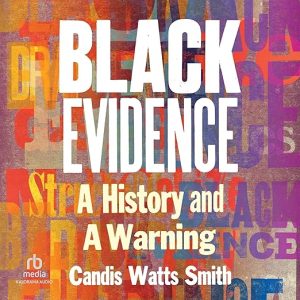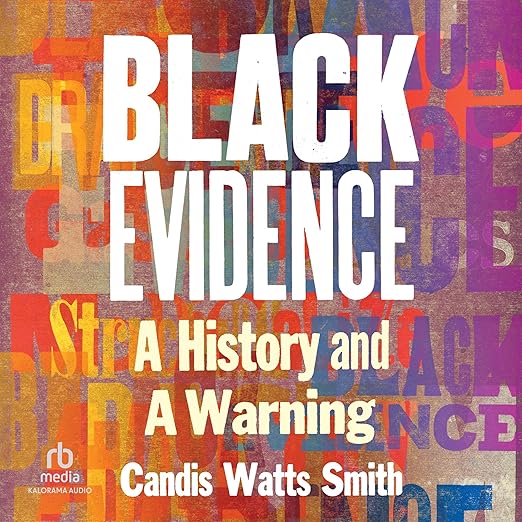
Belief is a political resource, and Candis Watts Smith argues that America has spent four centuries rationing it. Black Evidence works through the pattern: a period of reckoning, a wave of policy, then the retrenchment that undoes it, repeating from Reconstruction through the Southern strategy to the multiracial protests of 2020 and the swift dismantling that followed. The audiobook runs nine hours and thirty-four minutes, and its closing prescription happens to be the one thing this format does natively.
Calling Disbelief an American Pastime
Smith's framing is sharper than the usual survey. The book does not treat disbelief as a byproduct of racism but as a technique with a history, a set of tactics developed and refined to deny Black testimony its standing. That shift matters, because it converts a moral complaint into an argument about evidence, and an argument about evidence can be tested against four centuries of examples rather than merely asserted. The word doing the most work in the description is pastime. Calling the denial of Black truth an American pastime is provocative and also precise, since a pastime is something practiced habitually, casually, and by people who would never describe themselves as committed to it.
Blue's Reading Must Hold the Vignette Pattern
Structure follows the thesis. Rather than a continuous history, the book curates vignettes, critical moments chosen to show one mechanism operating in different centuries: Black communities terrorized, Black children treated as adults, Black resistance recast as pathology. Curation is the right word, because the selection is doing the arguing, and the listener is being asked to notice a repetition rather than to follow a chronology. That form also solves a problem which defeats most books on this subject, because four centuries is too much for a narrative and too little for a reference work, and a curated sequence lets an argument move across periods without pretending to cover them.
Diana Blue holds the reading credit on a Kalorama recording released in March 2026. Vignette-driven argument at this length is a demanding shape for audio, because each section changes period and cast, and anybody who loses the thread between two vignettes loses the pattern the whole book exists to demonstrate. Chapter markers will matter more than they do in most nonfiction.
Listening Is What the Book Asks For
Listening is what the book asks for, which makes an audio edition faintly recursive. The prescription in the closing line of the description is to attend to the veracity of Black voices and amplify it, and a recording is the one format that takes that instruction literally. Coincidence rather than design, certainly, but it changes how the final movement lands, and it is the reason I would choose this edition over print.
Eva K.'s response, the only one on the page, describes the effect in military terms: a banner raised in the heat of battle against a cruel enemy. That account credits the sourcing specifically, naming articles, documents and summations as the machinery behind the argument, which tells you the book does its work with material rather than with assertion. It went up on the day the recording published.
Timing gives the material additional weight. A book about cycles of reckoning and retrenchment arriving in 2026, after a period the description characterizes as the rapid elimination of policies built for a more equitable society, is not making an abstract point. The cure it proposes is unglamorous and specific, and whether you find it sufficient is precisely the argument the book wants to have with you. The thesis also names something readers usually experience without a word for it, the exhausting business of having to establish that an event happened at all before anybody will discuss what it meant.
One Review Says Nothing About the Reading
One rating sits above this page and it is a five, which tells you almost nothing. A single vote cannot express an average, cannot indicate consensus, and cannot survive contact with the second person who disagrees. Anybody using that score to decide should ignore it completely and read the description instead, because the number will move sharply the moment a handful of other listeners arrive. A March 2026 release is simply too new to carry a usable score, and that is nobody's fault, but it does mean the ordinary shortcuts for judging nonfiction on audio are all unavailable here.
The written record consists of one response, filed the same day the audio published, and it addresses the argument rather than the recording. Fair enough for a book of ideas, but it does mean the page offers no evidence about pace, clarity, or how a vignette structure survives being heard rather than read. A sample is the only test currently available to a buyer.
Sourcing is the other unknown. A book built on articles, documents and summations usually carries notes, audio handles notes badly, and nothing on this listing mentions a companion document, a bibliography or a printed appendix. For a work whose central claim concerns evidence, saying nothing about where its own evidence lives is a genuine gap for any listener who intends to check it.
Vignettes That Teach Without Claiming Balance
Readers of American political history who already know the outline and want a mechanism will get the most from this. So will anybody who watched the last several years and wondered why the sequence felt so familiar. The book supplies a vocabulary for that recognition, which is a more durable gift than another chronology of the same events assembled in the same order. Students and teachers are the other obvious audience, since a book organized around a repeating mechanism is far easier to teach than a chronology, and vignettes are short enough to assign one at a time without losing the shape of the whole.
A balanced survey this is not, since the description calls the book fierce and makes no pretense otherwise, so a listener hoping for both-sides framing has been warned by the copy itself. Policy manuals live elsewhere too, because the prescription here concerns who gets believed rather than what should be legislated, and it asks something of you rather than of a legislature.
Nobody here is being asked to feel differently, which is what stayed with me about the shape of the claim. The question is what happens to a country that builds procedures for discounting a particular set of witnesses and then acts surprised when the same crisis returns wearing a new decade's clothes. That question has a factual answer, and this book spends four centuries assembling it.
Before You Press Play
- Read by: A single credited reader, Diana Blue, on a March 2026 release too new to have gathered any listener feedback at all.
- At its heart: denial of Black testimony as technique, cycles of reckoning and retrenchment, evidence and who gets believed
- Vibe: Controlled, unsparing, argumentative
- Short version: A sharp reframing of a familiar history, best for listeners who want the mechanism rather than another chronology.
Is Black Evidence a history, or an argument built out of history?
An argument. The description calls it a curation of vignettes drawn from four centuries of critical moments, chosen to show a single mechanism repeating rather than to narrate events in order. Expect analysis with examples attached, and expect the selection itself to be doing much of the persuading.
Does the audiobook come with source notes or a companion document?
Nothing on the listing mentions one, which is worth knowing for a book whose argument concerns evidence. The only written response credits the research base explicitly, so the material exists somewhere in a form the recording cannot show you. Anyone planning to follow the citations should expect to want a written copy as well.
Can I trust the five-star rating on this page?
Not really, because it rests on a single vote. One rating cannot express agreement or disagreement, and the lone written response went up the same day the recording published. Judge this one on the description, the subject and a sample rather than on a number nobody has tested yet.
How long is the audiobook, and does the structure suit listening?
Just over nine and a half hours, arranged as vignettes rather than as continuous narrative. That shape asks more of a listener than a chronological book does, since the period and the cast turn over from one section to the next while the underlying pattern holds. Chapter navigation will matter if you listen in short stretches.