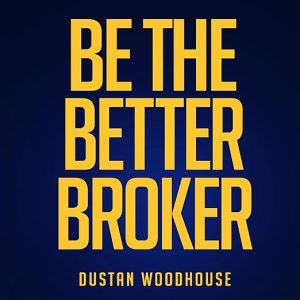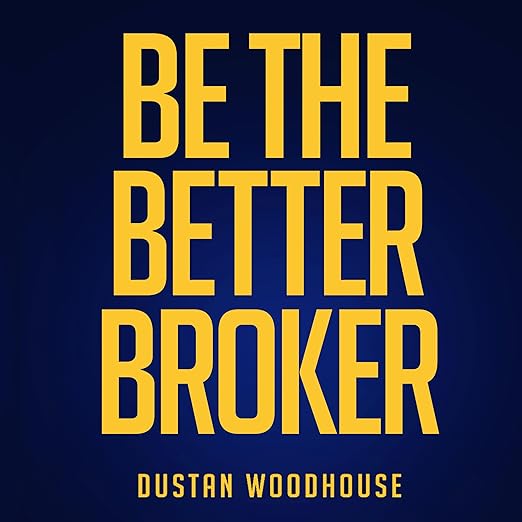
Career-entry books tend to fall into two categories: the ones that treat professional development as a series of hacks, and the ones that treat it as a form of character building. Dustan Woodhouse's Be the Better Broker sits firmly in the second camp, which is rarer than it should be. I came across it while researching audiobooks for a section of AudiobookDaily focused on finance and professional development, and what struck me almost immediately was how seriously Woodhouse takes the period before licensing - the habits, attitudes, and skills that most industry books ignore entirely in their rush to get to tactics.
The book is the first volume in a multi-book series, and it makes a deliberate choice to hold off on the operational specifics of mortgage brokering in favor of something arguably more important: who you need to become before you walk into that role. At five hours and twenty-one minutes, it's a focused listen that doesn't overstay its welcome, and Sean Pratt's narration gives it an appropriate gravity without tipping into self-importance.
More Useful Than a 750-Page Textbook
Reviewer Murzban Chinvala made a comment that stayed with me: he read this more attentively than his 750-page licensing textbook and found it more useful. That's a striking claim, but it makes sense once you understand what Woodhouse is attempting. A licensing textbook teaches you what the regulations are. This book teaches you what the profession demands of you as a person - the work ethic, the attitude toward clients, the discipline of learning how to learn. Those aren't things licensing covers, and they're precisely what separate producers who last from those who flame out in their first year.
Woodhouse writes from obvious experience, and he's generous with specifics. The book isn't vague motivational language - it covers concrete actions you can take before your license arrives, ways to build value for future clients and employers that most new brokers never think about. Reviewer Neil Wilson, six months into his brokerage career in BC, described the book's greatest gift as Woodhouse's attitude toward work and his love of learning. That tracks with what the book actually delivers: it's less a manual than a mentorship, the kind of professional guidance that shapes how you approach a career rather than just what you do in it.
Pratt Delivers Intimacy Without Affectation
The audiobook format works particularly well for this kind of material. Woodhouse's writing has an intimate, direct quality - he's talking to you as a specific person making a significant career decision, not broadcasting general advice into a void. Sean Pratt picks up on that quality and delivers it without affectation. The five-hour runtime is genuinely lean: there's no padding here, no filler chapters designed to justify a longer book. Woodhouse says what he means and stops.
For listeners already licensed and established, the book still holds value, as reviewer Rose Mendoza noted after re-reading it multiple times and annotating it heavily. The foundational habits Woodhouse describes are ones that even experienced brokers sometimes let slip. It functions as a recalibration as much as an introduction.
Canadian Context, American Listeners Still Welcome
The book is explicitly Canadian in its professional context - Woodhouse is based in BC and his examples and licensing references reflect that. American listeners will find most of the principles directly applicable, but some regulatory specifics won't map cleanly to US mortgage brokering structures. This is worth knowing before you listen, not as a reason to skip it, but as context for filtering the concrete advice from the transferable wisdom.
Reviewer Dave Tout described it as a chance to pick the brain of a top producer in an industry that's relatively young and where that kind of access is rare. That's the right frame. The book succeeds not because Woodhouse is a perfect writer but because he's a candid, experienced practitioner who took his summer weekends to document what he actually knows.
Listen Before You Study for the License
Anyone seriously considering a career in mortgage brokering should listen to this before they listen to anything else. It's also worth the time for newly licensed brokers who want to audit their professional foundations, and for anyone in adjacent fields - real estate, insurance, financial planning - who would benefit from thinking seriously about habit formation and client value at the start of their career. If you're looking for regulatory exam prep or transaction mechanics, this book won't give you that. What it will give you is something licensing can't: a framework for becoming the kind of professional clients remember and return to.
Common Questions
Is Be the Better Broker, Volume 1 specific to Canadian mortgage regulations, or is it useful for US-based brokers?
The professional principles and mindset guidance are broadly applicable regardless of country. Some specific regulatory and licensing references reflect Woodhouse's Canadian context (particularly BC), but American listeners will find the core lessons on habit formation, client value, and professional attitude fully transferable.
How does Sean Pratt's narration suit this kind of instructional business content?
Pratt is well-matched to the material. He reads it clearly and with appropriate pace - not too brisk to absorb the advice, not so slow it becomes tedious. For instructional audio where you want to take mental notes, his delivery works well.
Is this book valuable for experienced brokers, or is it only for people entering the field?
Multiple reviewers with established careers found it valuable as a recalibration. The habits and professional attitudes Woodhouse describes are ones even experienced practitioners can drift away from. It reads differently depending on where you are in your career, but the underlying principles hold at any stage.