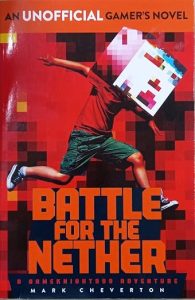
Quick Take
- Narration: Chris Sorensen delivers the action sequences with real velocity, keeping the ensemble cast differentiated across a plot that builds like a siege.
- Themes: Courage under impossible odds, the weight of responsibility, community versus individual heroism
- Mood: Fast and kinetic, built for listeners who want momentum above all else
- Verdict: A satisfying Minecraft adventure audiobook that earns its action through stakes that feel genuine even in a pixelated world.
Gameknight999 needs an army, and he needs it before Malacoda's forces overrun the Overworld. That sense of urgency is the engine of Battle for the Nether, Mark Cheverton's second entry in his Minecraft fan fiction series, and Chris Sorensen's narration captures it from the opening minutes. I listened to a portion of this audiobook with a group of kids ranging from eight to twelve, and the response was consistent: nobody reached for their phones. That is the correct metric for middle-grade action audio, and this one passes it without question.
Cheverton has built his series on a premise that is clever without being complicated: what if a real person were teleported into Minecraft and discovered that the NPCs inside the game had genuine lives, genuine fear, and genuine stakes? In Battle for the Nether, Gameknight knows the score. He knows that the people inside Minecraft can die, that the threat Malacoda represents is existential, and that he is carrying the weight of both worlds. The moral seriousness underneath the gaming premise is part of what keeps the series from feeling like pure brand extension.
Sorensen Reads Action Sequences With Real Velocity
Chris Sorensen's narration is a strong fit for the material. He reads the action sequences with real velocity, and the book has plenty of them: epic battles in the Nether, blazes and other hostile mobs, and the kind of sustained siege plotting that Minecraft players will recognize as a scaled-up version of what they face in-game. Sorensen's voice work differentiates Gameknight from the NPC characters with enough contrast to keep listeners tracking the ensemble, which grows in this second volume as Gameknight builds his coalition army. The production is clean and the pacing stays active throughout the nearly ten-hour runtime.
Building, Releasing, Building Again Like the Game
The book's greatest asset for young listeners is its ability to translate the anxiety and satisfaction of Minecraft gameplay into narrative form. The resource gathering, the strategic thinking, the threat of being overwhelmed by superior numbers: these are sensations that the target audience knows intimately, and Cheverton renders them in prose that makes them feel genuinely dramatic rather than mechanical. The audiobook format amplifies this because Sorensen's delivery paces the action the way a game's tension paces its play: building, releasing, building again.
For adult listeners who know nothing about Minecraft, the book works as a fairly conventional fantasy adventure, with the mining world's biomes and mobs serving as a distinct and internally consistent setting. Cheverton's narrative disclaimer, that this is a fan work not associated with Mojang or the official Minecraft brand - is noted at the close, but inside the story the world is treated with respect for its own internal rules, which the books repay with a level of consistency that fans of the game appreciate.
Listeners Overlay Their Own Audio Memories Here
Listeners who have not heard the first book in the series, Invasion of the Overworld, will need a brief orientation period. The premise is not re-explained at length, and some of the emotional weight of Gameknight's responsibility depends on understanding how he arrived in the game world. The book functions as a continuation more than a standalone entry. New listeners are not completely at sea, but the series is stronger heard in order.
The moral stakes are kept relatively simple, as suits the middle-grade audience. Good and evil are not as murky here as in more literary children's fiction. This is not a weakness so much as a deliberate pitch toward a readership that responds to clearly organized conflict with memorable antagonists. Malacoda is an effective villain precisely because he is powerful, motivated, and not interested in negotiation.
The book's treatment of the NPC world inside Minecraft is also worth noting separately from the action plotting. Cheverton has always been interested in what it means for Gameknight to discover that the digital lives inside the game are real in a morally meaningful sense. In this second book, that theme develops further: Gameknight's willingness to recruit and lead NPCs is not a logistical choice but a moral one, rooted in his recognition that these are not just game assets but beings who can suffer and die. That underlying ethical weight is handled lightly enough not to slow the adventure, but it is present, and it is part of what distinguishes the Gameknight999 series from Minecraft fan fiction that treats the game world purely as backdrop.
The book's production as an audio experience also benefits from the Minecraft world's inherent sound design logic. The game is famous for its distinctive ambient audio, and while Cheverton's text does not describe sounds in explicitly game-referential terms, Sorensen's narration brings enough sonic imagination to the Nether sequences that listeners familiar with the game will overlay their own audio memories onto the action. This is a specific kind of genre pleasure that audiobooks about game worlds can deliver in ways that other audio fiction cannot, and Cheverton's familiarity with the game allows him to write in a way that activates that pleasure without requiring it.
Audio Content That Competes With Screen Time
Any child aged eight to twelve who plays Minecraft and enjoys adventure fiction is the core audience for this audiobook. The series has also found readers among gaming-adjacent adults who are curious about how the game's world translates to narrative form. Parents looking for audio content that competes successfully with screen time will find that the combination of Minecraft familiarity and Sorensen's kinetic narration gives this an edge over more sedate middle-grade options. Those expecting nuanced moral complexity or literary depth should look at other children's audiobooks; those wanting fast, fun, and satisfying genre adventure in the Minecraft universe will find exactly what they came for.
Does the Battle for the Nether audiobook work if my child hasn't played Minecraft?
The book functions as adventure fantasy even without Minecraft knowledge. The world's rules are internally consistent enough to follow without game familiarity. That said, kids who play Minecraft will get significantly more from the setting details and mob encounters.
Is this audiobook suitable as a standalone, or does it require having heard the first book?
It works best heard after Invasion of the Overworld. The premise is not re-explained at length, and Gameknight's emotional weight depends on context from the first book. New listeners can follow the plot but will miss some of the setup.
How does Chris Sorensen's narration handle the large ensemble in this audiobook?
Sorensen differentiates the main characters clearly and maintains consistent velocity through the action sequences. His performance is calibrated for the middle-grade audience: energetic without being frantic, and varied enough to make the ensemble feel distinct.
What age range is the Battle for the Nether audiobook best suited for?
The book is pitched at readers aged eight to twelve. Younger children may find some battle sequences intense; the moral framework is clear and the stakes are high but not graphic. Parents of younger listeners may want to preview the battle chapters first.