Key Details
- Narration: Jim Dale is exceptional here as elsewhere; his distinct character voices and genuine enthusiasm for the material sustain nearly ten hours of two-novel adventure without listener fatigue.
- Themes: Friendship and unlikely alliances, adventure at a micro scale, courage against impossible odds
- Mood: Enthusiastic and inventive, family-friendly adventure with genuine stakes
- Verdict: An outstanding children's audiobook adventure in Jim Dale's hands; the combination of two complete novels makes this one of the more substantial family listening options in the genre.
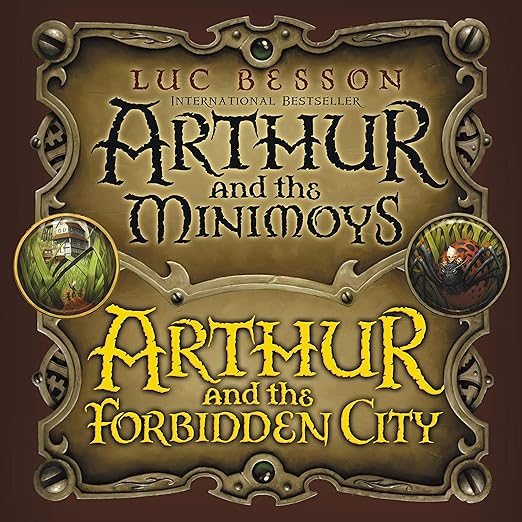
Minimoys are less than one inch tall, and they have an entire civilization waiting in the garden. Luc Besson's adventure audiobook binds two novels together into a single nine-hour-and-twenty-nine-minute journey that takes Arthur from his grandfather's garden down into a microscopic world of politics, danger, friendship, and a princess named Selenia who might be the most capable person in any room at any scale. I first encountered these stories years ago in the film adaptations Besson directed himself, but listening to Jim Dale's narration of the original novels is a genuinely different experience, one that restores the texture and pace of the source material that the films, for all their visual spectacle, compressed or transformed.
Reviewer Frank Branchini said it plainly: "Jim Dale is the most brilliant audio book performer in the world." That is high praise, but Branchini's comparison to Dale's Harry Potter work is apposite here. The same qualities that made Dale essential to J.K. Rowling's world, his ability to give each character a distinct voice, his genuine enthusiasm for the material, his calibration of pace for both comic and tense moments, are fully present in Besson's adventure stories. Reviewer David Miller, who bought the first book and then immediately needed the second, confirmed that the story works for kids aged eight to thirteen. The all-ages quality of these novels is part of what makes them durable.
Why Listen to Arthur and the Minimoys & Arthur and the Forbidden City
Arthur's initial quest in the first novel is clear and urgent: he needs to find the treasure his missing grandfather left behind in the garden, which is the only thing that can save the family home from being sold. The Minimoys, a tribe of people with their own language, customs, and social hierarchy, are not initially on his radar as potential allies, but the alliance that forms between Arthur and Selenia and her brother Beta is the engine that drives both novels. The second story, set in Necropolis, the forbidden city ruled by the evil wizard Maltazard, raises the stakes in ways that are genuinely threatening for children and genuinely satisfying for adults listening alongside them.
Besson's world-building at the Minimoy scale is inventive and detailed. A civilization of beings less than an inch tall has solved engineering, agriculture, social organization, and conflict in ways that are both logical and surprising, and the audiobook format allows these details to accumulate at Dale's pace, which is unhurried enough to let the world feel real. The film versions of these stories necessarily compressed the world-building to serve visual spectacle; the audiobooks restore the space that Besson's original novels use for invention.
Dale's character work across the cast is a consistent pleasure. Arthur's earnestness, Selenia's competence and prickliness, Beta's charm and loyalty, and Maltazard's menace are all distinct and consistent across nearly ten hours. For a production that covers two complete novels, the absence of listener fatigue is a genuine achievement, and it is largely Dale's doing. His reading has the quality of someone who finds the material genuinely fun, which is the most important quality a children's audiobook narrator can have.
What to Watch For in Arthur and the Minimoys & Arthur and the Forbidden City
The two novels are bound together in this audiobook without narrated chapter or segment breaks distinguishing one from the other, beyond what the narrative itself provides. Listeners who want to take the stories at separate pace or allow younger children to experience them in separate sessions will need to track that transition themselves. The combined runtime of just under nine and a half hours is substantial for a younger listener, and parents planning family listening sessions will want to identify natural break points in advance.
The adventures are linear and episodic in structure, building toward specific resolution points in each book. This suits the audiobook format well, since narrative threads are not held open across long stretches. But listeners seeking the kind of moral complexity or emotional ambiguity that some contemporary children's fiction offers will find these novels more classically constructed. Arthur and the Minimoys belongs in the tradition of straightforward adventure storytelling, where the heroes are clearly sympathetic and the villains are clearly villainous.
Besson's original novels were written in French and translated for the English-language market. The prose is confident and the adventure architecture is well-designed, but the translation occasionally shows its seams in word choice or rhythm. Dale's narration smooths most of these moments in practice, and for the audiobook audience, the translation transparency is a minor concern at most.
Who Should Listen to Arthur and the Minimoys & Arthur and the Forbidden City
Families with children in the eight-to-thirteen range looking for a long-form audiobook adventure that both parents and kids can engage with will find this one of the stronger options in the format. Jim Dale's presence alone makes it a worthwhile listen for anyone who has loved his work on other series. Children who have seen the Besson films may be curious about the source material, and this is a good way to explore the novels without requiring independent reading.
Listeners expecting the visual spectacle of the animated films will find the audiobook a different kind of experience, quieter and more internal, with the world-building happening in imagination rather than through Besson's distinctive visual style. That difference is the audiobook's advantage for younger listeners whose imaginative engagement is the point. Adults listening independently who are primarily fans of Besson's film work may find the original novels surprisingly measured in pace compared to his cinematic style.
Before You Listen
How does Jim Dale's narration of this audiobook compare to his Harry Potter work for listeners familiar with that series?
Dale brings the same core qualities: distinct character voices, precise pacing for comedy and tension, and a genuine enthusiasm for the material that makes the world feel inhabited. Reviewers have explicitly drawn this comparison, and the family-adventure register of Besson's novels is a good match for what Dale does best.
Is this audiobook appropriate for younger children, or is the content in the Forbidden City story too intense for kids under eight?
The content is family-appropriate throughout, but the second story's villain Maltazard and the Forbidden City setting are genuinely threatening in ways that more timid younger listeners may find intense. The recommended age range is eight to thirteen. Parents of children closer to six or seven may want to listen alongside them during the Necropolis sections.
Do the audiobook versions of these novels differ significantly from the Luc Besson films that were adapted from them?
Yes, meaningfully. The films compressed the world-building and accelerated the adventure plotting to serve visual spectacle. The audiobooks restore the pace and texture of Besson's original novels, with more time given to the Minimoy civilization and its details. Fans of the films who listen to the audiobooks will encounter a fuller, more internally elaborated version of the same world.