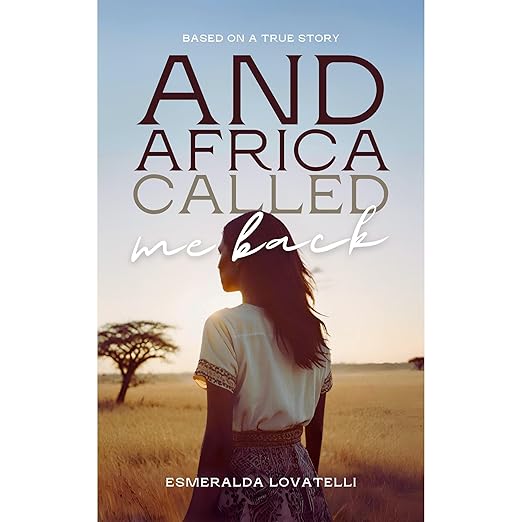
Esmeralda Lovatelli's And Africa Called Me Back tells the story of Elsa, a strong-willed young woman who follows her husband Nick to Kenya and finds in Africa something she could not have articulated she was looking for. This audiobook, narrated by Virtual Voice and running 4 hours and 43 minutes, is described as "a true story with a spark of fiction," blending memoir and autofiction in a way that gives the author some protective distance from her material while preserving its emotional specificity. Virtual Voice denotes AI-generated narration, which is worth noting clearly before purchasing: the emotional interpretive range available to a trained human narrator is not present here, and this is the most significant practical limitation of the listening experience.
The Verdict, Briefly
Lovatelli's prose aims for the kind of sensory immersion that good travel memoir requires, reaching for the textures and smells and quality of light that make a place feel inhabited rather than described. The synopsis describes Kenya as a place "where the absence of perfection was granted, and where happiness is found in the little things of everyday life, the admiration of nature and in simplicity." That framing, comfort abandoned for authenticity, is a recognizable current in expatriate memoir, but Lovatelli brings to it a personal specificity about what Kenya actually costs her: the doubts, the obstacles, the adjustments demanded by motherhood in an unfamiliar context far from her original cultural network.
One reviewer who spent 54 years in Africa wrote that they "loved reading her story and I feel much the same," which is the kind of response that suggests the book reaches its intended audience effectively and with genuine recognition. Another reviewer found it "written tragically, negatively" before finding "bright spots" at the end, which implies a tonal darkness not immediately obvious from the marketing description. Lovatelli does not write a conventional adventure narrative of arrival and joyful integration; the story includes extended passages of doubt, homesickness, and the specific friction of navigating a new culture as an outsider, which gives the eventual affirmation more weight than a simpler telling would.
What Makes And Africa called me back Worth Hearing
The Kenya landscape writing is the audiobook's strongest material and also the place where the Virtual Voice narration feels least adequate. Passages about the natural world, the wildlife, the quality of African light, demand the kind of breath control and rhythmic variation that trained human narrators use to convey scale and beauty. An AI-generated voice reads evocative description with the same steady pace it reads plot summary, which flattens the effect considerably. Listeners who care about the quality of the narration experience should factor this into their purchase decision.
At 4 hours and 43 minutes, the audiobook is short enough that the limitations of the narration do not become cumulative in the way they might over 12 or 15 hours, but the emotional payoff of the ending that several reviewers found rewarding will register differently without a narrator capable of building toward it with tonal variation and pacing. The book's hybrid memoir-fiction form also means listeners should not expect a conventional travel narrative; this is closer to autofiction than journalism, with the protagonist Elsa standing in close proximity to the author's own experience without being an exact documentary record of it.
Points to Consider
The book's treatment of Elsa's identity as a woman navigating motherhood and self-determination in a context far from her original cultural setting is where Lovatelli's writing is most distinctive and most personal. The choice to live in Kenya is framed not merely as romantic adventure but as a more fundamental decision about who Elsa intends to be: fighting to leave a more comfortable yet unfulfilling journey in order to seek "the thrilling unknown of her dream life across the globe." That framing of Kenya as a chosen rather than simply arrived-at home gives the book its emotional architecture.
The growth of Elsa's relationship with Nick, from the renewal of a childhood acquaintance to the deeper commitment of building a family in a demanding environment, is rendered with more complexity than the summary suggests. Lovatelli writes in English as what appears to be a secondary language, and the prose has an occasional formality that can function both as texture and, at moments, as a barrier to immersion. One reviewer commented specifically on the interesting use of language throughout, which is one way of acknowledging that the prose has its own particular quality, neither smooth commercial English nor rough translation, but something in between that reflects a genuine literary sensibility working in a non-native tongue.
The Right Listener for And Africa called me back
Listeners who have lived in or love East Africa, and who want a personal account of what it means to choose that life and what it costs to choose it honestly, will find this audiobook meaningful in the way memoir is meaningful when it names something you already know. Travel readers drawn to expatriate autobiography, to the specific emotional territory of leaving comfort for intensity, will also find it rewarding. Listeners who require a polished third-party narrator, or who want a conventional linear narrative arc, should look elsewhere. The Virtual Voice narration is the most significant practical limitation; if you are drawn to this book's subject matter, the print version may serve its emotional ambitions more fully than the audiobook format currently can.
Common Questions
What does Virtual Voice narration mean for the And Africa Called Me Back audiobook experience?
Virtual Voice indicates AI-generated narration rather than a human narrator. The narration handles the prose text accurately but lacks the emotional range, breath variation, and interpretive pacing that a skilled human narrator brings. For memoir material with strong emotional and sensory stakes, this is a meaningful limitation worth considering before purchasing.
Is this audiobook a travel memoir or a novel, given its description as a true story with a spark of fiction?
It occupies the space between autofiction and memoir. Lovatelli writes about real experiences through a slightly fictionalized version of herself named Elsa, which is a common autobiographical fiction strategy. Listeners should not expect documentary precision, but the emotional and experiential content is drawn from the author's actual life in Kenya.
Does And Africa Called Me Back audiobook focus more on the Kenya landscape or on Elsa's personal relationships?
Both are central, but the book's emotional core is in Elsa's identity, her relationship with Nick, and her negotiation of motherhood in a demanding and unfamiliar context. The Kenya landscape provides the setting and the motivating force, but the book is driven by character and personal transformation rather than by place description alone.
Would the print version of And Africa Called Me Back be preferable to the audiobook for this type of memoir?
For readers who prioritize the emotional texture of narration, yes. The material, memoir structured around love, belonging, and self-determination, benefits from the kind of interpretive warmth a human narrator provides. The audiobook renders the text accurately but does not enhance its emotional ambitions the way skilled human narration could.