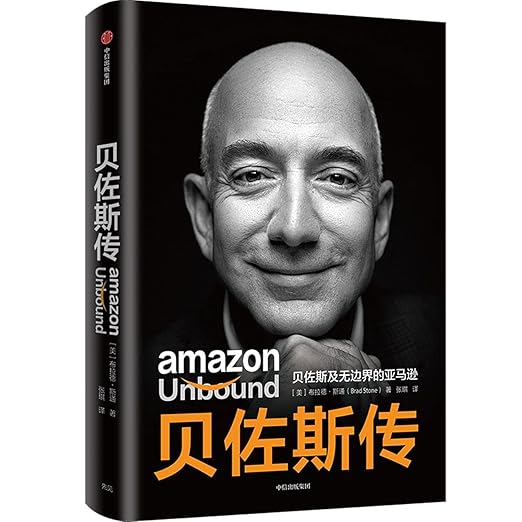
Key Details
- Voice: Pete Larkin gives Brad Stone's corporate biography the crisp, authoritative delivery the subject demands, sustaining energy across a nearly nine-hour listen without feeling like a recitation.
- Big ideas: The architecture of monopoly, power and accountability at civilization scale, the transformation of ambition into institution
- Atmosphere: Cold and fascinating, like watching a weather system from a safe distance
- Worth it?: Stone's follow-up to The Everything Store is more ambitious in scope and more unsettling in its conclusions, benefiting from a decade of hindsight.
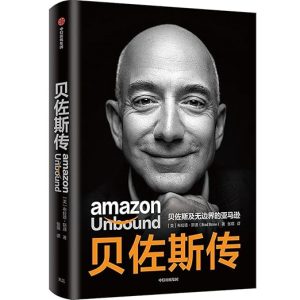
I read The Everything Store when it came out, and I remember finishing it with a complicated feeling: admiration for the reporting, unease at the company being reported on, and a vague awareness that the story was not over. Amazon Unbound is the second chapter, and it lands very differently from where the first book ended. A decade of Amazon being in our lives not as a startup or a growth story but as infrastructure has changed the way Stone's portrait of Jeff Bezos reads. This is not a comeback story. It is something colder and more interesting than that.
Stone's reporting access is formidable. This is a deeply sourced book, built on interviews with former executives, employees, competitors, and observers across the full span of Amazon's expansion in the years following The Everything Store. Stone himself is now a Bloomberg journalist with a decade of continued Amazon coverage behind him, and that institutional knowledge shows on every page. What he captures with particular skill is the gap between how Amazon's decisions are presented to the public and how they are made internally, a gap that grows more consequential as the company's power grows and its decisions affect more lives more directly.
First, the Big Picture
One of Amazon Unbound's most compelling threads is the evolution of Bezos himself. Stone moves between the operational story and the personal one with a journalist's eye for the detail that reveals character under pressure. The Bezos who emerges from this book is recognizably the same person who built Amazon in a garage, but the scale of his resources and reach has transformed what his particular combination of intelligence and impatience means in practice when applied to the world's largest retail and cloud infrastructure company.
The tabloid period, his divorce and the coverage that accompanied it, is handled without prurience. Stone treats it as material that illuminates something real about Bezos's self-conception and his relationship to the constraints that applied to everyone around him but increasingly did not apply to him personally. The Washington Post acquisition receives similar treatment: not as charity or vanity but as another expression of a particular kind of ambition that has no natural ceiling. Pete Larkin's narration serves this portrait well throughout, authoritative without editorializing.
What Makes Amazon Unbound Worth Hearing
Stone structures the book to examine Amazon's expansion through specific ventures and decisions: the development of Alexa, the acquisition of Whole Foods, the growth of AWS into cloud dominance, the Prime Video investment, Bezos's purchase of The Washington Post. Each chapter illuminates a different dimension of how Amazon thinks about competition, customer relationships, and long-term value destruction of industries it enters. The effect is cumulative and somewhat vertiginous: by the end of the book, the question is not whether Amazon is powerful but what power at this scale actually means for the rest of the economy.
The Alexa sections are particularly good. Stone shows how a product that seemed whimsical became infrastructure in ways that nobody, including Amazon, fully anticipated. The internal debates about what Alexa should be and what it would mean for privacy and household data are rendered with enough specificity to feel reported rather than synthesized. This is journalism at its most useful: not summarizing what everyone already knows but showing how the decisions that produced what everyone knows were actually made by actual people in actual rooms.
A Few Reservations
The most interesting thing about reading Amazon Unbound after The Everything Store is noticing what changed and what did not. The operating principles that drove Amazon in its first decade are still operating in its third. The urgency and the appetite for disruption are the same. What has changed is the context: the company is no longer a challenger. It is a settled power, and settled powers operate differently than challengers even when the people running them use the same language and the same playbook. Stone is alert to this shift without overtheorizing it, which is the right instinct for a book that is primarily journalism rather than economic analysis.
Some readers will want more structural analysis of monopoly and market power than Stone provides here. Amazon Unbound is a journalistic portrait rather than an antitrust brief, and while it accumulates evidence that would be relevant to such an argument, it does not deliver one. That is a defensible choice, and it means readers who want the book to conclude with a verdict about what should be done with Amazon's power will need to supply that verdict themselves.
Stone's reporting methodology is worth noting explicitly. He conducted hundreds of interviews and had substantial access to Amazon insiders, and that access is visible on every page. This is not a book assembled from public records and press coverage. The scenes have texture, the internal debates have specificity, and the human costs of Amazon's relentless competitive pressure are rendered through specific individuals with specific careers affected in specific ways. Whether you find the company's behavior troubling or impressive, Stone's reporting gives you the material to form a considered opinion rather than simply absorbing Amazon's own narrative about itself. That journalistic rigor is what distinguishes this from the category of business hagiography that dominates the genre.
The Right Listener for Amazon Unbound
Amazon Unbound rewards listeners who either read The Everything Store or are at least familiar with Amazon's early history. Stone writes with some assumption that the audience knows the origin story and is here for the sequel. Listeners with no prior knowledge can follow the narrative, but certain passages land with more weight if you have the first book's context to draw on. For anyone interested in how very large companies exercise power, how technology shapes markets and culture simultaneously, or simply how the past decade of Amazon's growth actually happened beneath its press releases and shareholder letters, this is one of the more reliable accounts available.
Good to Know
Do I need to have read The Everything Store before listening to Amazon Unbound?
Not strictly necessary, but Stone writes with some assumption of familiarity with Amazon's founding and early history. The experience is richer with that context, and the two books work well as a paired portrait of the company across two decades.
How does Pete Larkin's narration compare to the narrator on the original Everything Store audiobook?
Larkin is an accomplished narrator of business nonfiction and handles Stone's analytical prose with clear authority. Listeners who enjoyed the original audiobook should find the sequel equally well served.
Does the book cover Bezos's transition away from CEO?
The book covers the period leading up to and including major transitions at the company, tracing Bezos's evolution from operational leader to public figure. The very latest developments post-publication are naturally not included.