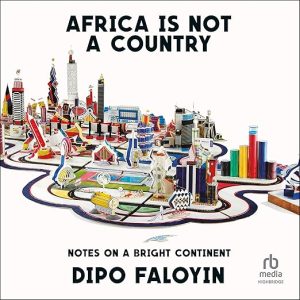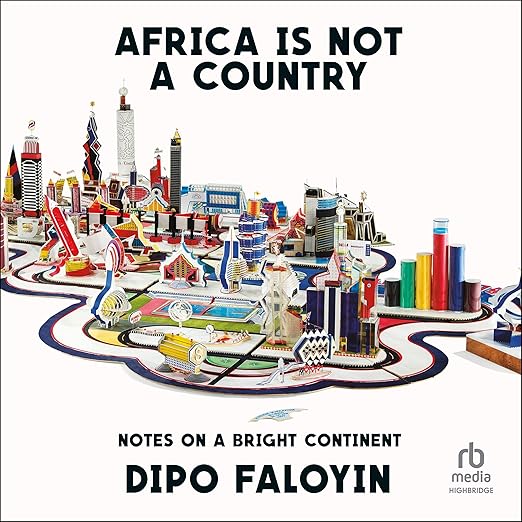
Dipo Faloyin opens Africa Is Not a Country with Lagos, and the audiobook, which he narrates himself across nine hours and twenty-four minutes, makes clear from the first pages that this opening is a deliberate argument. Lagos is large, complex, contradictory, and overwhelmingly alive, and beginning there is a statement about what the rest of the book will not do: it will not begin with safari footage, with famine statistics, with a white journalist's first encounter with poverty. Faloyin's argument, sustained with wit and precision across the full nine hours, is that Africa has been described to itself and to the world through a set of images so narrow and so consistently applied that they constitute a form of distortion, and that dismantling those images requires replacing them with something as specific and various as the continent actually is.
What We Made of It
The book covers considerable ground. Faloyin traces how colonial borders were drawn at the 1884 Berlin Conference by European powers with no interest in the ethnic, linguistic, and political realities of the land they were dividing, and how those borders have structured African national politics in ways that persist into the present. He follows the story of democracy's struggle across the continent through seven specific dictatorships, chosen to illustrate different mechanisms of authoritarian capture rather than to present a monolithic narrative of failure. He examines the white savior complex with the kind of biting specificity that makes famous charity campaigns of the 1980s legible as well-intentioned disasters rather than simply cynical operations.
The chapters on contemporary culture are among the most enjoyable in the book. The jollof rice debate between Ghana and Nigeria is treated with the same analytic seriousness as the political history chapters, because Faloyin's point is that cultural rivalry is as authentic an expression of African particularity as electoral conflict, and deserves the same attention. His analysis of the African Cup of Nations, which he describes as one of the strangest and most energizing sporting events in the world, extends this argument further. Reviewer TwoBlackCats noted that Faloyin "looks at Africa as neither a monolithic, tragic stereotype nor as 54 hopeless entities, but rather as a continent of multiple potential bright futures," and that balanced, rigorous refusal of easy narratives in either direction is the book's defining quality.
What Makes Africa Is Not a Country Worth Hearing
Faloyin's self-narration is essential to the audiobook's quality. His wit on the page is considerable, but hearing him deliver the sharper passages about charity concerts and NGO campaigns adds a layer of exasperated precision that reading cannot quite replicate. He knows exactly when to let the absurdity of a situation speak for itself and when to press the analysis. His delivery of the Lagos opening, immersive and fast-paced, establishes the audiobook's register immediately: this is not a documentary survey but a personal, specific, impassioned argument from someone who grew up inside the story he is telling.
The nine-hour runtime gives Faloyin space to be specific in ways that shorter books about Africa rarely manage. He does not explain Nigeria in general terms; he explains the particular mechanisms by which oil revenue was captured and distributed in ways that corrupted specific institutions at specific historical moments. He does not critique charity generally; he names campaigns and describes their documented effects on the communities they claimed to help. That specificity is the book's greatest strength and it is more effective in audio, because Faloyin's voice gives each instance the weight of personal testimony rather than the cooler register of academic summary.
A Few Reservations
Faloyin is based in London and his perspective, while rooted in Nigerian identity, is shaped by a particular diasporic vantage point. He is writing for an international audience, primarily Western readers encountering Africa through received stereotypes, and the book is calibrated accordingly. African readers from countries other than Nigeria and West Africa more broadly may find some chapters less specific to their own national experience than the book's opening suggests it will be. Faloyin acknowledges the impossibility of covering 54 countries with equal depth, and the choices he makes about which countries and situations to focus on reflect his specific background and analytical priorities.
The chapters on youth-led cultural and political movements that close the book are the most forward-looking and optimistic material, and also the most likely to have evolved since the book's composition. Some of the specific movements Faloyin discusses have continued to develop in directions that would complicate his framing. Listeners interested in the current political situation in particular African countries should supplement this audiobook with more recent reporting. As a framework for understanding the structural forces that shaped contemporary African politics and culture, however, Faloyin's analysis holds with considerable durability.
Who Should Pick Up Africa Is Not a Country
This audiobook is an ideal starting point for any listener whose understanding of the African continent has been shaped primarily by Western media, aid campaign imagery, or the kind of broad-strokes coverage that Faloyin documents and critiques. It works for book clubs, which reviewer Ann C confirmed when all ten members of her group loved it. It rewards listeners interested in postcolonial history, in the mechanics of how media narratives form and persist, and in the specific texture of contemporary African political culture across different national contexts. Skip it if you are looking for country-by-country travel guides, deep policy analysis of specific nations, or a comprehensive survey of African history from a neutral perspective. Faloyin is writing argument and cultural history, and he argues from a specific position with wit and conviction. Nine hours in that company is time well spent.
Frequently Asked Questions
Does this audiobook cover all 54 African countries, or does it focus on particular regions?
It focuses primarily on West Africa, with Nigeria as the most discussed country, alongside case studies from across the continent chosen to illustrate specific arguments about colonialism, democracy, and cultural identity. Faloyin is transparent about not attempting exhaustive coverage; his goal is to dismantle the monolithic Africa narrative rather than provide a comprehensive country-by-country survey.
Is the audiobook narrated by Dipo Faloyin himself, and does that affect the listening experience significantly?
Yes, Faloyin narrates his own work, and it matters considerably. His wit and precision of argument are audible in his delivery, and the sharper passages about charity campaigns and the white savior complex carry a different quality when the author is making the argument himself. The self-narration makes the audiobook feel closer to a lecture from someone with deep personal stakes than a performance of someone else's text.
Is this audiobook suitable for younger listeners or students learning about Africa?
The reading level and content are appropriate for high school and older. The material on colonialism, dictatorships, and charity campaign failures is presented analytically rather than graphically, and Faloyin's accessible style makes complex historical and political material comprehensible. It would be a strong supplement to history or social studies curricula covering African politics and postcolonial studies.