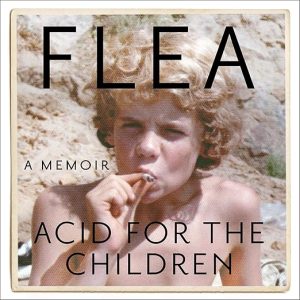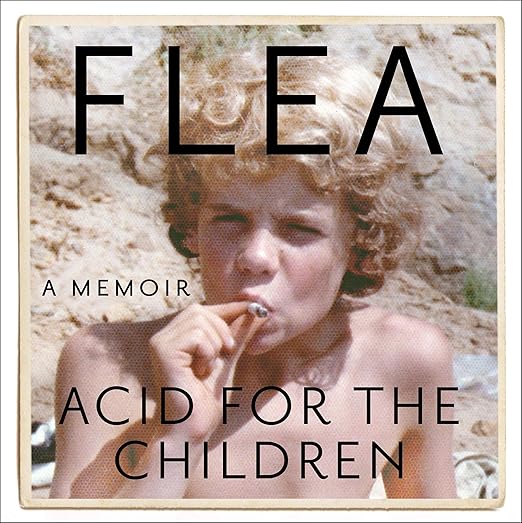
Before the bass, the trumpet. That is the fact this audiobook builds on, and it reorganizes everything most people assume about the man on the cover. A boy from Rye, New York, lands in Los Angeles after his mother remarries a jazz musician, the house fills up with players holding late jam sessions, and the kid gets obsessed with Miles, Dizzy and Louis. The bass, the band and the name that ended up on the front of this book all arrive much later, and some of them arrive after the last page.
Flea's Childhood Memoir Wearing a Band's Name
The single most useful thing a buyer can know here is where the book stops. The description carries the story to the streets at 14, to a daily habit, and to meeting another social outcast named Anthony Kiedis with whom he formed a band that would become the Red Hot Chili Peppers. That is the closing beat, not the opening one. Anyone shopping on the strength of the band tagline glued to the display title is buying a childhood memoir.
It happens to be a very good one, at least according to the most considered response on the entry. Signed jbaca, five stars in December 2024, it comes from someone who studied memoir at college for two semesters, has read a great many, and insists this is the best of them, praising a brutal and painful honesty and a style described as unusual and enchanting. That response also notices the architecture: chapters shaped to reflect the jazz background the book keeps returning to. Coming from someone who spent two semesters reading the form on purpose, that is a more useful endorsement than any number of five-star lines about a great read.
The material underneath the style is hard. Flea's own words, quoted in the publisher's summary, describe being raised in a very violent, alcoholic household and growing up terrified of his parents, particularly his father figures, with the note that it caused him a lot of trouble later in life. Weed at 13, harder drugs daily, homeless at 14. The lyricism is not decoration on that; it is the only way the book can hold it.
A Memoir Built From Spoken Rhythm
An all-caps response from September 2024 says the book is written exactly like the author speaking, and that you find yourself feeling as though you are right there getting to know him. That remark is about the prose rather than the recording, but it points straight at why the format matters on this title: a memoir already built out of spoken rhythm, read by the person whose rhythm it is, loses nothing in the transfer.
Music is the other draw, and it is not the music most buyers expect. The trumpet comes first and the jazz canon comes with it, absorbed through a stepfather's living-room sessions rather than through records. Punk arrives later, sideways, through a friendship rather than a scene. For listeners who came in through the band's catalog, that inversion is the most interesting thing on offer, and it explains a good deal about how that band ended up sounding the way it did.
Nine hours and four minutes is a generous run for a book that covers roughly fourteen years, which tells you the pace is not summary. The author and narrator fields on this entry both read, simply, Flea, so the mononym does double duty while the description talks about him in the third person throughout, referring to the boy named Flea as though he were somebody else. The book itself never adopts that distance, which is part of why the publisher can promise nothing left unsaid and mostly get away with it.
A Confident Number From a Very Small Sample
Arithmetic first. The 4.6 average rests on seven ratings, and five of those seven arrive with written responses grading five, five, five, four and five. Those five sum to 24, so the two silent ratings have to add up to eight for the displayed figure to land where it does: a pair of fours, or a three next to a five, with nothing else possible. Whatever else this page is, it is a very small sample wearing a confident number.
Structure divides opinion here. Oh Johnny, four stars in July 2025, had a hard time with some of the chapters being so short before getting used to it. Very short chapters behave differently in audio than on paper: you cannot see the next break coming, so the stops land as interruptions until your ear adjusts to the rhythm, and a book organized around riffs rather than scenes asks for that adjustment early.
Metadata deserves a squint as well. A marketing line about the Red Hot Chili Peppers legend has been welded onto the actual title, the publisher field says Headline while the description ends with a 2018 Hachette Audio copyright line, and the listed release date is November 2019, a year after that recording was claimed. The record also files a musician's memoir under Arts and Entertainment with a single Art tag and nothing about music at all.
Terrified Child, Trumpet, Street, Friend, Band
Musicians and lapsed musicians will get the most from it, especially anyone who found an instrument in a chaotic house and used it as a door. Ryan Lambert, five stars in June 2025, praises the honest simplicity of the words and the way the vibe and atmosphere of the seventies and eighties get rebuilt, which is a fair description of what the book does with a city and a decade most rock memoirs treat as backdrop.
Skip it if you want the band. Tours, albums, lineup changes and the long career are outside the frame entirely. Skip it as well if detailed accounts of childhood violence, parental alcoholism and adolescent drug use are more than you want in your ears, because the publisher's promise of nothing left unsaid is not marketing language in this case. And skip it if you need a memoir to travel in a straight line, since the chapters are built to loop and cut like the music that raised him.
What stays with me from the description is the sequence: terrified child, trumpet, street, friend, band. Four of those five are in the book, and the one everybody bought the ticket for is the one it leaves for later.