At a Glance
- Performance: the byline and the narrator credit are the same man, so nobody is interpreting somebody else's jokes
- What it covers: the Appalachian Trail, comic travel writing, American landscape and history, friendship on foot
- Feel: wry, digressive and companionable
- Our call: a funny and quietly informative trail book, best bought knowing the listing's own description was written mid-hike
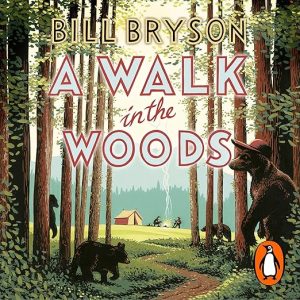
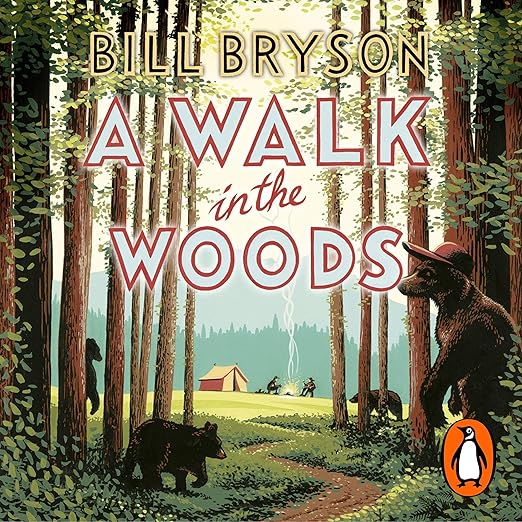
Bill Bryson reads his own book here, which is the first thing worth knowing, and the second is that the copy attached to this listing was written while he was still out walking. It quotes a letter sent to his publisher from the trail, reports that he has lost two stone so far, and treats the outcome of the hike as an open question. The audiobook it now advertises came from Penguin Audio in April 2010, by which point the finished book had been out long enough to collect reviews of its own. Publishers recycle jacket copy. This is what it looks like when nobody checks the tense.
First, the Big Picture
Fourteen states and more than two thousand miles of the Appalachian Trail make up the subject, running from Maine down to Georgia and holding the title of the longest continuous footpath in the world. What the description sells is the incongruity: a self-described reluctant adventurer, reared in the tradition of Mark Twain, James Thurber and S. J. Perelman, taking on a hike that has broken fitter people. What readers describe getting is broader than that. Cynthia K. Robertson calls the result funny, informative, reflective, depressing and thoroughly entertaining in a single breath, which is an unusual list and an accurate one.
Kris, filing four stars as a student who arrived from a wilderness class at school, gives the plainest account of the shape: Bryson and his friend Katz set out to scale the trail, and the book follows the hardships, the views and the improbable length of the thing. Note that name. The publisher's copy never mentions Katz once, and he turns out to be half of what people remember.
Suhail Zubaid's notice shows how much information rides along inside the comedy, admitting to having believed until this book that the main job of the US Forest Service was expanding tree cover to boost tourism. The same response finishes by day-hiking and section-hiking alongside Bill and Stephen in imagination and confessing to missing both men once the pages ran out. A travel book that leaves you lonely for somebody the marketing copy declines to name has done something the copy has no idea how to sell. Geology, forestry and American backcountry sociology arrive the same way, without ever being announced as lessons.
Why Listen to A Walk in the Woods
Self-narration is the whole argument for this edition, and for once it is not a sentimental one. The description's central claim is about voice: that Bryson spent years in Britain absorbing a particular sense of irony and used it to build a comic style entirely his own. A claim like that makes the timing, the understatement and the placement of the joke the load-bearing part of the book, and those are the properties most exposed in the move to audio. Handing them to the person who assembled them is the lowest-risk production decision available.
Comic travel writing also suits the format structurally. The book proceeds as a sequence of episodes, encounters and digressions rather than as an argument you must follow across chapters, so a listener who drifts for a minute loses a joke rather than the thread. Five hours and fifty-eight minutes covers a lot of ground for a trail measured in thousands of miles, and the pace stays brisk throughout, which is a real asset for anybody who has bounced off longer travel books.
The Caveats
Start with the title, which is incomplete. The listing shows A Walk in the Woods and nothing more, while a reviewer supplies the full version, Rediscovering America on the Appalachian Trail. That subtitle is not decoration; it tells a browsing buyer that the subject is the United States as much as a footpath, and its absence leaves the title looking like any one of a dozen gentle nature books. Nothing on this page tells you what the subject actually is until you read somebody else's notice.
Next comes the copy itself, written for a different country. The trail's length gets measured against the Pennine Way, a British long-distance path most American listeners have no reason to know, and the author's weight loss is reported in stone. Both are natural in a British edition and slightly odd on a listing whose reviews come from the United States, Canada, Brazil and the Netherlands. The description also quotes a private letter to a publisher as though the walk were still under way, which by 2010 it emphatically was not.
One tonal warning is fair. The copy leans hard on backwoods stereotypes, invoking moonshine, a film it expects every reader to recognize, and the phrase redneck country inside quotation marks, and it does so in the publisher's voice rather than the author's. Whether the book earns that register is a question every reader answers differently, but a buyer should know it appears before the first sentence of the actual text. The listing carries no content note of any kind, so that register is the only signal a browsing buyer gets.
Should You Listen to A Walk in the Woods?
Anybody who likes being taught something while being made to laugh should take this one straight away. It suits hikers and would-be hikers particularly well, and one reviewer notes the pleasure of reading it alongside a relative's own progress along a stretch of the trail, which is a use case that only improves the book. Listeners who already enjoy Bryson know exactly what they are getting and will simply be pleased he is the one delivering it.
Hold off if you want a practical guide to walking the trail, because this is not that and never claims to be, or if you have no patience for a comic persona that finds discomfort funny. The wilderness here is genuinely uncomfortable and the tone stays wry about it throughout, which is a combination some readers find bracing and others find flippant.
Two reactions on this listing come from outside the English-speaking market, one from Brazil and one from the Netherlands, and both single out the humor. That is a decent measure of how far the comedy carries, and a fair signal that it will hold up over a gym session or a plane.
Six hours with a writer who is funny about being cold, tired and out of his depth, and informative almost by accident, is a straightforwardly good purchase. Just go in knowing that the description on the page belongs to a book that had not finished happening yet.
Is the A Walk in the Woods audiobook read by Bill Bryson himself?
Yes. Byline and narrator credit name the same man, which matters here because the selling point is a comic voice rather than a plot. The publisher's copy makes exactly that claim about his style, so the author reading it is the natural production choice.
How much trail does the audiobook cover in under six hours?
Penguin Audio's edition runs a few minutes short of that, against a footpath of more than two thousand miles across fourteen states. The pace is brisk by necessity, and the book proceeds in episodes rather than as a step-by-step account of the hike. No page count appears anywhere on the page.
Do you need any interest in hiking to enjoy it?
None at all. Two of the five describe arriving by way of a school class and a relative's hike, and what they come away with is forestry, geology, American history and jokes. The walking is the frame rather than the subject.