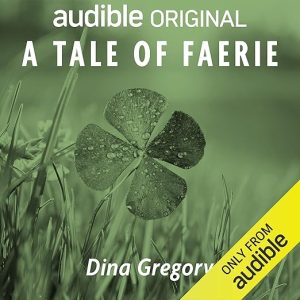
Seven Minutes, Structured Like Genuine Folklore
Dina Gregory's A Tale of Faerie is one of those small, perfectly contained things that works precisely because it does not try to be larger than it is. Jasmine has moved to an old cottage in the countryside of Devonshire, and things are immediately, persistently wrong in the specific way that British rural folklore has always described: she itches at night, small objects vanish and reappear in odd places, the rhythms of her new home refuse to settle into anything comfortable or predictable. This audiobook, narrated by Holli Dempsey, runs just seven minutes. Gregory is working in the oldest tradition of regional English storytelling, and she knows exactly how much space a tale like this needs to complete itself without sprawl.
A seven-minute audiobook invites a particular kind of critical framing. The question is not whether the story is substantial in the way a novel is substantial, but whether it does what a piece of short audio fiction at that length is supposed to do: establish a world, introduce a displacement, resolve it with something that feels earned rather than arbitrary or rushed. A Tale of Faerie does all three with the economy that the best short fiction writers spend entire careers developing. The Devonshire setting is evoked efficiently without becoming picturesque or self-conscious. The encounter with the famous neighbor that resolves Jasmine's difficulties is handled with the light touch that fairy-tale logic requires, because in the tradition Gregory is working within, the magic is not explained so much as acknowledged and accepted as part of the landscape.
Dempsey's Warmth and an Alexa Bedtime Routine
Holli Dempsey's narration is ideally suited to this material, and her contribution to the seven-minute experience is not incidental or merely functional. She has a warmth and a lightness of tone that makes the story feel like something told rather than something read aloud from a page, which is exactly what a piece of oral folklore tradition should feel like in audio format. The runtime is the length of a good bedtime story, and Dempsey delivers it with the unhurried quality of a narrator who understands that short does not mean rushed and that the atmosphere needs space to settle briefly before the action begins. The pacing allows the old Devonshire cottage to establish itself as a particular place before the folkloric disruption arrives, which is the correct rhythm for a story of this kind and this tradition.
The phrase that closes the synopsis, that the story puts the fairy in fairytale, signals something useful about what kind of audio experience this is. Gregory is not writing a fantasy novel with fairies in it; she is writing a piece of genuine folklore in the tradition of local tales that explain why certain places feel inhabited, why small things go missing, why the countryside can feel occupied by presences that suburban environments do not accommodate. Listeners who grew up with stories like this, who heard similar tales from grandparents or encountered them in regional collections and anthologies, will recognize the register immediately and find it a pleasure to encounter again in audio. Those new to the form will find it a gentle and accessible introduction to a tradition with deep roots in British literary and oral culture going back centuries beyond the written record.
The availability of the story through the Audible Stories Skill, accessible by asking Alexa to read a nighttime story or simply to read a story, positions it as part of a curated short-form audio library with practical domestic utility for families with young children. For families who want to incorporate storytelling into daily routines without extensive preparation or screen time, a voice-activated story of this quality at this length represents genuine practical value alongside the literary pleasure it delivers.
The Neighbor Whose Nature Stays Unspoken
The neighbor character is the story's most intriguing element, and Gregory handles the character with a restraint that is itself a form of sophisticated craft. The description of Jasmine having an encounter with the famous neighbour implies that this figure's nature is already known and accepted in the local community without ever spelling it out directly for the listener. That compression is folklore at its most efficient: the reader completes the picture using the pattern the tradition has already established over generations, and the resolution of Jasmine's itching and her displaced objects comes through that encounter with a logic that feels inevitable rather than convenient or explained away for an audience assumed not to trust the genre.
For families with young children, the content is appropriate at all ages without qualification or filtering. There is nothing frightening in the traditional sense; the uncanny elements, the nighttime itching, the moved objects, the sense that something unseen is aware of Jasmine, are the mild uncanny of classic fairy tales rather than the horror of contemporary supernatural fiction. The story operates on multiple levels rather than being flattened to a single age register, which is the older and more durable definition of family-friendly storytelling. Adults listening alongside children will find Gregory's handling of the tradition as satisfying as children will find the resolution.
Minimal Investment for a Genuinely Complete Bedtime Story
Young listeners who enjoy fairy tales and folklore, particularly those with a British countryside setting and a light touch on the supernatural, will find A Tale of Faerie a satisfying brief story that rewards re-listening in the way that good short oral tales do across many encounters. Parents looking for a clean, brief, high-quality bedtime audio option will appreciate Holli Dempsey's narration and the story's gentle and genuinely complete resolution. Adults who enjoy folk fiction, British regional supernatural traditions, and the particular pleasure of a short story that knows exactly what it is and does it with precision and confidence will find Gregory working in a register they will recognize and return to. At seven minutes, there is no meaningful barrier to giving it a listen; the investment is minimal and the experience is genuinely complete.
Common Questions
Is the A Tale of Faerie audiobook appropriate for very young children, or is it better for older kids?
It is appropriate across the full family range. The uncanny elements, nighttime itching and small objects disappearing, are in the gentle tradition of classic fairy tales rather than anything frightening. The story works equally well for listeners from early childhood through adulthood.
At seven minutes, does the A Tale of Faerie audiobook feel complete or cut short?
It feels genuinely complete. Gregory is working in the oral folk tradition where a tale of this length is a finished form, not an excerpt from something longer. The story establishes, disrupts, and resolves with the economy that good short fiction achieves through precision rather than compression.
How does Holli Dempsey's narration contribute to the A Tale of Faerie audiobook experience?
Significantly. Her warm, unhurried story-time delivery is exactly right for a piece of Devonshire folklore, giving the seven minutes the quality of a gifted local storyteller sharing something particular rather than an automated reading of text. The narration is a real asset to what is already a complete piece of work.
Can I access the A Tale of Faerie audiobook through Alexa?
Yes. The story is available through the Audible Stories Skill and can be accessed by asking Alexa to read a nighttime story or a story, which makes it a practical, spontaneous, voice-activated bedtime option for families without any additional setup required.