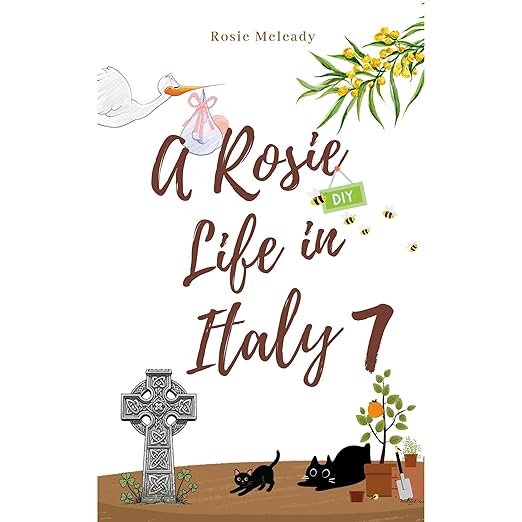
- Read by: This audiobook uses a Virtual Voice synthetic narrator. The AI-generated delivery is functional but lacks the warmth and timing that Rosie Meleady's Irish humor and intimate memoir voice genuinely demand.
- At its heart: grief and healing, expat midlife reinvention, found family and the persistence of love
- Vibe: Warmly bittersweet, funny and quietly heartbreaking in equal measure
- Short version: The series reaches its most emotionally mature point in book seven, though the Virtual Voice narration is a real limitation on the listening experience.
Seven books into Rosie Meleady's A Rosie Life In Italy series, the audiobook audience that has followed her from Dublin to Casa Anam Cara in the Italian countryside knows exactly what they are returning to: Irish wit, Italian bureaucracy, an unpredictable cast of guests and uninvited animals, and the specific texture of a woman who chose a different life and is still living it out loud. What this seventh installment adds, and what makes it, by multiple reader accounts, the most resonant volume in the series, is sustained grief. This is not a book that uses loss as atmosphere. It sits with it.
What We Made of It
A note on the narration first: A Rosie Life In Italy 7 uses a Virtual Voice narrator, which is an AI-generated voice rather than a human performance. For a memoir this intimate, written in a voice reviewers consistently describe as chatting with a friend, as if she is sitting across from you telling you the story of her life, the synthetic narration is a genuine limitation. The warmth, the Irish cadences, the comedic timing that makes Meleady's voice distinctive on the page: these are precisely the qualities that a Virtual Voice system renders adequately at best. Listeners who have read the earlier books in print will likely carry Meleady's voice in their heads clearly enough to compensate. Those coming to the audio format for the first time may find the experience flatter than the text deserves.
The book's content is another matter entirely. Book seven continues Rosie's hosting of midlife crisis retreats for women and writers at Casa Anam Cara, managing garden chaos and creative guests, and navigating the ongoing absurdity of Italian paperwork. The emotional center of this installment, though, is the solo trips back to Ireland, the memories they invoke, the heart-wrenching life decisions the synopsis mentions, and the way love persists even as its forms change. One reviewer described the book as deep, haunting, sad, and funny all at once, noting that the writing has matured and become quite brilliant. Several others echoed that this might be the best volume in the series.
The Casa Anam Cara setting functions differently in this installment than in earlier books. The house and the retreats it hosts are still present, but they feel more like the container than the content this time. Rosie's inner life, the memories, the decisions, the grief she is navigating, takes the narrative center rather than the colorful Italian chaos that dominated the earlier volumes. That shift is what gives the book its emotional gravity and its reputation among readers as the series' most significant installment.
For series followers, the appeal is not in question. The question is whether the audio format, with its Virtual Voice narrator, serves this particular installment as well as it deserves. The answer is: partially. The comic material, the bureaucratic frustrations, the unpredictable guests, the animals who arrive uninvited and stay, translates adequately in synthetic narration. The grief-adjacent passages, the lakeside walks and the Irish memories and the shifting sense of home, need a human voice to land at their full weight, and the Virtual Voice delivers them at reduced power.
The series as a whole is recommended to start from book one, and the synopsis confirms that A Rosie Life In Italy 7 is better as part of the series even if readable as a standalone. Reviewers who have followed Meleady from the beginning find that this volume represents genuine growth in the writing. The mix of humor and grief in this installment is more demanding than the earlier, lighter books, the Aperol spritz and the ache sit together without resolving each other, and that tonal complexity is handled with more assurance here than at any earlier point in the series.
Things to Know Before Starting A Rosie Life In Italy 7
Listeners who come expecting the breezy expat-in-Italy format of the earlier installments may find the tonal shift in book seven more demanding than anticipated. The grief thread is not resolved by the book's end, this is life, not narrative closure, and the emotional rhythm reflects that honestly. The comedy remains, but it coexists with something heavier this time around, and the balance leans more toward the heavy as the book progresses.
The Virtual Voice narration is the practical caveat for audio listeners. If you have been reading this series in print and want to add the audio format, this installment may not be the best introduction to the audiobook versions. The text is strong enough to hold up regardless, but the listening experience would benefit significantly from a human narrator who could render Meleady's Irish voice with its actual cadences and comic timing intact. Consider the print version for this volume if the narration limitation concerns you.
Best Suited For
Series followers who have been with Meleady since book one and want to continue the story in audio format will find the content entirely worthy of the series' reputation, with the Virtual Voice narration as a real but navigable limitation. Listeners encountering the series for the first time should consider starting from the beginning in print, as the emotional payoffs in book seven carry the weight of six prior volumes behind them. Midlife memoir readers who appreciate Irish humor alongside genuine emotional depth will find the series, and this installment in particular, well worth the investment of time and attention.
A Few Questions About A Rosie Life In Italy 7
What type of narrator is used in the A Rosie Life In Italy 7 audiobook?
This audiobook uses a Virtual Voice narrator, AI-generated narration rather than a human performance. For a memoir this personal and voice-driven, the synthetic narration is a real limitation, particularly for the emotional and comedic material that depends heavily on timing and warmth.
How does book seven compare to earlier installments in the A Rosie Life In Italy audiobook series?
Multiple readers describe it as the most emotionally complex and mature volume in the series, with the writing quality notably elevated from the earlier books. The mix of humor and grief in this installment is more demanding than the earlier, lighter entries, though the comedy and warmth remain throughout.