- Narration: The one written report on the recording praises hearing the nuance straight from the writer, and notes sound effects worked into it.
- Themes: Winemaking basics, grape and blend vocabulary, tasting technique, buying and storage
- Mood: Companionable and unhurried, closer to public radio than to a classroom
- Verdict: A charming introductory course that has aged well everywhere except the parts about which years to buy.
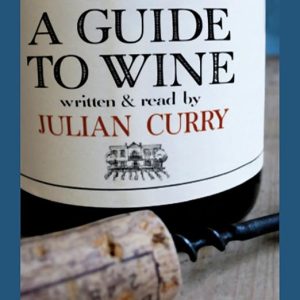
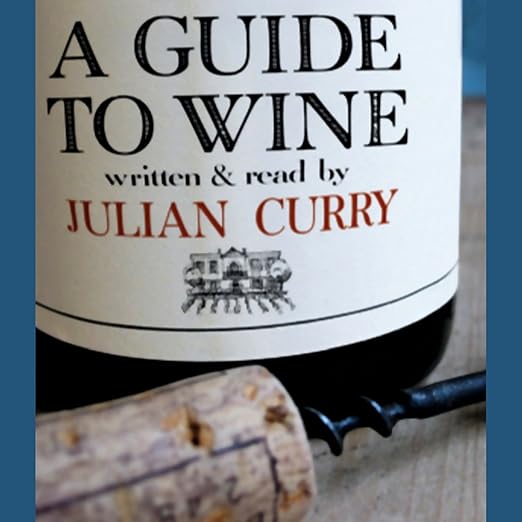
Judge this one by the ear rather than by the cellar. A Guide to Wine is a Naxos audiobook from December 2002 in which Julian Curry, who wrote it, also reads it, and five hours and fourteen minutes later you will know how wine is made, how to taste it and how to keep it. What you will not have is a single usable vintage recommendation, because the recording turns twenty-four this year and the calendar has moved on without it.
Fermentation Ages Better Than the Vintages Do
Curriculum is the right word for the shape of this. The description sets out the sequence plainly: how wine is made, the different grapes, the different blends, vintages, growing areas and types, then how to taste, how to choose and how to keep. That is a course rather than a browse, and it is the order a good teacher would pick. Nothing about it assumes you arrive knowing anything, which is rarer in wine writing than it ought to be. The whole thing fits in five hours, which for a subject this large means selection rather than survey, and the selection is sensible.
Age splits the material cleanly in two. Fermentation does not change, grape varieties do not change, and the mechanics of holding a glass to the light and working out what you are smelling have not changed either, so roughly two thirds of the course is as good now as it was when it was recorded. Regions and vintages are the other third, and they have aged exactly as you would expect. Anything the recording says about which years to look for belongs to a wine shop that no longer exists.
Formats stack up strangely on this page. The written responses describe a compact disc, an audio cassette that surprised the buyer by not being a book, and a download bought through a music store, all sitting under one nine-vote average alongside the current file. That is four carriers and one score. It does not make the reviews less honest, though the average is plainly measuring several different products, and a buyer should read the words rather than trust the number.
Curry Reads His Own Words as a Rare Treat
Julian Curry wrote the guide and also reads it, and one written response makes the case for that arrangement better than I can. I. King, a five-star account, calls it a rare treat to hear every nuance from the person who wrote the words, and mentions sound effects on the recording. That is the only production detail anyone on this page supplies, and it arrives from somebody who keeps more serious wine books for reference and comes back to this one for the enjoyment of it.
Second-hand praise arrives from an unusual direction. The account posted by Connudatus admits to never listening at all and reports on behalf of two parents who make wine in quantity: easy to listen to, not too long, not dry. Take it for what it is, a relayed verdict rather than a first-hand one, but the source is more qualified than most, and the two complaints it rules out are the two that sink an instructional recording.
Tasting is the part that genuinely belongs in audio. Everything else in the syllabus could be read; learning to taste is a physical exercise described in words, and you can do it with a glass in your hand while somebody talks you through what you should be finding. A print guide asks you to put the glass down to read. A voice does not, and this is the rare instructional book where the format is an advantage rather than a compromise. Smell in particular is almost impossible to learn from a page, since the whole exercise is matching a word to a thing you are currently breathing in.
Dense at the Wheel, With Nowhere to Write
Density is the recurring complaint, and it is specific. The four-star account signed Jax bought the recording to learn about wine in the car and found that some sections overflow with content that is hard to absorb at the wheel, while others move slowly. Both halves of that are believable. A course that names grapes, blends and regions in sequence is dense by construction, and nothing in the delivery marks a natural stopping point between one and the next.
Note-taking is the other problem, and Patsy Stone's three-star response puts it precisely: the habit is to listen while driving, and then nothing is available to write on. That is the whole retrieval difficulty in one sentence. This is a reference course with no reference layer, no printed list of the grapes it names, no glossary of the terms it introduces, and no way back to the minute where a definition arrived.
Numbers on the page are thin rather than wrong. Nine ratings produce a 4.2, and the five visible grades, a three, two fours and two fives, average to exactly that. The arithmetic holds, but nine votes across twenty-four years is barely a sample, and the page files itself under home and garden with a single food and wine tag, which is not where anybody looking for a wine course would think to look.
Like NPR, and Genuinely Educational
Eve's four-star response captures the ideal buyer in six words: like listening to NPR and learning. That is the register, and it is a compliment. Somebody who wants to be pleasantly informed while doing something else, who has no exam to pass and no cellar to fill, will get a genuinely good afternoon out of this. The tone never lectures and never performs enthusiasm it does not have, which is most of the reason the recording has outlived its own decade.
Beginners are the other clear fit, particularly anyone with a tasting, a trip or a wine course coming up who wants the vocabulary in place beforehand. Knowing what tannin means before somebody says it at you is worth a great deal, and the description's promise to explain how to choose a bottle is aimed squarely at that anxiety. Home winemakers, to judge by the report Connudatus relayed, do well with it too.
Anyone shopping for current vintage advice should shop elsewhere, and so should anybody who wants a reference to keep. Serious study needs a book you can mark, and this recording gives you nothing to mark. What survives the transfer is the teaching voice, the ordering of the subject and the pleasure of being talked through a glass by somebody who clearly enjoys it, and for a good many buyers that is the whole of what they wanted.