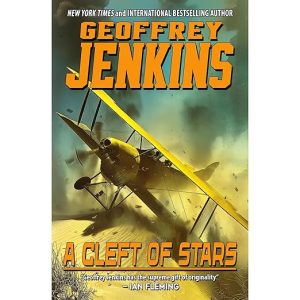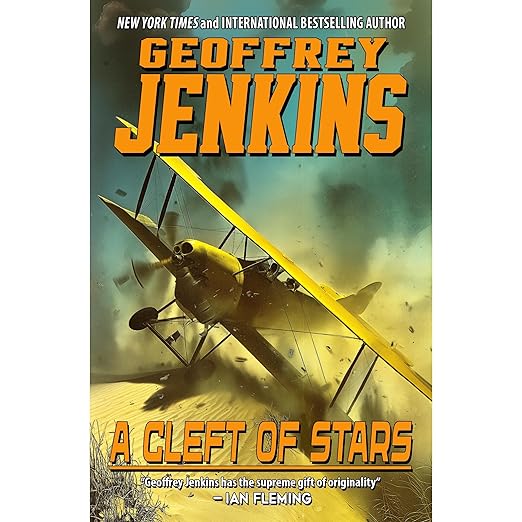
Geoffrey Jenkins built his reputation on fiction that made southern Africa feel physically present on the page: the heat, the distance, the ancient geology of it. A Cleft of Stars, his diamond-conspiracy thriller set at the remote Hill where the Shashi and Limpopo rivers meet, is Jenkins at what one reviewer calls his best, a rattling good story told by someone who clearly knows the landscape he is working with. As an audiobook narrated by Virtual Voice, the material arrives in digital form with the full text intact, and for listeners who come to Jenkins through reputation or who lost their print copies years ago, the audio edition offers a genuine second encounter with a novel that deserves more readers than it currently has. Jenkins was a New York Times and international bestselling author, and the quality of craft here reflects why that reputation developed.
Is A Cleft of Stars Worth Your Time?
The novel's central premise rests on one of geology's genuine mysteries: the Cullinan Diamond, found near Pretoria in 1905, has long been considered by experts to be only a fragment of a much larger gem. Jenkins takes that real-world puzzle and runs a thriller through it, converging three morally compromised individuals on The Hill in the space of 36 hours. Guy Bowker wants to settle a score with John Rankin, the man whose treachery sent him to prison on false diamond possession charges. Rankin himself is ferociously protective of his excavation site and what he believes is buried there. Manfred von Praeger, an ex-Gestapo doctor, arrives carrying information extracted during the war from a dying diamond-cutter, Guy's own grandfather. Jenkins builds his cast with the precision of someone who understands that good adventure fiction lives or dies on the quality of its antagonists. Rankin in particular is a creature of sustained menace, someone whose criminality is rooted in a specific historical moment rather than in abstract villainy. That historical grounding is what separates Jenkins from lesser adventure novelists of his era.
The story's 36-hour compression is one of its most effective technical choices. Jenkins does not have time for subplots or digression: everyone at The Hill is on a countdown, and the land itself, the arid desolation of the confluence where the two rivers meet, amplifies the pressure of that countdown. The lone woman who joins these three men at The Hill adds another layer of complexity to an already intricate web of competing interests. Jenkins shifts the hunter-hunted dynamic between characters with enough control that the tension does not resolve prematurely.
The Best Parts of A Cleft of Stars
The story's setting deserves special mention in any audio context. The confluence of the Shashi and Limpopo at The Hill, a site with genuine archaeological significance from 1930s excavations of ancient treasure, gives Jenkins a canvas that feels simultaneously remote and loaded with history. The arid desolation he describes, the fortress quality of the landscape, and the sense of ancient treasure either buried or waiting to be reclaimed, all of this creates an atmosphere that audio can convey through good prose even without visuals. Jenkins's sentences have momentum: the Scotsman review calling his storytelling compulsive is not hyperbole. The 36-hour narrative compression intensifies everything. At 6 hours and 45 minutes, this audiobook does not sprawl. It runs lean, which suits the story's pressurized timeline well. A listener who described the book as a great way to spend a few hours was capturing something accurate about its efficient pleasures.
Before You Commit to A Cleft of Stars
The Virtual Voice narration is the one area where potential listeners should calibrate their expectations. Jenkins's prose has a specific texture: it is period-inflected adventure writing that benefits from a narrator who can pitch the tension of the landscape alongside the moral complexity of characters who are all, to varying degrees, operating outside legal or ethical norms. AI narration handles the text accurately but cannot provide the tonal shading that this material rewards in a skilled human performance. Listeners who have strong feelings about AI-generated audio should know this upfront. Those who are primarily interested in story access and find the prose itself engaging, as existing fans clearly do, will not be significantly impeded. The three-way convergence at The Hill produces what Jenkins calls a terrifying climax involving forces of nature, a payoff that has held up for readers who have been returning to this novel across decades. The natural forces element is integrated into the plot rather than arriving as a deus ex machina, which is a mark of Jenkins's craft.
Should You Listen to A Cleft of Stars?
This audiobook works best for listeners who appreciate adventure thrillers with serious geographic grounding, particularly those with an interest in southern Africa, colonial-era history, or the criminal mystique surrounding famous diamonds. Jenkins fans who have read his other novels and want to encounter A Cleft of Stars in audio form will find the experience rewarding despite the AI narration. Listeners who should approach with adjusted expectations: those who require human narration with full tonal range to engage with literary adventure fiction, and anyone coming to Jenkins for the first time who might benefit from starting with one of his better-known works before arriving here. As a reintroduction to a somewhat overlooked thriller writer whose output deserves wider attention, this audiobook serves its purpose cleanly. The four and five-star reviews from loyal readers confirm that the core strengths of the novel survive the format shift.
- Read by: Virtual Voice delivers the thriller at a functional pace, though Jenkins's atmospheric writing deserves a more nuanced human performance.
- At its heart: Diamonds and greed, colonial-era Africa, revenge and justice
- Vibe: Tense and atmospheric, with a strong sense of remote landscape
- Short version: A propulsive diamond-heist thriller set against the confluence of the Shashi and Limpopo rivers that rewards fans of Geoffrey Jenkins's brand of place-driven adventure fiction.
Before You Listen
Does the A Cleft of Stars audiobook use a human narrator or Virtual Voice AI narration?
This audiobook uses Virtual Voice, Amazon's AI-generated narration. The text is delivered clearly and at a reasonable pace, but listeners who strongly prefer human narration with full tonal range should factor that in before purchasing.
Is this audiobook suitable for listeners who enjoy character-driven thrillers rather than pure action stories?
Yes, though with a caveat. Jenkins gives his three central characters distinct motivations and moral shadings, particularly Rankin as antagonist. The story is driven by character conflict as much as by action. However, this is adventure fiction from an era when interiority was implied rather than fully explored, so listeners seeking deep psychological character study may want to adjust expectations.