Seventy-Two Commands Replace Philosophical Arguments
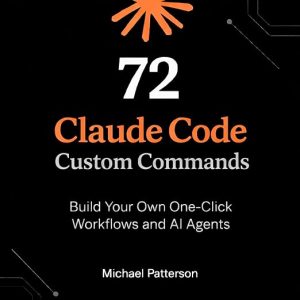
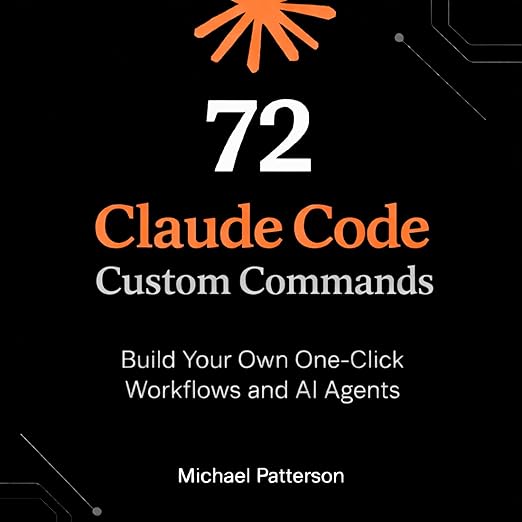
Michael Patterson's 72 Claude Code Custom Commands confronts a problem that developers working with AI coding assistants encounter early and often: the gap between what the tool is capable of and what it reliably delivers in practice. The audiobook, narrated via Ed Fairbanks's voice replica over four and a half hours, is built around the observation that Claude's inconsistency, its tendency to produce excellent results sometimes and mediocre ones other times for what seems like the same request, is not inevitable but addressable. Custom commands, properly configured, are the solution Patterson argues for. The premise is specific enough that it immediately separates listeners who belong in this audiobook's audience from those who do not: if you have worked with Claude Code and felt that gap, this title is speaking directly to you.
The title is specific and the ambition is proportionally specific: seventy-two battle-tested commands, organized into categories covering code analysis, refactoring, debugging, documentation generation, file management, testing automation, security scanning, and performance optimization. This is not a philosophical argument about the future of AI-assisted development but a practical toolkit. That specificity is the book's defining quality and the right lens through which to evaluate it.
Persistent System Prompts Are the Highest-Leverage Change
The audiobook's core value proposition is organized around several distinct developer pain points. The first is inconsistency: developers working with AI tools often find that results vary significantly depending on how a request is phrased, what context exists in the session, and what the model has been primed to produce. Patterson's commands address this by providing exact syntax and proven patterns, the book offers not generic AI advice but specific command structures that have been tested for reliability across real development environments.
The second pain point is persistence. One of the most underused capabilities in Claude Code is the ability to configure system prompts that persist across sessions, so the model retains knowledge of your coding style, preferred libraries, and architectural constraints without requiring you to re-establish context at the start of every conversation. Patterson spends meaningful time on this capability, which for many developers is the highest-leverage configuration change available in the tool. Understanding how to structure these persistent prompts, and what to include versus what to leave contextual, is the kind of practical knowledge that typically comes from trial and error, and having it laid out systematically in an audiobook accelerates the learning curve significantly.
The organization by command category is a practical choice for an audiobook. Developers can engage with the categories most relevant to their current workflow rather than listening through all seventy-two sequentially. The step-by-step setup instructions and real-world examples that accompany each command are the most valuable elements in audio, as they allow listeners to understand not just what each command does but why it is structured the way it is and what failure modes it avoids. Patterson includes troubleshooting guidance for each command, which addresses the practical reality that custom configurations do not always work as expected on first deployment.
Ed Fairbanks's voice replica handles technical terminology, command syntax, framework names, development tooling references, with clarity and correct pronunciation. The four-and-a-half-hour runtime is appropriate for the material's scope: substantive enough to cover seventy-two commands with meaningful context, short enough that focused listening sessions can cover a full command category in a single sitting.
The troubleshooting guidance included with each command is one of the more practical additions in the audiobook. Custom configurations fail in predictable ways, syntax errors, context window limitations, conflicting instructions, session state issues, and Patterson's documentation of what to do when a command does not work as expected is as valuable as the original command specification. That kind of failure-mode coverage is what separates a curated toolkit from a raw list of examples.
Ed Fairbanks's Voice Replica Cannot Inflect Weight
The voice replica narration deserves honest attention. Ed Fairbanks is a named narrator whose voice has been replicated via AI for this project, a disclosure that the title's narrator field makes explicit. The narration is competent for instructional content: terminology is accurate, pacing is clear, and the delivery does not actively impede comprehension. What it lacks is the quality that makes a human developer narrator particularly valuable for technical content: the ability to inflect around moments of genuine conceptual weight, to signal with voice when a caveat is important rather than decorative, and to bring the authority of lived practice to an explanation. Listeners engaging with this audiobook as a primary technical reference will find the narration functional; those who prefer human narration should factor that into their decision.
The book is explicitly positioned for developers already working with Claude Code rather than as an introduction to AI-assisted coding generally. Listeners without an existing Claude Code context will find the specific command examples less immediately actionable, though the underlying principles around prompt persistence, workflow automation, and command categorization transfer to other AI coding contexts with adaptation.
Team Leads Want Reusable Prompt Templates Too
This audiobook is best suited to software developers actively working with Claude Code who want a structured, practical guide to custom command configuration and persistent workflow setup. It will also serve team leads looking to build reusable prompt templates for their development teams and developers who have found AI-assisted coding inconsistent and want a systematic approach to improving reliability. Those new to AI coding assistants generally may find the content useful as an introduction to what consistent AI tooling looks like, but will get more immediate value after establishing a working Claude Code context. Listeners who prefer human narration for extended technical audio should note the voice replica format upfront, it is disclosed transparently and functions adequately, but it is a different experience than a human expert narrator.
- Narrator: Ed Fairbanks's voice replica narrates Michael Patterson's developer guide with technical competence, but listeners should note this is an AI-generated voice performance, it handles code terminology clearly while lacking the improvisational authority a working developer narrator would bring.
- Subjects: Custom AI command architecture, workflow automation, AI-assisted development consistency
- Tone: Focused and practical, like a senior developer walking you through their setup
- Bottom line: Developers already using Claude Code who want a structured audiobook guide to custom commands and persistent workflow configuration will find Patterson's curated collection more immediately actionable than most AI coding books.
Is the 72 Claude Code Custom Commands audiobook only useful for Claude Code users, or does it apply to other AI coding assistants?
The seventy-two commands are designed specifically for Claude Code, so the tactical examples are most directly actionable for current Claude Code users. The underlying principles, prompt persistence, command categorization, workflow automation, are applicable to AI coding contexts generally, but the specific syntax and configuration guidance is Claude Code-specific.
How does the audiobook handle the difference between understanding a command and actually implementing it?
Each command includes step-by-step setup instructions, real-world examples, and troubleshooting guides. Patterson structures the content to explain both what each command does and why it is architected the way it is, the goal is understanding that transfers to adaptation, not just replication.
What does it mean that this audiobook uses a voice replica, and does it affect the listening experience?
The narration uses an AI-generated replica of Ed Fairbanks's voice. It handles technical terminology accurately and the pacing is clear, making it functional for instructional listening. It lacks the tonal authority and improvisational inflection a working developer narrator would bring to genuinely complex explanations, which is worth considering for extended technical study sessions.
Does this audiobook address how to configure Claude to remember your coding style across sessions?
Yes. One of the book's core subjects is configuring system prompts that persist across sessions, so Claude retains knowledge of your coding style, preferred libraries, and architectural constraints. Patterson describes this as the highest-leverage configuration change available, and the audiobook covers setup and practical application in detail.