In Brief
- Voice: Mark Steines delivers Dr. Hamilton's advice with warm, unhurried clarity, and the added foreword from Patricia Heaton gives the three-voice production real range.
- Big ideas: newborn sleep and soothing, evidence-based parenting, the Hamilton Hold technique
- Atmosphere: reassuring and practical, built for repeat listening during exhausted late-night sessions
- Worth it?: strong for expectant and brand-new parents wanting fast, credentialed answers, less useful once your baby has outgrown the newborn stage.
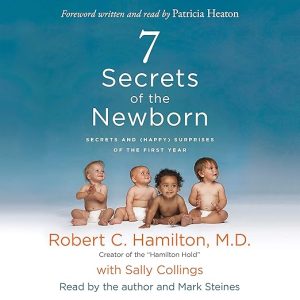
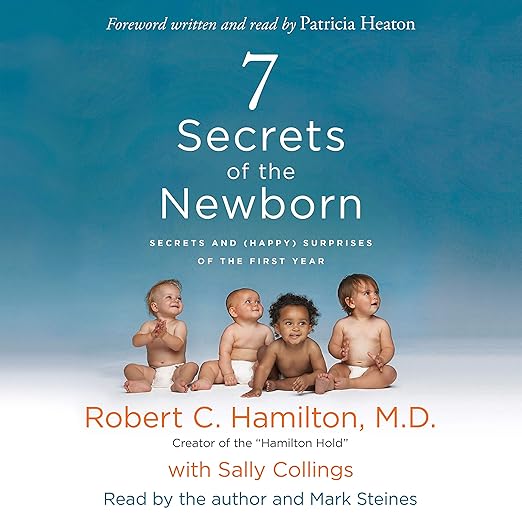
My verdict on 7 Secrets of the Newborn going in was skeptical, since celebrity-adjacent parenting audiobooks (this one is read by former Entertainment Tonight host Mark Steines) can lean heavily on personality over substance, and my verdict coming out the other side is that this one earns its reputation. Robert C. Hamilton, MD, the pediatrician behind the viral “Hamilton Hold” video for calming a crying newborn, spent more than three decades in practice before writing this, and the audiobook adds a foreword read by Patricia Heaton and a short introduction read by Hamilton himself, on top of Steines carrying the bulk of the nine hours and twenty minutes. That's an unusually layered production for a parenting guide, three distinct voices serving three distinct functions, and it works better than the premise suggests on paper.
Hamilton's Hold Anchors a Signal-Reading Framework
The content itself covers exactly the territory a panicked new parent actually searches for at two in the morning: how to get a baby to nurse, sleep, and stop crying, plus the harder-to-Google decisions around breastfeeding versus formula, screen time, and the day-to-day negotiations between two exhausted parents figuring out a routine together. Hamilton's approach throughout favors the specific over the vague, the Hold itself is a physical technique described precisely enough to actually attempt while listening, not just a comforting idea, and that same specificity carries into the chapters on establishing sleep patterns and reading a baby's early cues. The book doesn't promise a rigid schedule so much as a framework for reading your own child's signals, which tracks with how Hamilton frames his own three decades of practice: pattern recognition across thousands of newborns, applied to your one particular baby.
Sharon Wishes She Had This before Birth
Listener reviews describe something I noticed too: this is dense enough that it rewards returning to specific chapters rather than a single linear listen. Sharon's review captures the timing problem almost everyone runs into, admitting “I wish I had been able to get it before my baby was born,” since a lot of the most useful material, sleep setup, feeding logistics, what to expect in week one, is more useful as prevention than as a response to a crisis already underway. Lisa Cusack frames the audience more broadly: “It will benefit first time parents, and parents expecting their third baby.” That matches my own sense that Hamilton's decades of pattern recognition make this useful regardless of how much prior parenting experience you're bringing to it.
The chapters beyond the core sleep-and-soothing material round out the book's usefulness in ways easy to overlook from the title alone: dedicated sections on play, on managing screen time in the home, and on the small negotiations between partners over division of labor all get the same specific, practical treatment as the more headline-grabbing crying and sleep chapters. That breadth matters because a lot of newborn guides narrow almost entirely to sleep training and feeding, leaving the rest of a parent's actual daily decisions to be figured out elsewhere, and Hamilton's willingness to address the mundane, ongoing logistics of a first year, not just its most dramatic 2am moments, gives the book more staying power across those twelve months than its viral reputation alone would suggest.
Mark Steines Narrates in Ten-Minute Bursts
Mark Steines carries the main narration with the same warm, unhurried delivery that made him a comfortable presence on daytime television for years, which turns out to be a genuinely good match for content this intimate: nobody wants clinical detachment during a middle-of-the-night crying spell, and nobody wants forced cheerfulness either, and Steines lands closer to the steadier register a tired parent would actually want in their ear. Bringing in Patricia Heaton for the foreword adds a recognizable, trusted voice right at the start of the listen, functioning almost like a friend's endorsement before the doctor himself takes over for a brief introduction, a small structural choice that gives the whole production more range than a single-narrator parenting guide typically has.
QuiteContrary's review captures exactly the kind of listening this book is built for: three weeks postpartum, chipping “away at your book in those 10-15min sessions after the baby’s asleep and I’m almost asleep myself.” That's realistic new-parent listening, in short fragmented bursts rather than a dedicated evening, and the audiobook format actually suits that pattern better than the print edition would, since you can listen one-handed while holding a baby in a way reading a physical book simply doesn't allow. The chapter structure holds up reasonably well to that kind of stop-and-start listening; each topic feels self-contained enough that missing the exact stopping point from your last session doesn't cost you much.
Newborn-Only Guidance with a Personal Faith Thread
Worth naming plainly: this is explicitly a newborn and first-year guide, not a toddler or preschool parenting book, so its usefulness has a natural expiration date built into the premise. QuiteContrary's review also references pushback against Hamilton's “religiosity,” in her own word, a reminder that his framework carries a specific personal worldview alongside the clinical advice, worth knowing going in if you're specifically looking for a purely secular, data-only approach to newborn care with no personal philosophy attached to it at all.
At nine hours and twenty minutes, this runs considerably longer than a typical parenting quick-guide, which is a feature if you want real depth on feeding, sleep, and early development, but a real time commitment for an audience that, by definition, has almost no free hours available. I'd recommend treating it more like a reference you dip into by topic than a single sit-down listen, especially given how many listeners describe consuming it in short fragments rather than start to finish in order. Skimming straight to one chapter without the earlier context can occasionally cost you a cross-reference Hamilton set up earlier.
The format itself, short topic-based chapters rather than one continuous argument, is a real strength for the audio edition specifically, since it means a sleep-deprived listener can jump back in after days away without needing to reconstruct where a longer, more cumulative argument left off. That structural choice does mean the book reads less like a single sustained narrative than some nonfiction and more like an organized, returnable reference, worth knowing if you were expecting the audiobook to function as one continuous story rather than a topic-by-topic guide.
Best Read before the Baby Actually Arrives
Expectant parents in their final trimester are the ideal audience, since Sharon's review makes clear how much more useful this is before the baby arrives than after a crisis is already in progress, and the same goes for grandparents or a partner wanting a shared vocabulary for newborn care decisions. New parents already home from the hospital and improvising will still get real value from it, just later than they'd ideally want to.
Anyone hunting for a rigid, hour-by-hour schedule will be disappointed, since Hamilton's whole approach favors reading your own baby's cues over a one-size-fits-all timetable, and the book is upfront about that choice rather than apologizing for it. It's also not the pick for a parent whose baby has already outgrown the newborn stage, since the Hold itself and the earliest sleep guidance lose most of their relevance once a baby becomes mobile.
Is this audiobook more useful before or after the baby is born?
Before, ideally. Reviewer Sharon's experience is a common one: much of the most useful material, sleep setup, feeding logistics, early cues, works better as preparation than as a response to a crisis already underway.
Who reads the foreword on this audiobook, and does it add real value?
Patricia Heaton reads the foreword, with Dr. Hamilton himself reading a short introduction before Mark Steines takes over the main narration, a three-voice structure that gives the production more range than a single-narrator parenting guide typically has.
How long is this audiobook useful for, given it's specifically about newborns?
Its usefulness is front-loaded by design. This is a newborn and first-year guide specifically, not a toddler or preschool resource, so expect it to matter most during pregnancy and the first several months rather than as an ongoing reference.