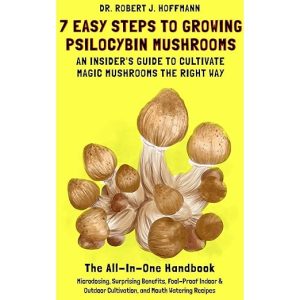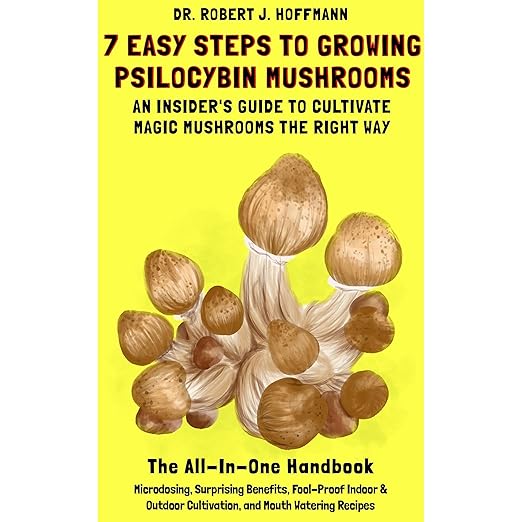
Dr. Robert J. Hoffmann's guide to growing psilocybin mushrooms is an audiobook straightforward about its purpose and its audience: an instructional resource for beginners, structured around seven discrete steps, authored by someone claiming two decades of cultivation experience. The audio format has a specific utility here: step-by-step guides with named techniques and sequential stages translate well to listening, particularly for those who prefer to follow along with their hands occupied or who find reading while engaged in a practical process difficult. At three hours and fourteen minutes, this is a focused guide rather than a comprehensive reference, and it pitches its ambition accordingly.
Legal Disclaimers Come Before Any Cultivation Advice
The most important thing any potential listener needs to know before purchasing this audiobook is what one reviewer stated at the outset: the book contains disclaimers and legal notices that must be read and understood before proceeding. Psilocybin mushrooms remain classified as controlled substances in most US states and in many countries internationally, and while the legal landscape is changing in some jurisdictions, it remains very restrictive in others. This guide covers cultivation technique and leaves legal compliance entirely to the listener. That is not a small caveat. It is the foundational context for everything else in the book, and anyone who skips the disclaimers is making a consequential choice.
With that established, the content itself is genuinely instructional. The guide covers the history and mythology of psilocybin mushrooms, addresses common misconceptions, and then moves into the practical material: knowing your strain, indoor and outdoor cultivation techniques, substrate management, yield optimization, and recipes for consumption. One reviewer described it as having all the information needed to start growing and confirmed it as a great place to start for newcomers. Another noted the depth of research and genuine practical know-how, describing the author as having clearly done their research. The consistency of the positive feedback on the information quality suggests Hoffmann delivers on the expertise he claims.
Synthetic Narration Flattens the Recipe Sections
The beginner-oriented structure is the book's most useful feature. Many cultivation resources assume significant prior knowledge or shift quickly from foundational concepts to advanced technique without adequate scaffolding. Hoffmann builds from scratch, covering what magic mushrooms are and the history of their use before asking the listener to do anything. The seven-step framework gives the procedural material a shape that makes it easy to track progress and return to specific stages for reference. That architecture matters in an audio format where listeners cannot quickly flip to a chapter overview to orient themselves.
The Virtual Voice narration is functional and clear in conveying procedural information, which is what this kind of guide demands above all else. It is not a warm or particularly engaging listening experience in the way a skilled human narrator would produce, but it delivers the content intelligibly. The recipe sections and more personal passages in the guide lose some texture under synthetic narration, but the core technical content comes through without significant distortion. Listeners who primarily need the information delivered accurately rather than atmospherically will not be significantly impeded by the delivery format.
Recipes and Dosage Guidance, Minus Clinical Depth
The inclusion of recipes is a practical acknowledgment that cultivation is only half the process. Listeners who want to use their harvest will need guidance on preparation and dosage, and the recipe section addresses this directly. The synopsis also flags the connection between psilocybin and potential mental health benefits, covering reported effects on anxiety, depression, and addiction. Listeners interested in the therapeutic research context will find the guide touches on this without providing clinical depth: this is a cultivation manual, not a therapeutic protocol. The wellness framing in the synopsis is optimistic about psilocybin's potential benefits. Listeners should balance this against the reality that psilocybin is a powerful hallucinogen with variable individual responses, and the therapeutic research, while promising, is still developing and not yet approved clinical treatment in most jurisdictions.
At three hours and fourteen minutes, this guide covers foundational knowledge but is not an exhaustive reference. Listeners who advance past the beginner stage will likely need to supplement with more detailed resources. The content on outdoor cultivation is useful but will need to be adapted for climate and season by the individual listener. The disclaimer noted by reviewers is not boilerplate: it reflects genuine considerations about safety and legality that apply equally to every listener regardless of their intentions.
Built for Legal Jurisdictions, Framed as Information
This audiobook is for listeners in jurisdictions where psilocybin cultivation is legal or decriminalized who are approaching the practice for the first time and want a structured, accessible entry point. Listeners with existing cultivation experience will find the foundational coverage familiar and may prefer a more advanced resource. Anyone approaching this for research or curiosity rather than active cultivation will find the guide a useful overview of how the practice works and what it requires. Those who have not checked their local law before listening should do that first, and the book itself asks them to do exactly that before proceeding. The guide is not advocacy: it is information, and what listeners do with that information is their own legal and ethical responsibility. That framing is honest, if occasionally uncomfortable.
The Short Version
- Performance: Virtual Voice narration delivers the instructional content clearly, though the synthetic delivery lacks the conversational warmth a human narrator would bring to the personal anecdotes and recipe sections.
- What it covers: Home cultivation technique, harm reduction awareness, natural wellness applications
- Feel: Instructional and practical, with a self-sufficiency ethos throughout
- Our call: A beginner-oriented cultivation audiobook that covers foundational technique across three hours, with the significant caveat that listeners must verify local legal status before applying any of it.