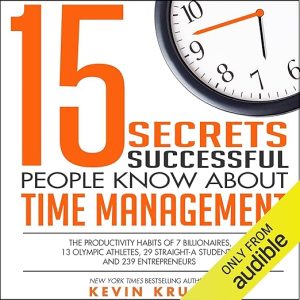
Nothing about the star average on this record survives contact with arithmetic. It reads 4.4 above a counter showing two ratings, and two whole-star votes can only average to a whole number or a half: 4.0 or 4.5, with nothing available between them. Beneath that counter, five separate people have written full paragraphs. Kevin Kruse reads his own book here, the audiobook fills three hours and ten minutes, and the imprint on the record carries his name.
Those two columns are counting different populations, and only one of them appears as a number. A rating costs a tap. A paragraph costs ten minutes and a reason. Five people spent the ten minutes, and at most two of them also spent the tap, which means the 4.4 is not a summary of the writing underneath it in any sense. Anybody reading this page from the top down forms an impression from a figure that no visible person produced, and the writing that could correct the impression sits below the fold.
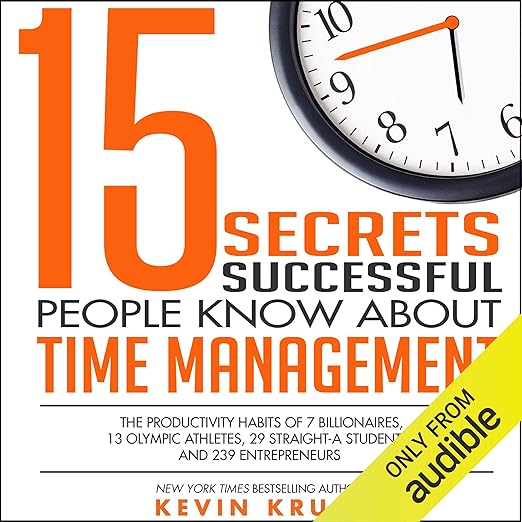
Kruse interviewed and surveyed a wide sample, and the copy is specific about the categories: billionaires, Olympic athletes, straight-A students and more than two hundred entrepreneurs. What he built out of that material is a compilation presented as research. From it he extracts fifteen positions about how productive people handle their hours. The framing promises findings. The delivery is closer to a well-organized consensus, which is a different product and, for most buyers, the more useful one.
Register is where the book earns its keep. Nothing here is dressed up, nothing is withheld for a later chapter, and no anecdote runs longer than the point it illustrates. Productivity writing has a habit of performing the very time-wasting it warns against, spending a whole chapter on a study before naming the lesson. This one names the lesson, shows who practices it, then moves. That discipline is worth more than the originality the title implies.
The Best Parts of 15 Secrets Successful People Know About Time Management
A July 2024 entry does something unusual and genuinely useful: it transcribes the opening rather than reviewing it. Secret one, that entry reports, holds that time is your most valuable and scarcest resource, so the practical move is counting the minutes from the moment you wake. Secret two is identifying your most important task and doing it first, before anything else. Read that back and the method is visible in two sentences. Whether that reads as damning or as efficient depends entirely on what you came for.
Signposting rather than performance is the job the author has taken on by reading it himself. A numbered list is the easiest structure to follow on a page and one of the hardest to follow in audio, because a listener has no page number, no bold heading and no visual signal that item nine has started. Those boundaries have to be marked out loud. Try a chapter where a quoted entrepreneur arrives, since a name-heavy passage is where a self-read digest most often loses its shape.
At three hours and ten minutes, the scale is honest for what this is. The material is a briefing: fifteen positions, each argued briefly, each illustrated with somebody's habit. A version padded to three times the length would be a worse book, and this shelf is full of exactly that transaction. Kruse states his fifteen things and stops, which on a title about not wasting time is at least internally consistent, and it makes a second pass cheap enough to be worth doing.
Before You Commit to 15 Secrets Successful People Know About Time Management
In November 2017 somebody filed a four-star that puts the sourcing question plainly. The book combines the author's own advice with brief advice and quotes from billionaires, entrepreneurs, Olympic athletes and straight-A students, that entry says, before adding the sting: some of it comes from his own research and enquiries, and some he just seems to have borrowed. That is the fairest sentence anybody has written about this title. The organizing is genuinely good. The originality is uneven, and the title oversells it.
Where the entries were filed complicates the picture further. Two of the five were posted from storefronts outside the United States, one of them in Spain in October 2015, calling the book not exactly super-scientific research but an interesting collection of tips, inspiring, readable in a couple of sessions and worth the time. That is a reasonable verdict. It is also a verdict on a text, filed from a different marketplace, sitting under a counter that registers two ratings, and the page makes none of those distinctions visible to anybody scanning it.
Publisher, on this record, means the author's own group, which matters a great deal on a book whose selling proposition is research. Survey work and interviews across more than two hundred entrepreneurs are claimed in the copy; no methodology, no sample description and no notes appear anywhere on the listing, and no outside house stood behind those claims before publication. None of that makes the conclusions wrong. It does mean the phrase about the remarkable findings of a study is carrying more weight than the visible evidence can bear.
Who Should Pick Up 15 Secrets Successful People Know About Time Management
Anyone who has never read a time-management book should start with something at roughly this scale, because the fifteen positions here are the field's consensus stated cleanly and three hours is a cheap way to acquire the vocabulary. It suits professionals between roles, students facing a first unstructured semester, and anybody who has watched a calendar fill up with other people's priorities. Most of the advice is actionable inside a day, which is the real test for this genre.
Readers who want the underlying survey data will leave unsatisfied, and anyone who has already worked through the standard productivity shelf will recognize most of these fifteen items wearing other clothes. Skeptics of the billionaire-anecdote mode should know it arrives early and often. A briefing is what this is, and briefings have their uses.
Key Details
- Narrator: Kruse reads his own research, which buys sincerity and costs the variety a hired reader would bring to three hours of list-shaped material.
- Subjects: extreme productivity habits, minutes as the planning unit, most important task first, notes from high performers
- Tone: Practical, upbeat, briskly repetitive
- Bottom line: A clean three-hour briefing on the productivity consensus, let down mainly by a page whose numbers refuse to add up.
Before You Listen
Does the audiobook name all fifteen secrets up front?
The title promises fifteen and the listing publishes none of them, so a buyer cannot check the list before paying. The copy describes what he surveyed and the question he set out to answer, then stops. Anyone who wants to know whether a particular idea is covered has to buy first and find out afterward.
Which people are quoted in this audiobook?
The copy names Mark Cuban, Kevin Harrington, James Altucher, John Lee Dumas, Pat Flynn, Grant Cardone and Lewis Howes, alongside unnamed athletes, students and billionaires who are never introduced. Those seven are the only individuals identified before purchase, out of a pool the copy puts at over two hundred entrepreneurs.
Is the audiobook usable without taking notes?
Mostly, because each position is short and self-contained rather than cumulative. The record lists no accompanying document, summary or workbook, so anything you want to keep has to be written down as you go. A second pass is the cheaper alternative at this runtime.
How current is advice recorded back in 2015?
The recording carries a December 2015 date and the listing shows no revised edition since. The copy frames the material as habits and principles rather than tying it to particular software, so the framing should age better than the examples do. Nothing has been added to update either.