At a Glance
- Narrator: Louise Hay self-narrates in her own voice, which is the defining feature of this audio format and the reason many listeners specifically seek out this version over any print alternative.
- Subjects: Self-affirmation, positive thought patterns, emotional and physical wellbeing through daily practice
- Tone: Calm and nurturing, designed for daily or repeated listening rather than one-time absorption
- Bottom line: At just over an hour, this audiobook functions as a daily practice tool rather than a conventional listening experience, and Hay's own voice makes it uniquely effective for that specific purpose.
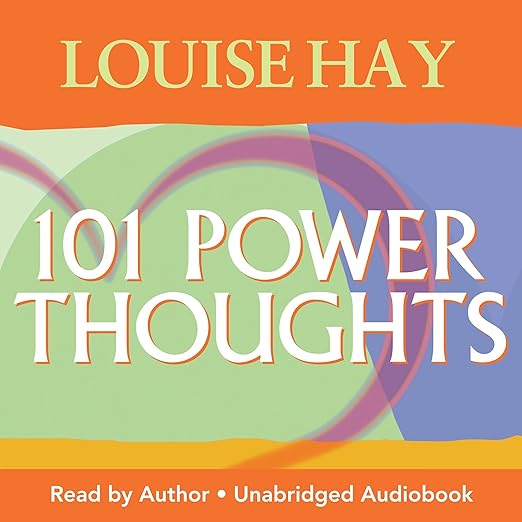
Louise Hay's 101 Power Thoughts is an audiobook that is honest about what it is from the first minutes. Hay reads one hundred and one affirmations in her own voice, the warm and deliberate delivery that became familiar to millions through You Can Heal Your Life and decades of work in the self-help space. The running time is one hour and six minutes. This is not a book about affirmations; it is the affirmations themselves, delivered by their author in the format they were designed for. Reviewers who have found it are listening to it daily, sometimes twice, which tells you something about how the content is meant to function and what it is actually doing for the people who return to it.
The distinction between this and a conventional audiobook matters for setting expectations. At sixty-six minutes, 101 Power Thoughts is closer in format to a guided meditation recording or a daily practice companion than to a book you finish and file away. The synopsis itself suggests listening to one power thought each day or a few at a time, framing the content as something to return to rather than move through linearly. That is the right frame, and listeners who approach it that way consistently report meaningful results.
How 101 Power Thoughts Holds Up
What Hay is doing with the self-narration goes beyond simple convenience. The affirmations in her catalog address the relationship between internal thought patterns and physical and emotional states, and the credibility of that framework depends in part on trust in the voice delivering it. Hay spent decades in face-to-face work with people, and her recorded voice carries the accumulated warmth of that practice. L.J.H. specifically credits Hay's voice with an ability to make simple truths we forget in our busy, stressful lives audible and accessible in the middle of an ordinary day, in the kitchen or during exercise.
Lisa Thompson, who had already been working with Hay's books and other recordings for months before this one, describes the daily listening as literally changing my life, and situates this recording within a broader practice that includes Hay's written affirmations. That context is useful: this audiobook functions best as one component of engagement with Hay's framework rather than as a standalone introduction. Listeners who come to it without any prior exposure to affirmation practice may want to start with You Can Heal Your Life for the conceptual scaffolding, then use this recording as the daily practice tool it is designed to be.
Why 101 Power Thoughts Works as an Audiobook
The audio format is essential here in a way that is not always true for self-help content. Reading affirmations silently and hearing Hay deliver them in her own voice are meaningfully different experiences. The reviewer Cat listens while driving to work and reports that the affirmations cover many areas and are positive and said in a kind and gentle way that fits into the transition of a morning commute. The listening context she describes is exactly what the format is built for: ambient, repeated, present during movement or routine activity rather than demanding focused sitting attention.
The sixty-six-minute running time means the full recording can be absorbed in one session or cycled through a few affirmations at a time over weeks. Neither approach is wrong. The reviewer who has been listening once or twice daily for a month treats the whole recording as a cycle, returning to it as a complete unit. Others will use it selectively, finding the specific affirmations that address their current focus and returning to those. Both patterns are served by the audio format in ways that print cannot replicate.
Weak Spots in 101 Power Thoughts
Scope is the most important thing to calibrate before purchasing. At one hour and six minutes, this is not a comprehensive self-help program or a detailed treatment of Hay's philosophy. It is one hundred and one affirmations read in sequence by their author. Listeners expecting extended explanation, case studies, or the kind of narrative that characterized Hay's major books will not find that here. What they will find is exactly what the format promises: Hay's voice, her thoughts, delivered simply and directly without scaffolding.
Hay's affirmation framework is rooted in a specific set of assumptions about the relationship between thought patterns and physical and emotional health, assumptions that have both devoted adherents and significant skeptics in the wellness space. This audiobook is not designed to argue for the framework; it is designed to practice it. Listeners who are uncertain whether affirmation practice is something they connect with may want to sample Hay's broader work before purchasing this specific title, which presupposes some investment in the approach.
The Right Listener for 101 Power Thoughts
Existing Hay readers and listeners who want a daily practice tool delivered in her own voice are the primary audience, and they are well-served. The recording's short duration and its design for repetition make it suitable for daily integration in ways that longer audiobooks cannot achieve. Reviewers use it during exercise, while driving, and as a morning ritual, all contexts where the calm and deliberate delivery serves the purpose without demanding fixed attention.
Listeners who are new to Hay's work and affirmation practice generally will get more from starting with a longer work that explains the underlying framework before purchasing this companion recording. That said, the affirmations themselves are self-explanatory, and a listener with no prior exposure who simply wants to hear what positive thought practice sounds like in audio could use this as a first encounter. The one-hour-six-minute commitment is low enough that the risk of the format not working for you is proportionally low, and the 4.5 rating across 288 reviews reflects an audience that found genuine value in the experience.
Questions Listeners Ask
Is this audiobook suitable for daily repeated listening, or is it a one-time listen?
Designed specifically for repeated use. Hay's own framing suggests listening to one affirmation per day or a few at a time, and the reviewers who report the most impact are those who have been cycling through the recording daily for weeks. The sixty-six-minute format is short enough to use as a morning or commute practice rather than a sit-down listening event.
Does this audiobook explain the philosophy behind affirmations, or does it just present the affirmations themselves?
Just the affirmations. This recording is the practice itself rather than an explanation of it. Listeners who want Hay's reasoning and framework for how affirmations work should start with You Can Heal Your Life, which provides the conceptual foundation. This recording is most useful for listeners who have already engaged with that framework and want a daily audio tool.
Why does Louise Hay self-narrating this audiobook matter, and would a professional narrator have served just as well?
The self-narration is a core part of what this audiobook is. Hay's voice has decades of practice and personal authority behind it, and reviewers specifically cite the quality of her voice and delivery as part of what makes the affirmations land differently than reading them in print. A professional narrator would produce a technically competent recording, but it would not be Louise Hay speaking directly to you, which is the specific experience this audiobook provides.
At just over an hour, is this audiobook good value compared to longer self-help titles?
Value depends entirely on how you use it. As a daily practice companion played repeatedly over months, the per-listen cost becomes negligible quickly. As a one-time listen, an hour is a brief session. The reviewers who report the strongest results are those who treat it as a recurring tool rather than a conventional listen, which is exactly the use case Hay designed it for.