Before You Press Play
- Narration: Mike Carnes reads instructional material where menu paths and metric names must stay crisp, so sample a procedural passage rather than the intro.
- Themes: Channel planning and production, lighting and audio basics, analytics-led audience building, monetization and sponsorship.
- Mood: Brisk, encouraging and relentlessly practical.
- Verdict: A solid conceptual primer for absolute beginners, best paired with a version you can actually look at.
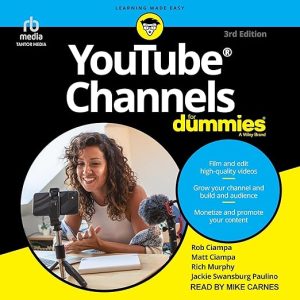
Four experts wrote this book, according to the publisher's copy, which promises guidance across the whole run from first idea to production, promotion and money. The listing credits one name, Rob Ciampa. That gap is a small but real thing to know going in, and it is characteristic of how this kind of guide gets built. YouTube Channels for Dummies (3rd Edition) is an audiobook of eleven hours and seven minutes read by Mike Carnes, aimed with equal seriousness at what the copy calls the bedroom broadcaster and at a business chasing a global audience, which is a wide brief for a single volume to satisfy.
DB's Hot Wheels Channel Is the Real Test
The clearest evidence that the book works comes from a reviewer with an unusually specific goal. DB wanted to start a channel documenting a Hot Wheels collection, bought this, and reports that it 'clearly and easily shows all aspects of creating and running/maintaining a YT channel.' Nothing about that ambition is grand, and that is exactly why the endorsement is persuasive. A guide of this type either serves the person with a modest, concrete project or it does not, and abstract praise for a manual tells a buyer far less than one reader describing the thing they actually managed to do with it.
The contents list in the description is unusually honest about scope, which helps set expectations. Video planning, filming and editing come first. Then the equipment and the shot. Then audio and lighting. Then audience building through analytics, with a section on using AI to streamline planning and scheduling. Then monetization through advertising programs, sponsorships and brand deals. That progression is a whole production pipeline compressed into eleven hours, and it means no single stage gets book-length treatment. A second reviewer notes that it 'actually goes into more detail than you would think for a simple guide,' which is praise calibrated against low expectations rather than against a specialist text. Worth adding that the four-author arrangement the copy advertises tells you something about scope. A single practitioner writing alone tends to produce a book shaped by whatever that person happens to do well. A panel produces coverage instead, which is what a guide promising an entire pipeline actually needs, at the cost of one consistent temperament across eleven hours.
Carnes Must Make Menu Names Stick Later
The strongest argument for the audio edition is the part of the book that has nothing to do with buttons. Deciding what your channel is for, understanding why the platform rewards some formats over others, grasping what sponsorship money is actually buying, learning to read the shape of an audience rather than a raw view count: all of that is conceptual, and conceptual material transfers to audio without losing anything. A listener can absorb it while driving or walking and arrive at the desk already knowing what they are trying to do, which is a better use of eleven hours than watching tutorials.
The third-edition status carries genuine weight for a subject that reinvents itself constantly. One four-star reviewer arrived here having already worked with an earlier edition of this same book, having done some digital video conversion and editing and started a channel to post a few videos, and came back for more. Repeat custom from someone who already owned a previous version is a meaningful signal about whether the revision earned its existence. The inclusion of AI-assisted planning and scheduling in the current contents supports the same conclusion, since that material could not have appeared in an earlier edition at all.
Mike Carnes is the credited reader, and the difficulty of this particular assignment is easy to underestimate. Instructional audio lives or dies on whether a listener can tell where one step ends and the next begins without a visible numbered list to lean on. Menu paths, settings names, metric names and platform terminology all have to be delivered cleanly enough to be recognized later on a screen. A reader who blurs those is worse than useless on a book like this, however pleasant the voice. I would sample a passage of actual procedure rather than the introduction, and listen specifically for whether the structure survives without the page.
Specific Toggles Are Harder to Act On
The obvious limitation is the one the format cannot solve. A guide covering filming, editing, lighting, analytics dashboards and monetization settings is describing things that live on screens, and a listener cannot follow a walkthrough of an interface they cannot see. Anything involving a specific panel, a specific toggle or a specific editing timeline will be considerably harder to act on from audio alone. This does not sink the book, but it changes what it is: a strategic primer to listen through first, paired with the print or digital edition, or with the platform itself open in front of you, when it comes time to execute.
The second caution is shelf life. A book teaching a single fast-moving platform starts aging the day it ships, and monetization thresholds, analytics layouts and recommendation behavior are exactly the parts that move. Treat the strategic reasoning as durable and verify every specific number, requirement or menu location against current documentation before relying on it. A related point about the reviews: the 4.2 average sits on a modest pool, and at least one enthusiastic reviewer praises the price alongside the content, which points at a print purchase rather than this recording.
Beginners With a Specific Project Fit Best
Complete beginners with a specific project are the sweet spot, and the reviews bear that out. If you have a collection, a craft, a business or a subject you want to build a channel around, and you currently know nothing about how any of it works, this covers the whole arc from first idea to first sponsorship in one pass. Small business owners considering video as a channel rather than a hobby are equally well served, since the monetization and audience sections are written with commercial intent rather than as an afterthought.
Established creators will find much of this familiar and should look for something narrower and more advanced instead. Listeners who need step-by-step software instruction should buy a version they can see, because that material is the part audio genuinely cannot deliver. And anyone allergic to the relentlessly upbeat register of the description, which promises stardom and a share of the spotlight, should sample before buying, since eleven hours is a long time to spend with a tone that grates.
Common Questions
Can you really learn YouTube from an audiobook with no visuals?
Partly. Strategy, platform logic, audience thinking and monetization models all transfer cleanly to audio. Anything involving a specific dashboard, editing timeline or settings panel does not, since you cannot follow a walkthrough of an interface you cannot see. Use the listen as a primer and keep a visual edition for execution.
Who is the audiobook actually aimed at?
The description targets both the bedroom broadcaster and a business chasing a global audience, which is a wide range. In practice the reviews come from beginners with concrete projects, including one documenting a Hot Wheels collection. Established creators with an existing audience will find much of it familiar.