In Brief
- Narration: Vicki Robin self-narrates with the authority of someone who built this framework over decades, warm, assured, impossible to replicate with a hired voice
- Themes: Life energy and money, financial independence, conscious consumption
- Mood: Deliberate and quietly transformative, building philosophical conviction across eleven hours
- Verdict: The foundational personal finance audiobook, not a tactics guide but a framework for reconceiving what your money actually costs you in hours of life
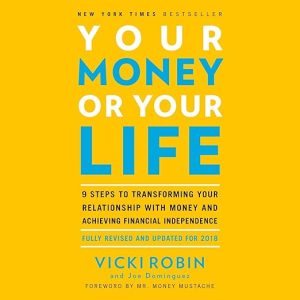
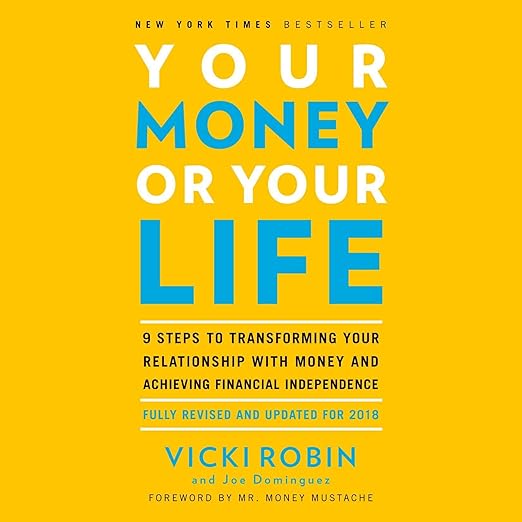
Vicki Robin's Your Money or Your Life is the audiobook that quietly radicalized a generation of personal finance readers before the term financial independence had a Reddit community or a popular acronym. The fully revised 2018 edition, narrated by Robin herself, remains the most coherent argument in the genre for treating money not as an accumulation goal but as a proxy for your life energy. I've recommended this book to people who weren't interested in investing, people drowning in credit card debt, and people who had saved diligently for decades without feeling any less financially anxious. It works differently for all of them, and that range is the clearest sign that the underlying framework is doing something more foundational than most personal finance titles attempt. When Robin speaks in her own voice, she brings something no hired narrator could replicate: the authority of someone who built this argument over a lifetime and chose to live it.
Grant Sabatier Calls This the Best Book on Money
The nine-step program Robin outlines asks listeners to calculate their real hourly wage, including commute time, decompression time, and work-related expenses, then evaluate every purchase in terms of how many hours of life it required. This is not a new idea anymore, but Robin got there first in the early 1990s, and the 2018 revision updates the practical infrastructure, adding sections on index fund investing, side hustles, freelancing, and tracking finances digitally, without abandoning the philosophical core that made the original essential. Oprah called it life-changing. Grant Sabatier, founder of Millennial Money, called it the best book on money, period. These endorsements are genuine rather than promotional because the book's premise is difficult to argue with even when you resist its conclusions. One reviewer described reading it in the 1990s, finding it didn't sink in, returning years later, and having it completely transform their relationship with money. That delayed-action quality is real, and it suggests the audiobook rewards a second listen as much as a second read. The companion PDF included with the audiobook provides the charts and graphs referenced in the text, which matters particularly for the more quantitative steps in the nine-step program where visual representation of progress is part of the method itself.
Robin's Own Authority Beats Professional Performance
Robin narrating her own work is the correct decision for this material. Her voice carries an authority that trained narrators often can't replicate: the certainty that comes from lived experience rather than professional performance. She spent decades developing and refining this framework, and the self-narration communicates that investment in a way that's difficult to manufacture. At over eleven hours, this is not a short listen, but the length reflects the depth of the nine-step program rather than unnecessary padding. The Los Angeles Times called it "the seminal guide to the new morality of personal money management," and that description captures the scope of what Robin is attempting: not a collection of savings tips but a complete rethinking of the relationship between work, consumption, and meaning. For listeners who engage with the material actively, taking notes and pausing to complete the calculations, the audiobook format suits the content particularly well because the exercises benefit from the kind of reflective pause that natural listening creates.
Confrontational More Often Than It Feels Liberating
This book's premise involves a genuine philosophical reorientation, not just tactical tips, and that means it can feel confrontational rather than liberating depending on where you are in your relationship with spending and work. Robin argues that the consumption habits most people treat as natural are actually choices, and that those choices carry costs measured in hours of life. Reviewers who grew up without financial literacy find the framework particularly impactful; listeners already deep in FIRE-related content may find the early sections familiar, though Robin's philosophical framing distinguishes this from later financial independence literature that focuses more narrowly on investment mechanics and portfolio optimization. The 2018 updates are substantive but don't obscure the book's origins in an earlier era. Some investment guidance, while competent, does not match the specificity of dedicated investing titles, and listeners who want to go deep on portfolio construction should supplement with more specialized resources. The book's lasting value is in the framework it provides for understanding what money represents in relation to time and life, not in its technical investment advice.
The framework also rewards listeners who return to it at different life stages. One reviewer described first encountering the book in the 1990s without much impact, then returning years later and finding it completely transformative. This pattern appears often enough in reader testimony to suggest that the nine-step framework requires a certain readiness that isn't always present at first contact. Robin builds her argument carefully enough that listeners who aren't ready to act immediately still get the conceptual vocabulary that will make the material actionable when they are. The audiobook format, where you can easily revisit specific chapters, suits this kind of absorption particularly well.
The Definitive Edition of an Idea About Work
Robin's audiobook serves anyone who has felt that earning more money hasn't made them feel more financially secure, or who senses that their relationship with spending is driven by forces they haven't fully examined. It is not primarily a how-to book about investment strategy, and listeners expecting a detailed portfolio guide will be underserved. It is a framework for reconceiving what money actually costs, delivered at eleven-plus hours of self-narrated instruction from the person who built and lived the argument. This audiobook functions as the definitive edition of an idea that changed how many people relate to work and consumption, and it rewards listeners who are ready to take notes and actually work through the nine steps rather than absorbing it passively.